• Stay Sharp. Be Cyber Bright.
  • https://www.youtube.com/@becyberbright
  • https://www.cybersafekids.ie/online-safety-jamaican-style/

CyberBright

~ Navigate Cyber Space in a Smart Way. Stay Sharp. Be CyberBright. Cyber Safety is a Human Right. You'll also find my ServeYouWrite blog entries: Health, Adventure, Travel, Humour, Food, Philosophy, Books & More!

CyberBright

Tag Archives: writing

One Part of a 50-Year-Old Woman’s Narrative is Not her Complete Story, nor Should it Render So Much Criticism; by Emma Sharp Dalton-Brown, May 12, 2026.

13 Wednesday May 2026

Posted by becyberbright in Life

≈ Leave a comment

Tags

Cyber Safety, digital-information, Education, Life, short-story, social-media, writing

When a 50-year-old woman posts a video of herself walking along a beach, while she is dressed in a swimsuit, there’s a backlash from a whole bunch of people. However, hundreds of younger women clad in carnival wear, dancing down the streets of Kingston, is celebrated. Some of these same young women display their bodies on their personal social media pages, with not a wrinkle nor a square inch of cellulite in sight. Sometimes they are pushing products that brands wish to sell to the followers of these “content creators”, other times they are doing it to get a particular brand’s attention. Often, these are beauty brands, so it is deemed acceptable when an attractive young lady uses her good looks and sex appeal to “sell” the merchandise. She may indeed be rewarded with some free merchandise herself, and with any luck she’ll also get paid. It’s not dissimilar to models or actors being hired by agencies of legacy media for their magazine and television advertisements, or even billboards.

Now, what would we think if a pretty 22-year-old woman was pushing her own products, essentially using herself as a model for her new business? Would we think it crass, inappropriate or “vaguely pornographic” if she was, let’s say, demonstrating the effects of her own skincare line on social media by wearing a swimsuit to show how beautiful her skin was looking? Highly unlikely. In fact, the criticism could well be placed on her youth, underestimating her ability to be successful at such a young age and possibly in part due to her gender. Don’t roll your eyes…..this is still a patriarchal society burdened by misogynistic archetypes.

What if the aforementioned 50-year-old is using herself to promote her carefully curated skincare brand on social media? It would mean she has to expose much of her skin for photos and videos. But why would she do that, you may ask? I’m potentially purchasing the product, aren’t I? Wouldn’t I need to see the results before I choose to buy? Is it really “vaguely pornographic” for her to show so much skin because she is 50? Should she have hired a 25-year-old model to demonstrate the results? That would be unhelpful, however, because all I’d be looking at is how the creams, serums and lotions affect the skin of a woman half my age. So, tell me, what should this intelligent entrepreneur have done? Oh wait, perhaps she should have hired a seasoned 50-something model like Naomi Campbell. Would you have judged Naomi so vehemently had she walked down a beach in a bikini, showing even more skin (Quelle horreur!)? I don’t even think you’d have had an issue with the supermodel Iman, a legend creeping up on 71 years old, had she posted a video of herself doing the same.

I just watched the 16th CARIMAC Aggrey Brown Distinguished Lecture in full, including the Q & A time, and I would emphatically encourage everyone to listen to what the guest lecturer, Lisa Hanna, had to say. While I do indeed have a personal interest in the issues she raised, it is essential for us all to acknowledge and ponder the changing world of digital media, the kinds of connections we are making with one another and the information we are absorbing. In my CyberBright cyber safety workshops and CyberBright Segments on Sunrise CVMTV, I have repeatedly discussed fake news, the differences between misinformation and disinformation, as well as imploring everyone to do the work to discover the whole story and not just make assumptions from the headline, an incomplete part of the story, nor, worse yet, the clickbait clip that’s gone viral.

Nine years ago, when I was 41, I wore a bikini on a beach. I didn’t have to post a picture online to get criticised for baring skin. I got assaulted in the flesh. However, I then posted a part of happened (no names mentioned), which gained a good amount of online support, but also some offline abuse. So, I went back to my social media page and posted the whole story, still not including any names. I garnered even more support, online and offline, but I still lost some friendships because those people had no interest in my entire story. Perhaps it didn’t suit their agenda or their view of me, who knows? But don’t for a minute believe that they did not fabricate their own stories about what happened, for their own social circles. These never went viral because, like I said, I never mentioned a word about who the predator was. You throw a stone into a pigpen and wait to hear which one squeals!

When you see a middle aged woman showing too much skin for your liking, you are influenced by your biases, but you are also swayed by the comments and an incomplete narrative that you have decided tells a complete truth. Your interpretation of a snippet of another person’s story is not the whole truth of the story, nor the person. Your understanding of an event is not the reality of the event when you have seen, heard or read about only a part of it. You cannot be truly analytical and critically thoughtful about anything, unless you have ALL the correct information. This article I’m writing now may incite much criticism and comments. You might even conjure up exactly the person you believe me to be, but it’s not my whole truth. One moment, one article, one video, one image of a 50-year-old woman in a swimsuit does not tell her complete story, nor should it render so much criticism.

emma@becyberbright.com

Share this:

  • Share on X (Opens in new window) X
  • Share on Facebook (Opens in new window) Facebook
  • Email a link to a friend (Opens in new window) Email
  • Print (Opens in new window) Print
  • Share on LinkedIn (Opens in new window) LinkedIn
  • Share on Reddit (Opens in new window) Reddit
  • Share on Tumblr (Opens in new window) Tumblr
  • Share on Pinterest (Opens in new window) Pinterest
Like Loading...

Are Vapid Influencers and Social Media Platforms Pushing Vapes on our Children?

08 Friday May 2026

Posted by becyberbright in Life

≈ Leave a comment

Tags

Cyber Safety, Education, Health, Life, Online Safety, smoking, vaping, writing

What would you do if you caught your kid vaping at home? Worse yet, what would you do if you received a call from your child’s school to say she/he had been found vaping in the bathroom?

But this is more than a “what if?”. While some of us may be sure that our daughters and sons do not smoke, nor vape, because we parents clean the backpacks, do the laundry, tidy the bedrooms, etc, we have no way of knowing, with absolute certainty, that they have not been offered it at school (and tried one “puff”, or even more). I do not like to be the parent who says, “My child would never……”, because, truthfully, I do not want to be the fool who is naive enough to believe that even the most well-behaved children won’t sneak around and do something of which their parents would not approve! It happens. Heck, weren’t we teenagers once?! In fact, one day during the summer holiday one of my brother’s and I (we were 15 and almost 13 years old), along with a few friends, took a bottle of liquor from the cabinet and hid it. After our parents went to bed, we went to get the bottle and it had gone. WHAT!! WHO could have taken it? Well, we had our answer the next day, when the cabinet was opened by my mum and there it was. She never said a single word to us…..until years and years later, when we all had a good giggle about it. Our parents believed in allowing us to take a couple sips of wine or beer when we were that age, but under their supervision. It did not mean we could stash a bottle of vodka behind a bush and drink the entire thing with our friends in the secrecy of the night! Parents used to know everything, but it simply is not the case nowadays. Social media and personal electronic devices have made that the certainty!

I suspect that our mum heard us discussing our plot to deceive because conversations were had face to face or on a landline. There was no private texting on Snapchat, WhatsApp, or the like. Our conversations with our friends were essentially “public” within the house. Nowadays, all kinds of plotting and planning can occur without us knowing, and while there is a chance you may be home to monitor what your children are doing, there are tiny windows of opportunity at school, larger ones at parties and perhaps at someone’s house if those children are not supervised. As for teenagers, adults tend to leave them to their own devices (pardon the pun) as they get older.

Recognising that the covert texting is occurring, where on earth are these kids getting the idea to start vaping? Some may be learning from their peers, but it’s a real and broadly spread issue, so what has been the root cause and the catalyst of why there are so many teenagers, and even pre-teens, who vape? Marketing…..but not the traditional marketing to which we were exposed when we were young. There’s a new kind, one which we don’t even realise is causing a huge problem as we are literally not seeing it. Social media is the most influential marketing tool for any product one wishes to push on children, and they don’t even have to go searching for it. The algorithms are set to advertise any product that will pull your teenagers and young children in to keep scrolling.

“I don’t see any ads on my social media feeds about vaping,” some of you may say. For the record, I don’t either. But it is clear from my age and my interests that it is unlikely that my algorithm would bring such ads to my feeds. Indeed, it doesn’t even need to be an interest of your child to show up on his or her feeds. And if they are not seeing actual advertisements, they are watching and/or following social media influencers and content creators (all rather boring sets of people), who either use e-cigarettes and/or are being paid to “use” them and put them in their online content. Ironic, considering the legal age here in Jamaica (and many other countries) to purchase and use any vaping products is 18 years old. Some states in the USA require you to be 21 years old. So why is it that online ads are being pushed by social media platforms to the screens of teens? Nothing like the bottomline of wishing to generate billions of dollars! This is what we are battling with, my friends, and there is only one way for this war on e-cigarettes to end. We must keep pushing for legislators to make these big tech, social media companies put the safety of our children above all else. There has to be real consequences for these companies, with criminal charges that include heavy fines and imprisonment.

Listen, 75 years ago it was deemed acceptable to advertise cigarettes on national television and radio, until it was banned 20 years later. E-cigarette ads have been running for 12-14 years, with a rapid increase in online ads of all vaping products in the last 8 years. Yes, just before Covid started, restrictions were technically put in place by Meta to prevent influencers from promoting the use of branded vaping paraphernalia, but this has not stopped them, with Instagram and TikTok being two of the biggest culprits. What are two extremely popular social media platforms for teenagers? Instagram and TikTok. I also want to note that while both these platforms have a legally required age of 13 years old for users (16 years old in some countries), many children as young as 10 years old have accounts, because all they need to do is lie about their age. And do not fool yourselves, many of you know that your underage child uses these platforms. They may tell you that they’re only looking at music videos, or sports-related content, or “that’s how my friends communicate,” or they may even insist that it’s social suicide NOT to have Instagram, TikTok and Snapchat, but I can promise you, from personal experience it is NOT social suicide. Please do not let your children use these platforms and hold off until they are at least 15 or 16 years old. I promise you, you will not regret it. No future adult will ever look back and say they wished they had been on social media when they were a child or young teen! These greedy social media platforms do not have your child’s best interest in mind and the influencers that “everyone” is talking about are vapid and just as greedy as the soapbox upon which they stand.

Emma@becyberbright.com

For information on the harm e-cigarettes and vaping causes, please read this paper published in the National Library of Medicine: Electronic Cigarette Harms: Aggregate Evidence Shows Damage to Biological Systems

Please also check out the American Lung Institution’s The Impact of E-Cigarettes on the Lung

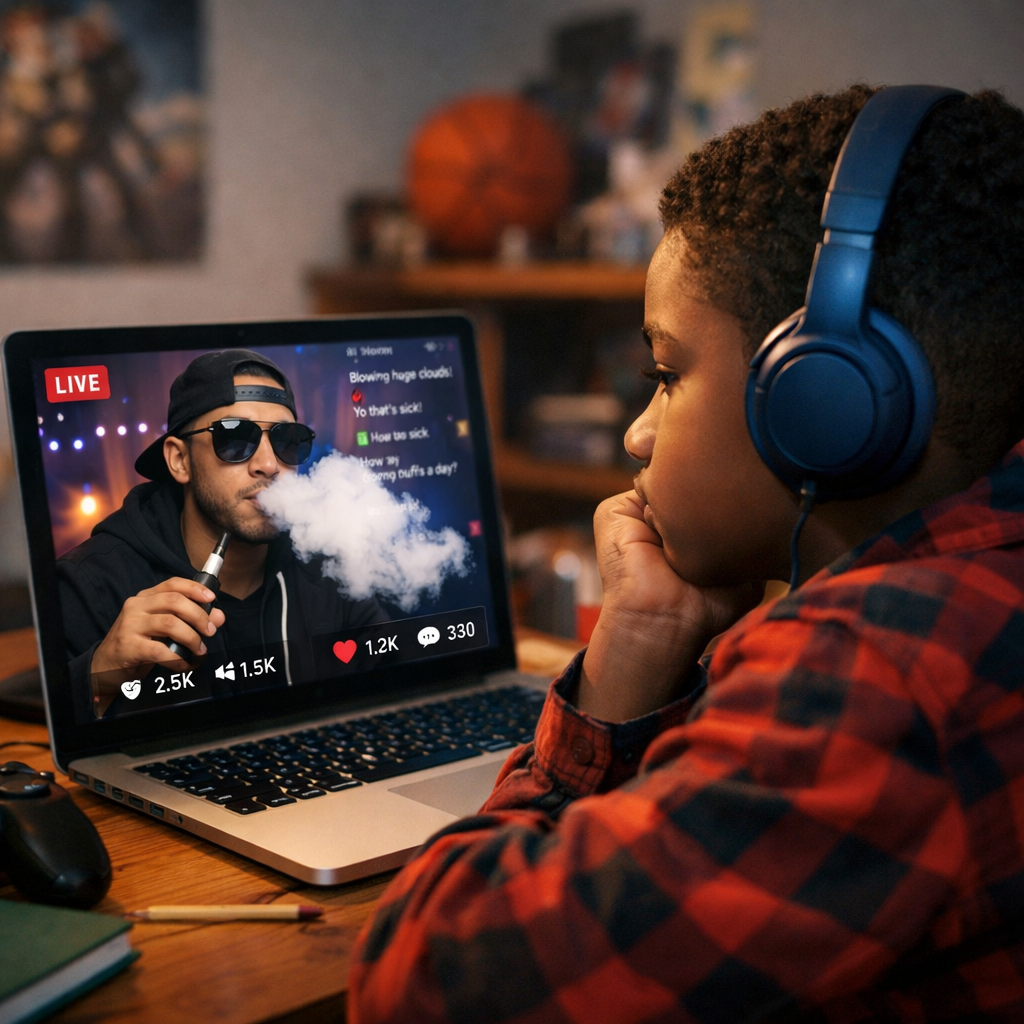
A boy wearing headphones watching a livestream of a man vaping on a laptop screen
A young boy watches a live vaping stream on his laptop.

Share this:

  • Share on X (Opens in new window) X
  • Share on Facebook (Opens in new window) Facebook
  • Email a link to a friend (Opens in new window) Email
  • Print (Opens in new window) Print
  • Share on LinkedIn (Opens in new window) LinkedIn
  • Share on Reddit (Opens in new window) Reddit
  • Share on Tumblr (Opens in new window) Tumblr
  • Share on Pinterest (Opens in new window) Pinterest
Like Loading...

Life is “Lifing” in the Dawkins’ Dramedy ‘A Rose of Sharon’ Written by Emma Sharp Dalton-Brown, May 4, 2026.

05 Tuesday May 2026

Posted by becyberbright in Life

≈ Leave a comment

Tags

fiction, plays, review, reviews, theater, theatre, writing

There are few plays that have you spontaneously belly-laughing with such ease, almost dropping off your chair, while simultaneously seated in the discomfort of a truth that is known and felt by, likely, an entire Jamaican audience. ‘A Rose of Sharon’, written by Basil Dawkins and directed by his daughter TK Dawkins, is one such Dramedy.

I rarely read much about a production before seeing it, believing in the adage “show, don’t tell”, because I want to sense what the universe has laid out for me in real time, without someone else’s opinion influencing my own. Now here I am writing to tell you what I thought about the play, not really to make those of you who have not seen it envious (but you should be!), but rather to absorb the life-harrowing elements underlining the script.

In a nutshell, Basil Dawkins has written a play about a lady road sweeper who takes in a deportee on the bone of his backside, at the risk of upsetting her son. What a simplistic storyline, right? Don’t make assumptions……How could this possibly go deeper than it sounds? Keep reading….How could three actors show the audience a full understanding of the lives their portrayed characters have experienced and are still experiencing? Allow me to illustrate.

Beginning on the backstreets of Kingston, street-cleaner Vida bucks up a down and out man, Fahrenah, who has recently been detained by ICE and deported from the United States. He is a shell of who he once probably was, cowering under the confidence of Vida, who is intent on calling him “husband” as soon as she gets home to her son, Tall Man. But Tall Man, a delightfully amicable young rasta who is very small in stature, but big in presence, shows Fahrenah what he really thinks of him, making no attempt to curb his raw Jamaican patois so that this foreigner can actually understand him.

As dialogue unfolds between the two gentlemen, their use of the stage and the props permit us to truly absorb the set. Vida has created a home in a gully, literally under a bridge, for herself and Tall Man. The cut stone wall has a beauty about it, reminiscent of somewhere peaceful in the countryside, but we are jolted back to reality when we notice that Vida has used someone else’s tossed out tarpaulin and rusty zinc to create partitions within the “rooms” of her “house”, which is fronted by an enduring wall of disposable plastic bottles. Terrific touch, TK, lest we forget that we must each make the effort to ensure a greener environment for everyone on earth. Rather fitting with a script whose main character likes to keep the streets clean!

Award-winning actress Deon Silvera succinctly demonstrates Vida’s lifetime (thus far) in less than two hours. Sure, much of this is depicted in her lengthy monodrama lines, but she still has us hooked with her ability to exhibit the multiple people and events, which were placed along her path, in those monologues. Ironically, Silvera has the audience howling with hilarity and bursting with uninvited and bold-faced comments, all due to her talented delivery of her story, as the misfortune and hardship in Vida’s life is hardly comedic.

Indeed, Vida’s curated family, Fahrenah (Dennis Titus), who repeatedly reflects on his own family, and Tall Man (Derrick Clarke), who was abandoned by his mentally ill biological mother, yet still makes gestures to care for her, both also manage to mask the underlying heaviness of their situations. And the audience on Saturday night ate it all up, unable to stop the laughter, even for a moment to acknowledge the characters’ tragedies. Make no mistake, while we all bellowed, it was not lost on me (and others I am sure) the denial playing out in each of our psyches. This is Life’s life. (See what Basil Dawkins did there!)

In case those of you who have not seen this play will get to watch it one day, perhaps Mother’s Day I hear, I won’t give away any more of this rich story. But I will take my leave with a few last words……

As we applauded the three-people cast, the director, the playwright, and every other person involved in this near-perfect production, a part of me yearns to know what happens to Vida, Fahrenah and Tall Man after the script ends, because their stories are not over. Does Vida stay living under the bridge? Should we be concerned about her? Vida, meaning Life in Spanish, and her utter abandon to her god, makes you wonder if she is even worried. Vida is simply “lifing”.

emma@becyberbright.com

Pink hibiscus flower with red center and green leaves
A Rose of Sharon

Share this:

  • Share on X (Opens in new window) X
  • Share on Facebook (Opens in new window) Facebook
  • Email a link to a friend (Opens in new window) Email
  • Print (Opens in new window) Print
  • Share on LinkedIn (Opens in new window) LinkedIn
  • Share on Reddit (Opens in new window) Reddit
  • Share on Tumblr (Opens in new window) Tumblr
  • Share on Pinterest (Opens in new window) Pinterest
Like Loading...

Getting the Most out of Books & Play Scripts: Emma’s Guide to Enjoying Reading

15 Sunday Sep 2024

Posted by becyberbright in Life

≈ Leave a comment

Tags

book-review, books, fiction, reading, writing

Have you ever listened to a story being told by a reader who has a monotone voice? When you are reading a book, how does the story “sound” in your head? Do you even enjoy reading, or do you find it boring or “difficult”. Is it only the writing that gives life to a story, or does our imagination play a part?

In writing, a useful adage to go by is “Show, don’t tell.” When actors go on stage, or they are being filmed, the same applies. They use their bodies – how they hold themselves, how they walk, their facial expressions, the movements of their limbs and even a tilt of the head, to show the story they are telling. They also use the varying intonations and volumes of their voices, so the audience can understand the real meaning of the words they are saying. True, each member of an audience interprets what is presented to her or him in a way unique to herself or himself, but there is likely a common idea of what the story is about, even if little nuances and meanings vary from person to person. The actors “show” rather than “tell” the audience the story. If an actor is able to do this successfully, she or he has done a great job.

When we read books to small children, we are more likely to grasp their attention if we recite with varying expressions – different voices, volumes and beats. To be honest, the same goes if we are reading something aloud to adults. They will be far more inclined to stop what they are doing and listen, if we intonate, accentuate and enunciate with a fluctuating voice.

So what happens when we read books to ourselves? Some people say they “hate” reading and would rather watch the movie of the book or an adaptation made into a series. Why is this? Is it because the screenwriters, producers, directors and actors of these do a better job at “showing” the audience the story than an author of the book from which the film or show was adapted? I don’t think this is the case, as most people, who read the book and watch the film or show, say, “The book is much better.” So why are there many who simply do not like reading? Let’s not include those who find reading difficult in real terms – in other words, people with dyslexia or anything similar. There are a lot of other people who are able to read easily, but simply do not enjoy it. Why is this? How can one help them to change their views about reading? How can reading be made more interesting to people who generally don’t enjoy it?

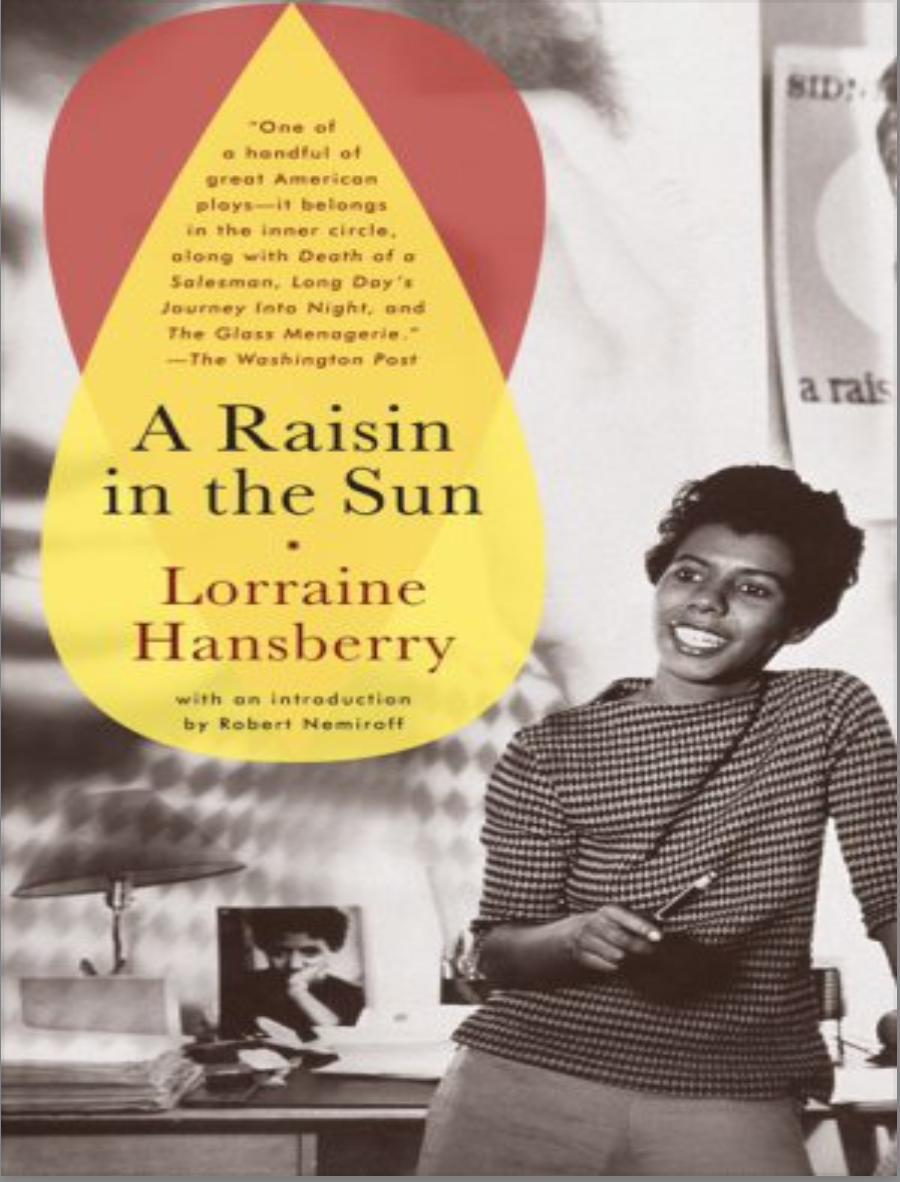
If you’ve read the blog I wrote yesterday, you’ll know that I have rekindled a hobby that I had in my teens – acting. I attend an acting class once a week and in the first class we focused on “show, don’t tell.” This led us to reading lines from two great plays (‘A Raisin in the Sun’ by Lorraine Hansberry and ‘Tale of the Bellywoman’ by Jonathan McLaughlin). What I noticed was it was much easier to follow the storyline of what we were all reading when we fluctuated our voices (see aforementioned). Of course, when we then had to act while reading, the stories came to life even more. At the end of the class, we were sent the full scripts of these plays, both of which I have now read.

Truth be told, if you read a play in your head in a monotone “voice”, it is going to be quite boring. So, do you know how I brought these plays to life? I gave each character an actual voice, an accent, in my head, and I read the lines with those voices/accents in my head. Each of the two scripts instantly came to life for me. I also made sure to read the stage direction notes that are included in the script, because this helps to stir up one’s imagination. When an author writes a book, she or he includes descriptions of the people, scenery, weather, noises, and so on, in her or his story – setting the “scene”, so to speak. Some authors use more description than others, some use more dialogue than others.

Whatever we are reading, I think it helps to picture the characters, imagine who they are and how they sound and even read the words in the accents or voices we imagine the characters to have. I believe that if we all approach reading this way, we could all enjoy books. Some books are long and often this may put someone off because she or he doesn’t have the time to read. Play scripts are much shorter than novels and non-fiction books in general, ergo play scripts are quicker to read. There are countless scripts, which tell incredible stories with so much depth, ones that carry valuable humour, heart and life lessons, yet we are not reading them. Why is this the case? Is it because we think they are only for the actors? Why can’t play scripts be read by us all? They can be.

Recommended Play Scripts: ‘A Raisin in the Sun’ by Lorraine Hansbury; ‘Sweat’ by Lynn Nottage.

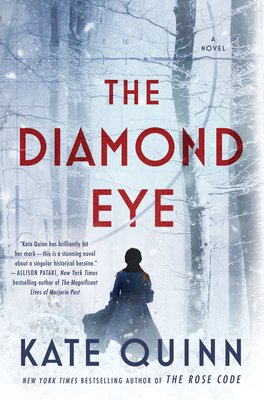
Recommended Novels: ‘The Diamond Eye’ by Kate Quinn; ‘The Maid’ by Nita Prose; ‘Wrong Place Wrong Time’ by Gillian McAllister

Share this:

  • Share on X (Opens in new window) X
  • Share on Facebook (Opens in new window) Facebook
  • Email a link to a friend (Opens in new window) Email
  • Print (Opens in new window) Print
  • Share on LinkedIn (Opens in new window) LinkedIn
  • Share on Reddit (Opens in new window) Reddit
  • Share on Tumblr (Opens in new window) Tumblr
  • Share on Pinterest (Opens in new window) Pinterest
Like Loading...

Subscribe

  • Entries (RSS)
  • Comments (RSS)

Archives

  • May 2026
  • May 2025
  • April 2025
  • November 2024
  • October 2024
  • September 2024
  • May 2023
  • April 2023
  • January 2023
  • November 2022
  • April 2022
  • March 2022
  • February 2022
  • November 2021
  • October 2021
  • March 2021
  • September 2020
  • June 2020
  • May 2020
  • April 2020
  • March 2020
  • February 2020
  • January 2020
  • November 2019
  • April 2019
  • March 2019
  • December 2017
  • November 2017
  • October 2017
  • September 2017
  • August 2017
  • July 2017
  • June 2017
  • May 2017
  • March 2017
  • February 2017
  • January 2017
  • October 2016
  • September 2016
  • June 2016
  • May 2016
  • April 2016
  • March 2016
  • February 2016
  • January 2016
  • December 2015
  • November 2015
  • October 2015

Categories

  • Children
  • Education
  • Fashion
  • Food
  • Health
  • Humour
  • Life
  • Uncategorized

Meta

  • Create account
  • Log in

Blog at WordPress.com.

  • Subscribe Subscribed
    • CyberBright
    • Join 64 other subscribers
    • Already have a WordPress.com account? Log in now.
    • CyberBright
    • Subscribe Subscribed
    • Sign up
    • Log in
    • Report this content
    • View site in Reader
    • Manage subscriptions
    • Collapse this bar

Loading Comments...

    %d