~ Navigate Cyber Space in a Smart Way. Stay Sharp. Be CyberBright. Cyber Safety is a Human Right. You'll also find my ServeYouWrite blog entries: Health, Adventure, Travel, Humour, Food, Philosophy, Books & More!
“Your child does NOT have the right to be fed, clothed, housed and educated, nor does your child have the right to safety,” said no-one!
What if parents agreed with this notion, however? You would be appalled, correct?
How many of you parents make it your business to keep your child safe online at all times? How many of you have put in parental controls limiting device-use time and setting “downtime” hours on all devices, as well as blocking certain apps or limiting time spent on particular apps? Have you talked to your children about the potential dangers they might face online? Does your child share his or her location with any app or website? Is your child’s phone/device contact list shared with apps such as Instagram or Snapchat? What personal information does your child share on their social media platforms? Does your child share hobbies or the sports played, the school he or she attends, photos of your house, or even where your family is currently on vacation? Have you vetted every single one of their “friends” or followers online? Do you allow your child to play online games with people they have never actually met in person? Does the online game, which your child is playing, facilitate chatting with strangers, text or voice, and have you put the settings to disable this feature? Does your child go on YouTube? Do you know the content of every single video your child has watched or is watching? Does your child ever watch TikTok reels or videos? Are you aware of the content TikTok feeds to your child in the “suggested for you” feed? Have you read RTÉ Prime Time Experiment reveals disturbing content recommended to 13 year old Tik Tok users? Do you check your child’s phone regularly to ensure that he or she is not exposed to any inappropriate content, via any website or app, including communication with people he or she does know? Do you allow your child to take his or her device into a bedroom or private space with the door closed? Do you allow your child to have any device in the bedroom overnight?
If you read the United Nations Convention on the Rights of Children, which contains 54 Articles in total, you will find several Articles that could arguably include a child’s right to cyber safety (online safety). Article 17, in particular, bears the language that puts the onus on us, as the adults, to ensure that the information children get online is not harmful. “Children have the right to get information from the Internet, radio, television, newspapers, books and other sources. Adults should make sure the information they are getting is not harmful. Governments should encourage the media to share information from lots of different sources, in languages that all children can understand.”Convention on the Rights of Children – Child Friendly Version
In Article 34 of the aforementioned, it explicitly insists “The government should protect children from sexual exploitation (being taken advantage of) and sexual abuse, including by people forcing children to have sex for money, or making sexual pictures or films of them.”
Surely children should equally be protected from online sexual exploitation, such as cyber grooming, both by strangers and people they know.
Oh, wait! The Convention on the Rights of Children – Child Friendly Version does technically have a blanket cover for every single form of exploitation, as depicted in Article 38: “Children have the right to be protected from all other kinds of exploitation (being taken advantage of), even if these are not specifically mentioned in this Convention.”
I know that this all sounds incredibly daunting and time consuming. How on earth are we, as parents, expected to monitor our child’s every move online? Don’t you know we have jobs and homes to look after? We have to worry about feeding our families and paying the bills, as well as ensuring that our children do their homework. Simply put, we are not with our children 24 hours a day. This, however, does not exempt us from the obvious responsibility, in all matters, which we have for our children, whose lives are very much entwined with the online world. Thus, we must make every effort to set aside the time to educate ourselves and put parameters in place when it comes to our children’s online presence. Remember if your child has access to the world online, then the world has access to your child. The cyber world is not a game of “let’s play pretend”, but rather, real life on steroids. Within seconds, a message, a post, an image or a video can be shared and go viral, or within minutes your child could be exposed to inappropriate content and exploitation.
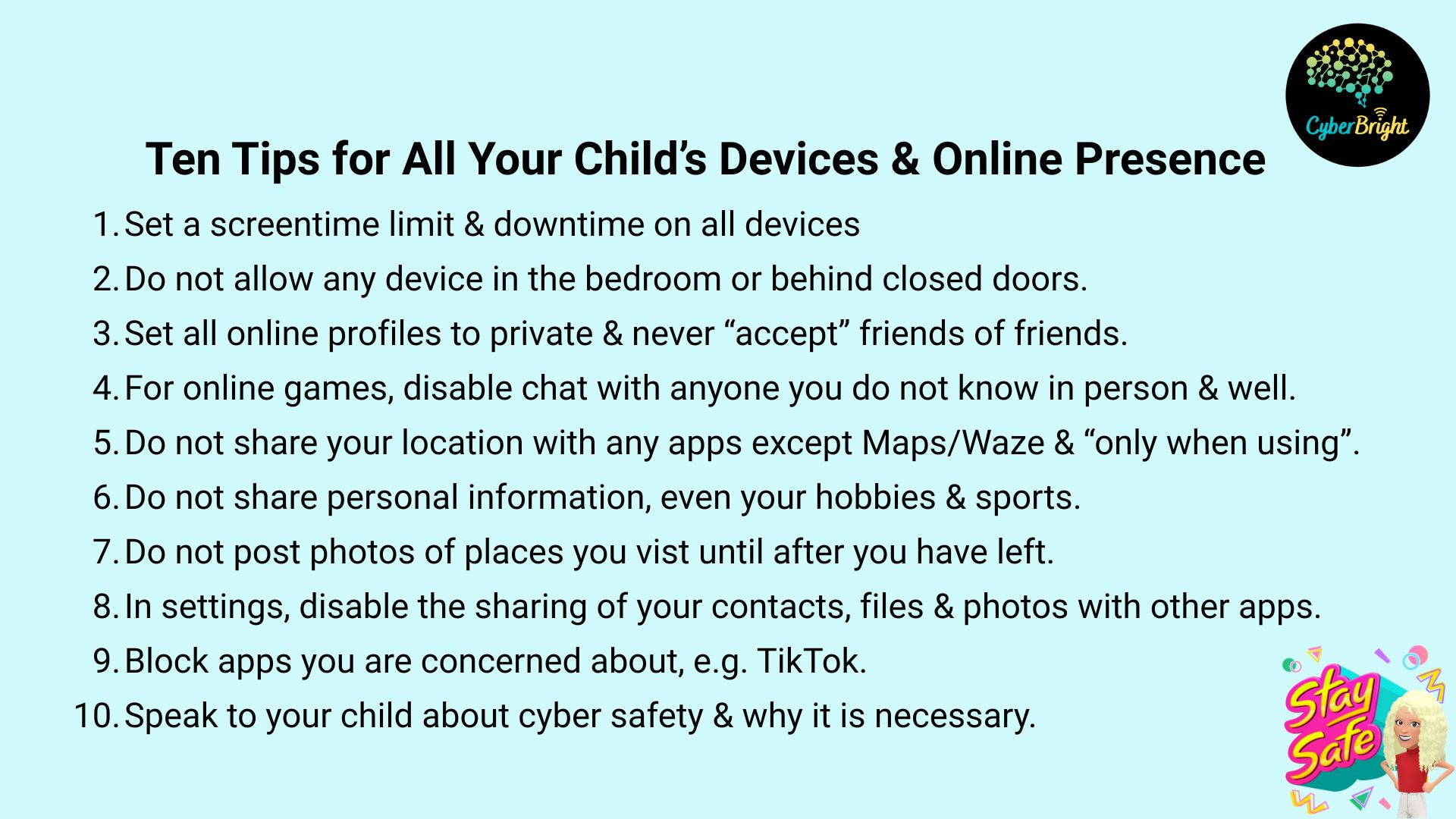
Drawing from my own screen-time rules, which have morphed over the years from allowing certain cartoons on Apple TV or NickJr and Disney movies on DVDs, to safeguarding my children’s current online exposure as best as possible, and of course pulling from my mentors at CyberSafeKids, I do have ten tips to get you started. (see attached)
The truth is, even the rules and parameters that I place on myself have changed, as each day I am still learning more ways to safeguard myself, my family and my friends. And while it is imperative for me to protect my own children, there is an overwhelming need for all children to be protected online. For those of us who can be a part of this, we must do so. For this to be effective in every way, all adults need to learn about cyber safety. If we want children to buy into the idea that cyber safety is essential, adults have to buy into the same. In order for all adults to get on board, clear and stringent cyber safety laws should be put in place here in Jamaica. While there is a supposed to be a National Child Online Protection Committee, I do feel very strongly that there should be a specific “Child’s Right to Online Safety” Act. That said, for this to be executed and enforced, cyber safety awareness must be simultaneously brought to all Jamaicans through our education system and through media in a collaborative effort. So, a big shout out and my gratitude to Sunrise CVMTV for beginning to get on board with me at CyberBright.
Too often we easily share our personal information online – the sports in which we participate, the football clubs we support, our hobbies, our trips, our dreams and even information about our children. We might not explicitly write what any of these are, but by posting photos, we are revealing so much about our lives. Even if our social media accounts, like Instagram, are set to private, any number of our friends or followers could screenshot a photo and share with whomever they please. If you have 500 followers, all 500 of them could potentially screenshot and share your photos. But the truth is, it only takes one follower to do this and then it’s out of even their control. Who is to say with whom they will share and with whom the next person will share, and so on?!
Can you imagine if you printed out each of your photos you have ever posted on Instagram, as a post or a story, 500 times and handed each photo to 500 people Down Town, or anywhere for that matter! These 500 people would think you were very strange for doing this and, frankly, the whole exercise would seem rather creepy. It would also be highly unlikely for any of these 500 people to make copies of your photos and hand them out to others. So, why are we comfortable sharing the same photos with the 500 followers online? Please take note: Online life is real life on steroids.
Let’s now look at location sharing.
Apps and websites often ask us, in the form of a pop-up box, if we would like to share our location. It happens so fast that it is very easy to “allow”, especially as we may be focusing our attention on what we want or need from the app or website itself, thus not reading the pop-up box properly and clicking on it just to eliminate it from our screen. You know it happens! In fact, some people think that sharing location is harmless and may have benefits.
Teenagers are especially prone to easily sharing their location. Take Snapchat, for example, which has Snap Map. “Snap Map lets you discover fun places, see what your friends are up to, and view Snaps from the community.” https://help.snapchat.com/hc/en-us/sections/5689786363284-Snap-Map If you choose to share your location, this information is also revealed about you to all your “friends” on Snapchat. Once again, your “friends” can screenshot your location and share with whomever they choose. Moreover, you may not actually know all your “friends”. It is quite common for teenagers to allow “friends” of “friends” to follow them. It is also quite common for none of them to know who indeed some of these “friends” of “friends” are, no matter how far back they might try to trace them. In reality, these “friends” of “friends” are in fact strangers, potentially predators.
Your teenager is out with his or her friends at the movies, followed by dinner in the food court, let’s say. Everyone, except your teen, wants to go to the ATM and your child agrees to watch their backpacks while they go for cash. Minutes later, someone comes up to your child and introduces himself as “Michael”, explaining that he is a friend of some of the close friends in the group. He says he was supposed to meet them for dinner after the movies, he names the friends, he indicates where they all go to school and live, what mode of transport they take, where each friends went yesterday, last weekend, and so much detailed information about their movements over the last few months, or even year, that your child has enough proof that Michael is legitimately a close friend of some of the friend group. Michael gets a phone call, then tells your teen that one of the friends, Peter, at the ATM, is asking them to bring their bags up to the carpark. Off your teenager goes to the carpark, with Michael and all the bags, to meet Peter and the others. They get to the carpark, “Michael” has a gang waiting for your child, from whom they and Michael steal all the bags, along with your child’s phone and wallet. Predators will go to great lengths to learn yours and your friends’ patterns online. Snap Map facilitates this predatory behaviour.
The truth is, it is not a necessity to share your location online. Now, you may need it when using Google Maps or Waze, but ensure that in your phone settings you select “only while using”, then properly scroll out of said app as soon as you have finished using it. You may even have an app like Life360 with your immediate family, but make sure you are only sharing your location with said immediate family. Otherwise, why do you need to share your location? You do not. Stay Sharp. #BeCyberBright
Imagine your 12 year old daughter committing suicide because she had been sexually abused and blackmailed by a man who had catfished her, originally pretending he was a girl her age named ‘Sarah’. This is what happened in 2018 to 12 year old American, Cimarron Thomas, who lived with her parents and siblings.
“Using a fake persona, (Alexander) McCartney contacted her (Cimarron Thomas) online, complimented her on her appearance, and began grooming her before she sent him an intimate photo. The court heard that during the first abusive interaction, he kept her online for an hour and 45 minutes, demanding sexual and degrading images. He told her if she didn’t send him more photos, he’d publish the ones he already had on the internet. Cimarron went back to school and did not tell anyone about the abuse. McCartney continued to pursue Cimarron and contacted her four days later using another fake account, saying: “I want to play one more time.” Despite pleading for McCartney to stop and being visibly upset, he told her to “dry your eyes” and involve her younger sister, aged nine, in a sex act. Cimarron refused and said she would rather kill herself. McCartney then put up a countdown clock, telling her “goodbye and good luck”. Three minutes later, Cimarron was found by her nine-year-old sister, who entered the room after she thought she heard a balloon pop. She had shot herself in the head with the family’s legally-held firearm. Cimarron was taken to hospital where she was pronounced dead. Her family had no idea why she had taken her life and were unaware of the ordeal she had been subjected to. Her mother, Stephanie, told investigators that she might have been unsure of her sexuality. Eighteen months later, Cimarron’s father then took his own life. However, years later, the truth behind what had happened to Cimarron emerged.” https://www.bbc.com/news/articles/cm2yj24xge1o
Thanks to the bravery of a 13 year old girl from Scotland, who spoke up after being catfished by the same university student, Alexander McCartney, authorities were able to capture, arrest, convict and jail him for at least 20 years.
“Alexander McCartney from Northern Ireland pretended to be a teenage girl to befriend, then abuse and blackmail children around the world, often sharing images with other paedophiles. Some of the children were as young as four. Some had never told anyone what they had been through – until police knocked on their door. McCartney gradually admitted 185 charges including manslaughter after a 12-year-old girl he was abusing took her own life.” https://www.bbc.com/news/articles/crejr8grr01o
As if the thought is too much to stomach, and I apologise to anyone who may be triggered by these harrowing facts, I believe it is imperative that all parents read about and pay attention to the horrors happening across the world and understand that our children are not necessarily safe in their bedrooms on their devices – phones, laptops, iPads and any other electronic tablets/devices that can be connected to the internet.
“McCartney’s crimes occurred between 2014 and 2019, when he’s believed by police to have targeted about 3,500 victims, mostly via Snapchat, all over the world, including in Australia, New Zealand and the U.S., according to the Press Association. The case against him in the Belfast Crown Court focused on 70 child victims, including (Cimarron) Thomas.” https://www.cbsnews.com/news/catfishing-alexander-maccartney-sentenced-us-girl-cimarron-thomas-suicide/
Young girls are not the only demographic at risk – our boys are being targeted as well, notably through ‘sextortion’ by online criminals pretending to be pretty young girls attracted to them. Three particular cases, which have been in the media in the USA, come to mind. These involve 15 year old Braden Markus, who died by suicide in 2021 within 30 minutes of being ‘sextorted’ online, and James Woods and Jordon DeMay, both 17 years olds when they each committed suicide in 2022, also after being ‘sextorted’.
The truth is, even people whom our children and we know can become predators in the form of scamming or sexual grooming. That said, there are many wonderful and fun aspects of the internet that have become daily common-use and necessary for work, learning, socialising and gaming for adults and children alike.
Most people do not realise the real dangers of privacy invasion and scams, which can lead to compromising your WhatsApp messages, the contacts stored in your phone, your personal and business files, your bank account information, and even access to your online shopping sites such as Amazon and other apps where money is at stake. Moreover, the risks posed by believing and further spreading fake news, as well as inappropriate content exposure, sexual grooming, sexual harassment and other acts of cyberbullying can affect all ages, including adults. Many children, especially teenagers, have little to no cyber-supervision and the adults in children’s lives don’t fully understand the extent to which they could fall prey because they, the adults, are also victims of online manipulation and abuse.
Moreover, we can pay a high price when it comes to our digital footprint, as every time we post anything online, it becomes part of our digital footprint. Everything we do online stays online forever. If we delete it, someone could have screenshot and saved it already. Every “like”, comment, search, video watched, music listened to, and so on, all leave a digital footprint. What we do online today can affect our current positions at work and any job applications in the future. Our digital footprint must be a positive one.
Children must especially take note as schools, colleges and universities all look for social media presence of their applicants. Your past can come back to haunt you, so unless would not have a problem if something you have posted/commented on/done online were to be published on the front page of the newspaper, do not do it. Not to say you’d want what you share/post to be published in the paper, but you must be okay with it if it is. Like I tell the teenagers and young children to whom I give cyber safety workshops, “The online world is the real world on steroids.”
Which leads me to the cyber safety workshops themselves. In 2020, soon after the Covid pandemic began, I was trained as a trainer in Cyber safety by CyberSafe Ireland, now called CyberSafe Kids, https://www.cybersafekids.ie/, after which I designed an interactive Cyber Safety programme to help students, their teachers and their parents. I launched my online Cyber Safety workshops in April 2021 and by October 2021, I had reached 1400 students, teachers and parents from rural community schools in Westmoreland, Hanover and St. Mary in Jamaica.
After a long hiatus doing other projects, I saw that the need for literacy in social media and online use in general was rising exponentially, so I relaunched my cyber safety programme under the name CyberBright. In May 2024, I brought my workshops to 700 students in 21 class groups at Campion College and in February/March 2025, I taught another 550 students in 19 class groups at Campion. In September 2024, I also gave a workshop to students of Ph.D. Clinical Psychologist Dr. Tracey-Ann Coley doing their Masters in Psychology at University of the West Indies, so they might be able to use the knowledge about the online social risks to which children are exposed in order to help them.
My Ikigai (my purpose) is to bring Cyber Safety to everyone in Jamaica. While I think that it is a necessity to have Cyber Safety in the core of the curriculum within primary and secondary schools, I do understand this is a task which I cannot tackle alone. The efforts must be collective, beginning with the Ministry of Education and tertiary institutions, which would need to provide training for the teachers/trainers. In the meantime, I believe media is the best way to get this message out to the public: It is imperative for children and adults to learn how to navigate the cyber space in a safe and smart way. We need to stay Sharp and be CyberBright.
Please contact me at emmasharptv@gmail.com if you have any questions about cyber safety, would like me to conduct cyber safety workshops for you or are interested in collaborating to help all Jamaicans become socially cyber safe.
Beginning with a brief, but succinct, back story, the girl Millie-Jean Black leads us from Kingston, Jamaica to London, England, and then, as an adult, back to her childhood home, where haunting memories still reside. This part of Millie’s story plays out in the first few minutes and I was hooked. I had only come downstairs to record the first episode for later viewing, but I couldn’t move from my spot on the sofa.
Millie’s beloved brother, Orville, who suffered horrendous abuse at the tongue and hands of their mother, was presumed dead. In fact, it was his abuser who told Millie as much. However, when she sees her brother’s signature on their mother’s death certificate, she returns to Jamaica to work as a detective in the Jamaica Police Force. Searching for her brother, Millie realises he is indeed no longer, as Orville now goes by the name Hibiscus.
Marlon James, the ingenious creator and writer of this limited series, does not seem to concern himself with the possible backlash he may receive from the general population of the island, which is steeped in prejudice against the LGBTQ+ community. There is no time for bigoted homophobes to brace themselves, as James not only gives Millie a detective partner who is a gay man living with his life partner, but also throws his audience right into the underbelly of the transgender community, whose only refuge lies in the gullies of Kingston.
James’ storytelling is raw and real, astoundingly brilliant and depicts a truth about Jamaica that few islanders would be willing to disclose to foreigners. After all, isn’t our beautiful country a sought after tourist destination?
I did a little digging after watching this first episode. Transgender girls and women are literally thrown out of their homes by their own families. They have nowhere to go because no one will take them in and they have little to no money, as no place of work wants them either. The threat of violence against them is much more than a threat, rather a reality that often leads to brutal killings inflicted by homophobic males, who never suffer any consequences for their actions. The government and opposition have no interest in creating a safe space for anyone within the transgender community, hence why they live in the ditches of the city.
Truth be told, I could keep writing about this show and the social issues it highlights all day long, yet only one episode has aired thus far! However, I don’t want to give away too much about the story’s plot, which is multifaceted, startling and brutally authentic. Get Millie Black is a conversation maker, a glass ceiling breaker and a necessity in our society.
Thank you, Marlon James, for bringing this all to light.
In the last few months, two people to whom I am very close have been diagnosed with breast cancer – one HER2 (Human Epidural Growth Factor Receptor 2) positive and the other ER (Oestrogen Receptor) positive. Both recently began their roads to recovery within weeks of each other, both in different countries, neither one knows the other, together they straddle fifty years old. These are not the only two women with whom I am friends to have received this dreaded diagnosis. Just over ten years ago, another dear friend had a double mastectomy, chemotherapy and radiation treatments. She was in her early forties and now thrives as a survivor. That said, it’s been a very rocky road – and I don’t mean the ice cream, but maybe I should take her some! Another sweet friend of mine got her news during the pandemic and she is still on her arduous journey. Then there are the women whose jobs literally involve fitness and health – two of them whom I know were diagnosed last year. Oh, and what about three of my mum’s best friends who have had it – sadly, only two survived. And let’s not forget the men – rare as it is, men DO get breast cancer. I personally know of three.
Each one of these aforementioned people knows others with breast cancer and I have not included the people I have heard about through others, nor have I included the strangers whom I interviewed for an article about breast cancer, which I wrote several years ago.
Do we see a pattern here, folks? The anecdotal pattern: there are a trailer load of ladies who have breast cancer and the risk factors are being a woman and growing older! The good news is that most breast cancers are treatable, especially if detected early.
Statistics coming out of the United Kingdom predict 1 in 7 women will get breast cancer in their lifetime, while in Jamaica it’s 1 in 21 women. However, in the UK the NHS (National Health Service) automatically sends women letters with a set date for a mammogram, and further breast screening if deemed necessary, when they turn 50 years old. And, by the way, the NHS is free for UK residents. We don’t have this type of vigilance in Jamaica. Are there simply many women who are never screened? Which begs the question: are our statistics accurate? Should our government be doing all it can to ensure that more women get screened, and earlier than they currently do? In the USA, 1 in 8 women will be diagnosed with breast cancer and the recommendation is for women 40 years to 74 years old be screened at least every two years, in some cases every year, and starting younger if they are at a higher risk.
There is also a lot of talk about whether your breasts are dense or not and how this relates to screening. It is harder to detect breast cancer with a mammogram if one’s breasts are dense, so an ultrasound is also advisable. And, by the way, breast density has nothing to do with the size or firmness of your breast, rather how much fibrous and glandular tissue is in them. So, my fellow itty bitty, not so firmy, ladies, please don’t assume you are safe because you don’t “feel” anything out of the ordinary. Please, all ladies, get screened for breast cancer.
Have you ever listened to a story being told by a reader who has a monotone voice? When you are reading a book, how does the story “sound” in your head? Do you even enjoy reading, or do you find it boring or “difficult”. Is it only the writing that gives life to a story, or does our imagination play a part?
In writing, a useful adage to go by is “Show, don’t tell.” When actors go on stage, or they are being filmed, the same applies. They use their bodies – how they hold themselves, how they walk, their facial expressions, the movements of their limbs and even a tilt of the head, to show the story they are telling. They also use the varying intonations and volumes of their voices, so the audience can understand the real meaning of the words they are saying. True, each member of an audience interprets what is presented to her or him in a way unique to herself or himself, but there is likely a common idea of what the story is about, even if little nuances and meanings vary from person to person. The actors “show” rather than “tell” the audience the story. If an actor is able to do this successfully, she or he has done a great job.
When we read books to small children, we are more likely to grasp their attention if we recite with varying expressions – different voices, volumes and beats. To be honest, the same goes if we are reading something aloud to adults. They will be far more inclined to stop what they are doing and listen, if we intonate, accentuate and enunciate with a fluctuating voice.
So what happens when we read books to ourselves? Some people say they “hate” reading and would rather watch the movie of the book or an adaptation made into a series. Why is this? Is it because the screenwriters, producers, directors and actors of these do a better job at “showing” the audience the story than an author of the book from which the film or show was adapted? I don’t think this is the case, as most people, who read the book and watch the film or show, say, “The book is much better.” So why are there many who simply do not like reading? Let’s not include those who find reading difficult in real terms – in other words, people with dyslexia or anything similar. There are a lot of other people who are able to read easily, but simply do not enjoy it. Why is this? How can one help them to change their views about reading? How can reading be made more interesting to people who generally don’t enjoy it?
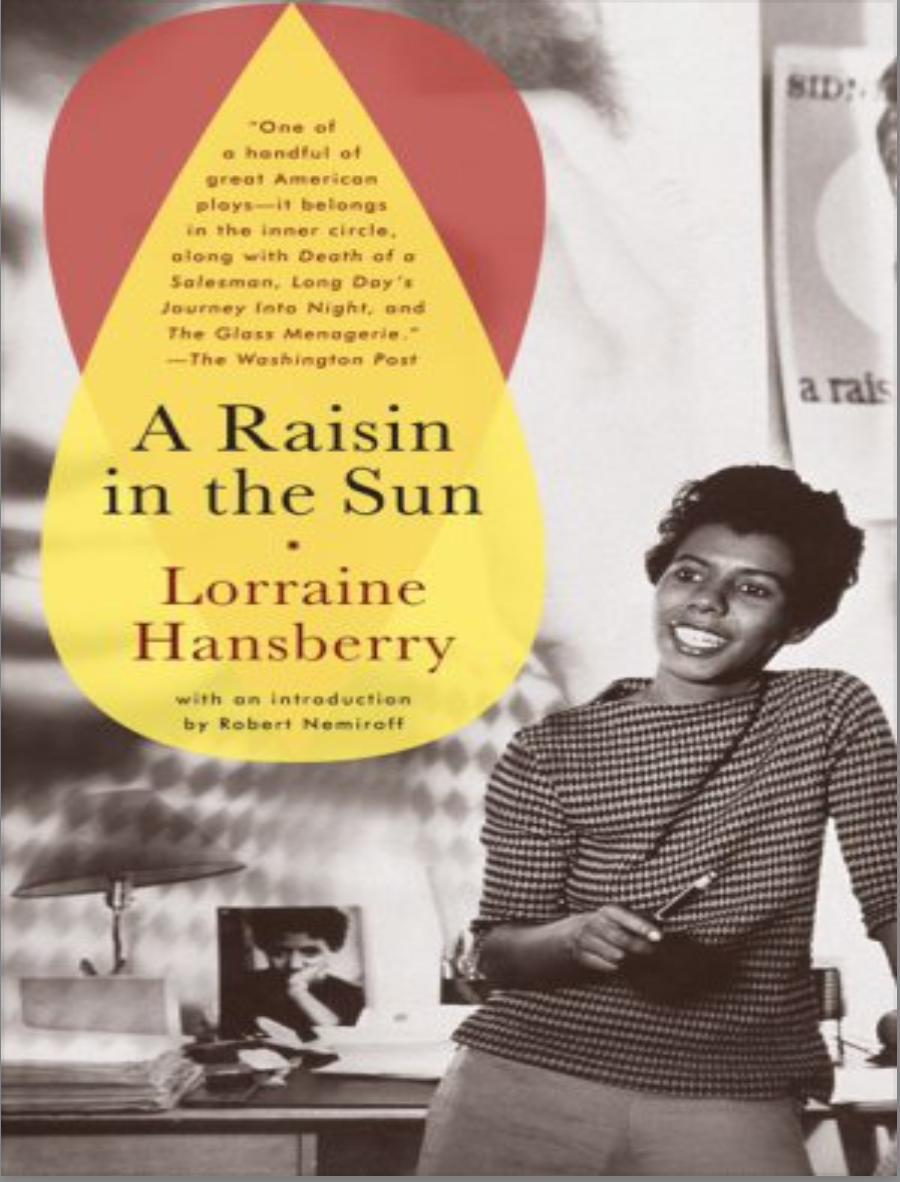
If you’ve read the blog I wrote yesterday, you’ll know that I have rekindled a hobby that I had in my teens – acting. I attend an acting class once a week and in the first class we focused on “show, don’t tell.” This led us to reading lines from two great plays (‘A Raisin in the Sun’ by Lorraine Hansberry and ‘Tale of the Bellywoman’ by Jonathan McLaughlin). What I noticed was it was much easier to follow the storyline of what we were all reading when we fluctuated our voices (see aforementioned). Of course, when we then had to act while reading, the stories came to life even more. At the end of the class, we were sent the full scripts of these plays, both of which I have now read.
Truth be told, if you read a play in your head in a monotone “voice”, it is going to be quite boring. So, do you know how I brought these plays to life? I gave each character an actual voice, an accent, in my head, and I read the lines with those voices/accents in my head. Each of the two scripts instantly came to life for me. I also made sure to read the stage direction notes that are included in the script, because this helps to stir up one’s imagination. When an author writes a book, she or he includes descriptions of the people, scenery, weather, noises, and so on, in her or his story – setting the “scene”, so to speak. Some authors use more description than others, some use more dialogue than others.
Whatever we are reading, I think it helps to picture the characters, imagine who they are and how they sound and even read the words in the accents or voices we imagine the characters to have. I believe that if we all approach reading this way, we could all enjoy books. Some books are long and often this may put someone off because she or he doesn’t have the time to read. Play scripts are much shorter than novels and non-fiction books in general, ergo play scripts are quicker to read. There are countless scripts, which tell incredible stories with so much depth, ones that carry valuable humour, heart and life lessons, yet we are not reading them. Why is this the case? Is it because we think they are only for the actors? Why can’t play scripts be read by us all? They can be.
Recommended Play Scripts: ‘A Raisin in the Sun’ by Lorraine Hansbury; ‘Sweat’ by Lynn Nottage.
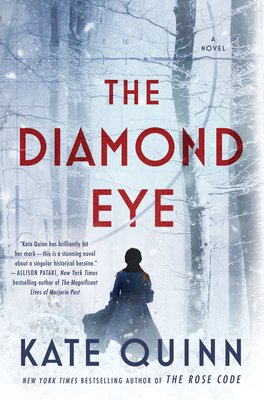
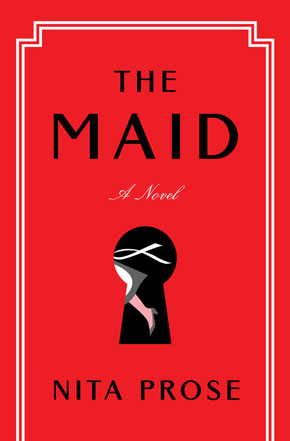
Recommended Novels: ‘The Diamond Eye’ by Kate Quinn; ‘The Maid’ by Nita Prose; ‘Wrong Place Wrong Time’ by Gillian McAllister
I have had writer’s block for over a year. I just didn’t know what to write, nor could I figure out where to start when ideas did come to me, let alone which idea to follow.
I spent 4 months in the hospital last year, but for the last 21 months, since COVID kicked my Scleroderma and Behçet’s Disease up several notches, I have really not been well. Sure, I have had days of great energy, driven by my natural adrenalin and my personality, which can override days of bad health. However, my body has been uncomfortable all the time. It still is. It has become my norm, but it can be all-consuming. So, needless to say, my illnesses take up a lot of time – taking medications at the correct hour each day; monitoring what my GI tract is doing at every moment so I know which days I have to take those medications; moving through the pain every morning I get up until I get used to it and no longer feel it so badly; figuring out if I can get to sleep at night without pain pills (I save them for truly special pain!); respecting when my body simply cannot go on without me taking a rest in the afternoon or getting into bed by six in the evening; nourishing my body with enough food so that I can function while being careful not to eat something that is going to make my GI tract go bonkers; and so on. No wonder I have not been able to write!
Now, it’s not like I have been unmotivated in other areas – quite the opposite actually. I am active when it comes to helping with fundraisers and projects at my children’s school and I teach cyber safety to the students, so that’s taken up some of my time, but I am a doer and a thinker and a writer, and I need all those cups to be overflowing for me to feel fulfilled. The writing is fundamental to who I am.
I needed something to generate my creative juices. I read a lot, but this has still not been motivating me to write. I started to do some research online a couple months ago – looking perhaps for a writing course to do, but the truth is, I don’t need other people around me to motivate me to write. What I need is something to stimulate me to write. I go to therapy once a week – I am all talked out of my emotions, so I don’t really want to write about them as well. Anyway, I came across an acting class at Edna Manley College’s School of Continuing Education and Allied Programmes. Instinctively I felt this was the right course for me to do.
I did drama as a hobby at school, taking Speech & Drama exams all the way up to Guildhall Grade 8 Level, scoring distinctions in all. I enjoyed playing lead parts in Frederico Garcia Lorca’s ‘Bodas de Sangre’ and Noel Coward’s ‘Private Lives’, and smaller parts playing a horse in Peter Shaffer’s ‘Equus’ and other school productions. I then went on to take a course at the Central School of Speech and Drama while I was completing my Bachelor’s at LSE. I never pursued my mini passion for acting beyond this because it was not something I dreamed of doing as a career. When I was a little girl, I did want to be an actress, but when I announced this to my parents, my dad told me it was a hard life and he asked me who did I think would look after me. To which my youngest brother, who is two years my senior, replied, “I will look after you, Ems.” What a sweetie, right! Alas, other passions took over and I pursued those.
Coming back to the present day, my first acting class at Edna Manley College took place last Wednesday evening. Well, that was all it took for me to overcome my block and here I am, after more than a year since writing my last blog – I have blocked writer’s block.





 CyberBright