Don’t Comment on What She Eats; Ask about Her Journey…

Why don’t you just eat more? If someone had given me a dollar for every time I’ve been asked this, I’d be a rich woman. Okay, maybe not quite, the Jamaican dollar is hardly worth much, but you catch my drift, yes?

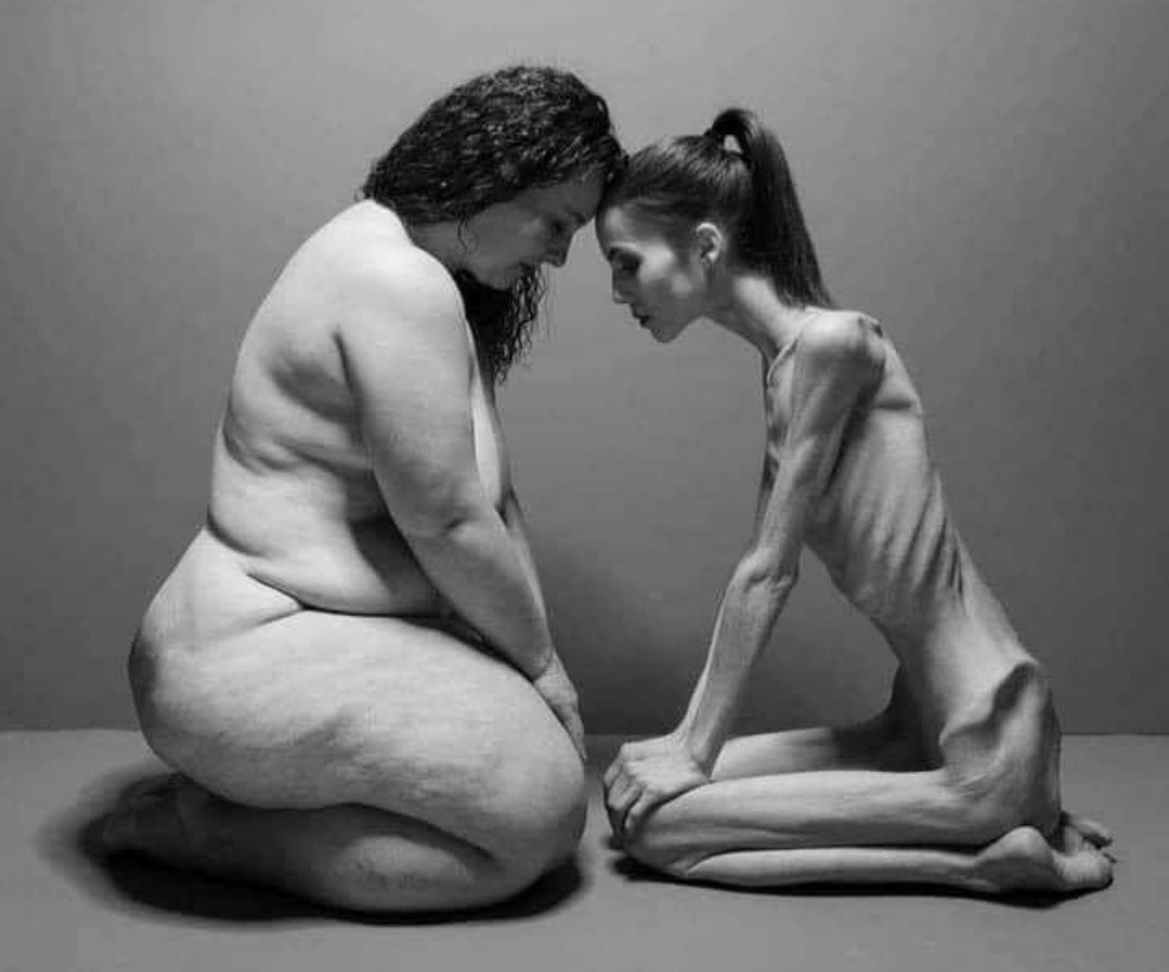
The photo attached caught my eye this weekend and I thought it quite uncanny because of what’s been on my mind over the last few weeks. I’d love to know what your initial thoughts and feelings were when you first looked at this picture, and I’d equally love to know if these thoughts and feelings changed over a period of time pondering said picture. I don’t even want to put any ideas in your head, but rather hear exactly what came to YOUR mind without anyone else’s suggestions.

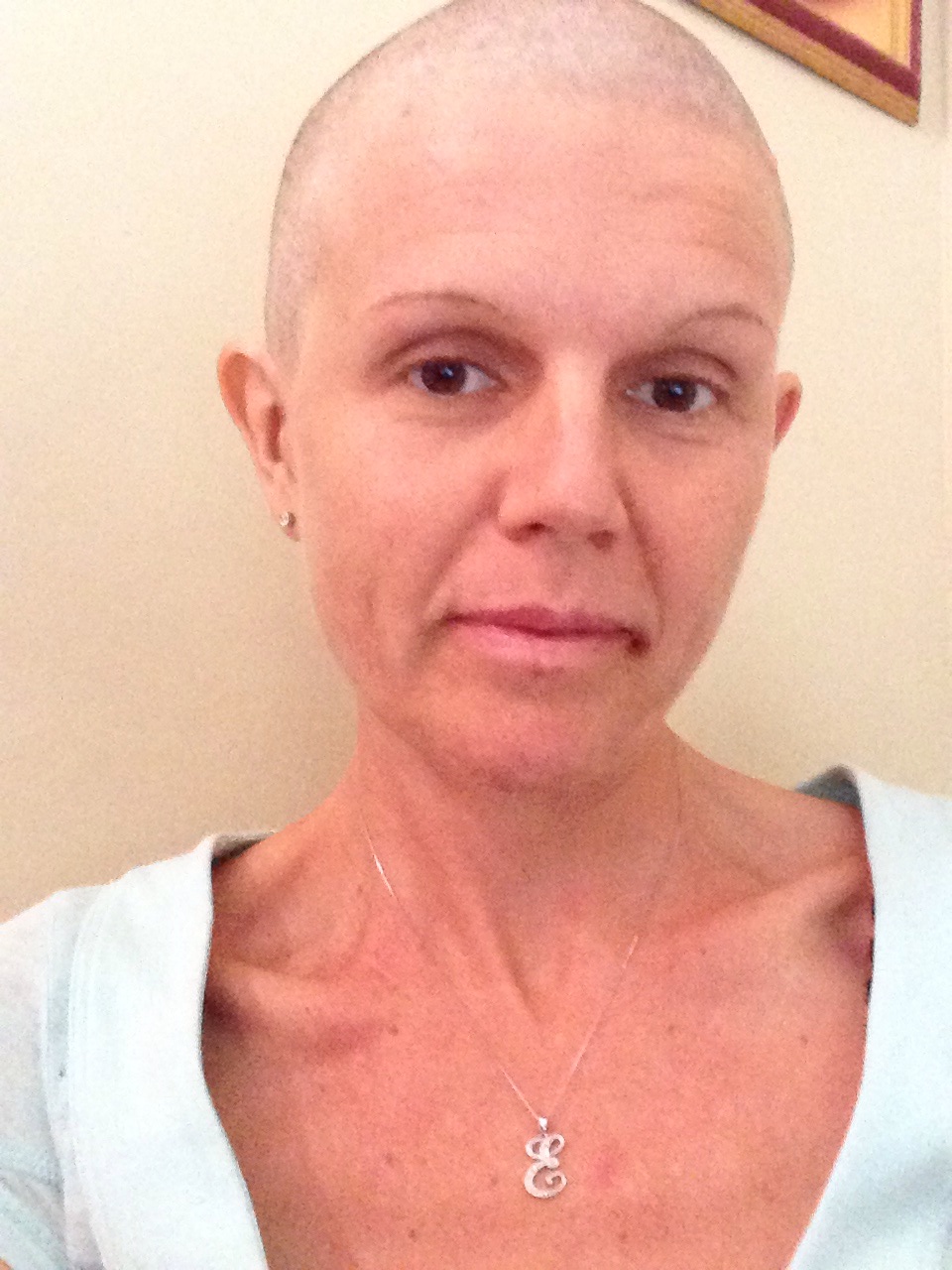
As many of you may know, I have been extremely sick for two and half months, losing weight by the day without realising just how much I was losing. In hospital, there was only a mirror above the bathroom sink, so I couldn’t really get a grasp of how skinny I had become. Sure, I knew that I had lost weight, but I was not prepared for what I saw in the full length mirror when I came out of hospital. I could barely look at my reflection, cringing with agony at what was staring back at me. I hardly had much of a bottom to being with, but what had become of my body was not something I could psychologically stand. How disappointing it was to fully understand that my physical self had let me down. The impact of my illness resonated deeper than before; what it had done not only to me but also to my children, the rest of family and my friends. I was now seeing what they had been witnessing through recent weeks. What a horror show!

Indeed, some understood why I had physically become this way, but what of others who did not know why? What would they think? I literally looked deathly anorexic. The only difference between my state and the definition of anorexia was the fact that I did not want to be this thin. At 112lbs two months prior, I was skinny enough as it was! Now I had lost more than 15% of my body weight and my BMI was 14.6. All I can say is thank goodness for Osmolite, which is therapeutic nutrition that provides balanced nutrition for patients with increased protein requirements. I would have been in a far worse position without it. However, the real difference began as treatments began to work and I could add solids to the all liquid diet of smoothies, soups, yogurt, juices and kombucha. I am stronger, feeling better overall and the weight is piling back on. Okay, maybe not “piling”, but there are considerably less creases in my skin where my backside is supposed to be!

Now I’ve painted a not so pretty picture of what I have been looking like, let’s get your attention back to the photo attached. Too large, too small? What would you think if both women were eating a bag of Cheetos? What if both were eating a plate of cucumbers? Where would your thoughts go then? What if the larger lady was chowing on the Cheetos and the little lady was guzzling down the cucumbers? And vice versa? We all have preconceptions of what we think would be the better scenario for the situation we believe we know. Now bring an eight fluid ounce bowl of broth to the story, along with a serving of the same size of oatmeal porridge with flax seeds and blueberries. Which do you pass to whom? What if I told you that both were suffering from constipation: one of them is generally healthy, with no known disease; the other has severe gut dysmotility, caused by a rare autoimmune disease, would you know who was to get which bowl of food? Are your preconceived notions influencing your choices?

The truth is, we don’t actually know what either of these women’s stories are (well maybe some of you do), and there are unquantifiable variations, but we do tend to take our limited experiences and use these to tell grossly inaccurate narratives. As I look at this image, my personal experiences are certainly influencing my thoughts, moreover they are giving me pause and reflection, making me rethink and wish that I could ask each of these women what her journey has been.
All That Remains in Death… or in Life

Many believe that there is life after you die. I do not. When I die, the only thing that will remain is my broken down body, which will continue to break down as it decomposes or gets cremated. I know this will upset and madden many of you, but please understand that while I do respect your beliefs, truly, I would like you to accept mine.

I cannot wrap my head around the idea that my body will just waste away and no longer be, but I simply do not believe I have a spirit that can live on beyond the death of my body. It’s a problem, of course, because I have a fear of death: https://serveyouwrite.wordpress.com/2022/11/23/fear-of-death/ (a piece I wrote in November last year), or rather, I used to.

Since sharing my fears, I have discovered a new lease on death. My mum gave me a book “All That Remains: A Life in Death” by Professor Dame Sue Black, a Professor of Anatomy and Forensic Anthropology. This story is a memoir of her career, scientifically based, but also tied with her own personal contemplations about death. While Black has held positions at several universities within the United Kingdom, namely St. Thomas’ Hospital, University of Dundee, Lancaster University and, more recently, St. John’s College, Oxford, her work as a forensic scientist has taken her globally to war zones in Kosovo and to the Indian Ocean Tsunami aftermath in Thailand. I would highly recommend you read Sue Black’s book. It has changed my views on death and I no longer fear death per se.

There are few people with whom I connect on what happens to us after we die. One such person is a very dear friend of mine. She lost her son four years, seven weeks and one day ago. He had a medical emergency and he died. The loss for her and her daughter, his sister, was insurmountable. It still is. The pain only worsens as time passes. No one can remove this pain, because no one can take away the love. For as long as love remains, so too shall the pain, forever.

When you don’t believe in life after death, it can be a curse. You have no hope of ever seeing the person you love again. Those who believe there is more after living on earth, these people have faith that they will meet their loved ones someday, in the wake of their own death. No matter how many people I speak to about this, I just know that there is no such thing as life after death. However, I can wrap my head around my own mortality after reading “All That Remains: A Life in Death”, because I have definitively decided what I would like to happen to my body after I die. You read it here, everyone, and I hope that my wishes are honoured by my family. I would like to donate my body, in its entirety, to the University Hospital of the West Indies Medical School. I would like medical students, doctors, nurses and other medical scientists to respectfully use my body in order to further their medical knowledge and expertise. Once they have finished using my body for medical science purposes only, they may return my remains to my family to do what they wish. This gives me a sense of purpose and a sense of peace, and I truly believe this will do the same for my family.

When people get sick, they often recover. Sometimes they do not, despite the great efforts that can go into saving someone’s life. We are never going to know for sure what will happen, but when we do get sick, we get a semblance of just how delicate and precious life is and how important every aspect of our health is in order for our body to survive illness, or even function as it should. I have been connecting with a young woman who has been sick for 11 months with a rare and aggressive form of cancer. Every blessing that one could wish for from family, friends and a career came to this beautiful lady, likely because what she gave, and clearly still gives, of herself to others and to the earth, the universe has rewarded her. But life is not perfect for anyone, not even for the best of people on the planet. She has been dealt a hand that no human would wish on another, ever. She is amongst many millions of people, even billions, who suffer something, but she tells her story publicly, so we connect with her, what she is going through, what her family and friends are going through, and we choose to take her story and learn a few of our own life lessons. When she first spoke out about her diagnosis, my heart ripped in two for her and her family. Every day, I could not stop thinking about her. I still think about her every single day. We all wish we could help people in these times, find a cure, take away their illness, somehow change the fate of statistics in medical science. But we can’t do that, can we? We just have to be there to lend an ear, a shoulder, a hug, whatever they need from whomever. It has to be on their terms. Their sickness is not about you. It is about them. Just be there to listen.

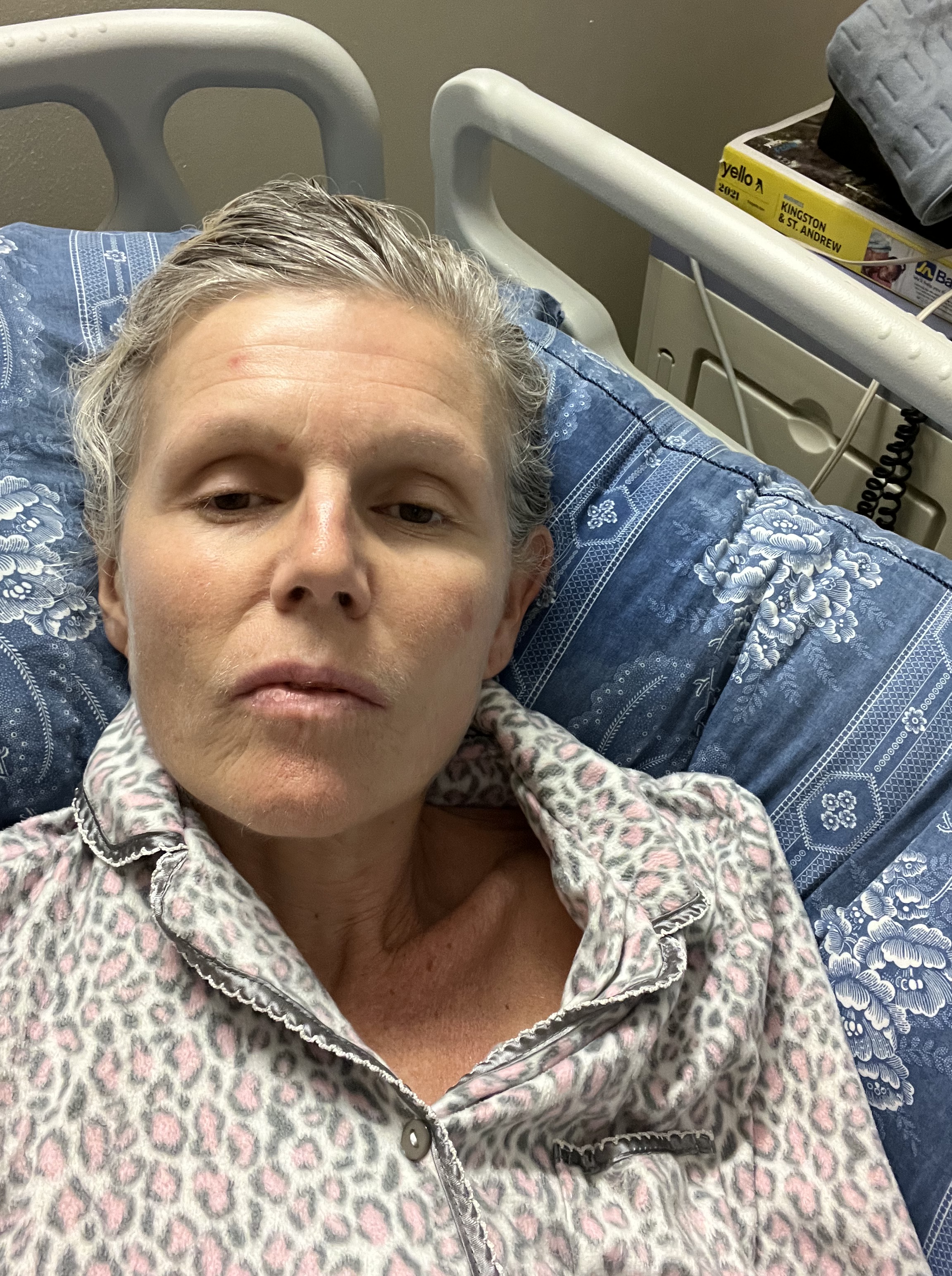
At the moment, I am very sick with my own illness. I have two autoimmune diseases, Behçet’s disease and Scleroderma. While both have been in inflammatory, “flare-up”, mode for a couple months, the latter has brought on my third acute bout of gut dysmotility, which statistically has a mortality rate. According to the CDC “A mortality rate is a measure of the frequency of occurrence of death in a defined population during a specified interval.” However, I am a stubborn brute when it comes to certain things and I am not a statistic. Sure, my body is not completely obeying my mind at the moment, but my mind never gives up and my mind will not let this disease kill me. Not on my watch. My aforementioned friend has surely shown anyone who has been reading her social media posts this lesson. The mind is a powerful tool. Her mind is a powerful tool. It has defied so many acute and emergent medical problems, which she has endured, much more recently in particular, and her mind is not accepting what is happening to the rest of her body. The mind is the brain. The brain is the super organ, in my opinion. In fact, your brain controls everything in your body, so technically it really is the super organ. Even when something goes horribly wrong with parts of your brain, the other parts take over. The brain can literally rewire itself. It is the SUPER ORGAN!

I am not saying that any of this is easy, trust me, it’s not. But having someone whom I admire open up and share what her journey has been like is helping me right now to share my journey and to keep fighting each day. This is not my first rodeo, but it’s been 17, 14, 12 and 9 years, respectively, since I have been in desperately acute stages with my health. Her willingness to share is helping me fight today. Her determination and defiance of medical statistics reiterates the knowledge that I can fight this and solidifies the willpower to use my brain to fight this. There are certain things I cannot change, but there are plausible alternatives, ones which did actually seem impossible for me to wrap my head around even a month ago. When something acute happens with your health, putting your life at risk, you learn to accept the shortfalls about your usual normal-functioning body because you simply want to live. You simply know that the most important thing that must remain right now is your life.

Justice: Jamaicans are in it for the long haul!

Grab several bags of popcorn, sit back and enjoy the show, people, because this is going to take longer than a couple weekends of binge-watching an entire suspense series on Netflix. Even ‘Madoff: The Monster of Wall Street’, a four episode documentary series that was released on Netflix on January 4 this year, could be watched in one night. The SSL scandal, which has hit the pages of traditional and social media alike, will hardly be resolved by next weekend, but Jamaicans are currently riveted and addicted to what is being called one of the largest fraud cases ever to hit our island’s shores.

Of course, we Jamaicans are furious. Not only has the legendary sprinter Usain Bolt, a national treasure, our hero, been massively affected by this fraud, but others have come forward to claim the losses that have jeopardised their livelihoods. It stands to reason that there could be many more clients who have lost funds through shares, bonds, etcetera, which they may have bought over the last decade or so. Those who follow the stock market and make investments do know that there is always a risk of losing some money. However, we can keep abreast of the situation and make choices according to how the financial market is going. Sometimes, we do solicit the service of investment/brokerage/wealth management firms. We place our trust in them because we believe we have done due diligence by doing research, getting recommendations, seeing successes, and so on. No-one with integrity could ever imagine this trust would be discarded like used toilet paper! Yet, here we are. Jamaicans have been gypped.

There have been all kinds of accusations spinning around social media, some of which may well be true, or false, but speculation is not going to help the crime-solvers get to the complete truth. While there are people who would like Bolt to extrapolate on his business, I do feel he is doing the right thing by giving the bare minimum of details. I have to imagine that he is not only getting sound advice from his legal team, but also Bolt is not going to suffer fools lightly. In fact, from the countless comments I have seen on social media, after certain “disclaimer” statements were made in traditional media, Jamaicans are not going to suffer fools lightly either. Nor should they!

What is interesting is why this devastating news only broke two weeks ago. Why didn’t someone else come forward before Bolt? Surely there are other large investors who have lost their retirement funds. If so, did they hold back through fear? Did they turn a blind eye because they didn’t want to defecate in their own backyard, so to speak? Did they keep quiet for the sake of social standing? Perhaps they didn’t understand they’d been fleeced, but thought they’d simply suffered a loss from a poor investment. All food for thought.

Speaking of food, I hope the supermarkets are stocking up on their popcorn supplies, because if we want justice, we are going to have to be in this for the long haul.

For more information about the Madoff scandal and the incompetency of the SEC (Securities and Exchange Commission), read ‘No One Would Listen’ by Harry Markopolous: https://www.goodreads.com/book/show/7740121-no-one-would-listen

For some interesting literature on fraudulent schemes in Jamaica, read Kayyonne Marston’s Dissertation for his Doctorate: ‘In Pursuit of Illicit Goals: Structure, Dynamics, and Collapse of Crime Facilitating Networks in Jamaica’, notably Chapter 7 (Olint/David Smith): http://mars.gmu.edu/bitstream/handle/1920/10608/Marston_gmu_0883E_11239.pdf?sequence=1&isAllowed=y

Mental Health of Primary School Students: Are Jamaica’s Extensive PEP Exams Putting Too Much Pressure On Our Young Children?

By the time our children in Jamaica reach Grade 7 (Form 1), they will be mentally burned out. Of course, there are always exceptions to statements such as this, but I will try and explain why I believe it to be the case for many, if not most.

In the late 1950s, the Common Entrance Examination (CEE) was introduced in Jamaica. Children leaving primary education would take three exams (Mathematics, English Language and Mental Ability) in Grade 6 and, pending their results, they would be placed in a government high school. The exam changed some forty years later to Grade Six Achievement Test (GSAT), whereby Grade 6 students would take five exams (Mathematics, English Language, Science, Social Studies, Communication Skills) and, pending their results, they would be placed in a government high school.

As we Jamaicans know, all schools are not academically equal for a plethora of reasons. Thus, notwithstanding a small number of exceptions, the results of your exams would determine in which high school you were placed from the list of your choices. Due to high competition, very few actually got their first choice or even their second choice, out of the five preferred schools chosen by the individual students and their parents. I knew children scoring 90% in GSAT who believed themselves to be failures because they were placed in their third choice schools. In which other country is an average of 90% deemed a failure? To give some perspective within Jamaica itself, an overall term average of 90% or above in your academic subjects at Campion College awards you a First Class Honours.

The year before the Covid 19 pandemic hit, Primary Exit Profile (PEP) was introduced to the then Grade 6 (graduating class of 2019) and to Grade 5 (who would be graduating in 2020). The former students took a total of seven exams (one Ability Test, two Performance Tasks – Mathematics and Language, four Curriculum Based Tests – Mathematics, Language, Science and Social Studies) and were placed in a school from their seven choices. Some did not even get into one their seven choices! The latter students took four exams (Performance Tasks in Mathematics, Language, Science and Social Studies) and were slated to take seven exams, like the previous Grade 6, in 2020. Alas, all children across Jamaica were sent home on the afternoon of 12th March, 2020 and “homeschool” began on Friday, 13th March, a few weeks after Grade 6 students had taken their Ability Test and before the remaining six exams were given. The then Grade 5 students were also unable to take any of their PEP exams.

For the next two years, the majority of school students in Jamaica remained in “online” school. Meanwhile, the government attempted to keep “business as usual” when it came to these entrance exams for high school. The Grade 4 cohort of 2020-2021 had been slated to be the first Grade 4 class to take two PEP exams (Performance Tasks in Mathematics and Language), but were unable to do so because of the pandemic. So, while immense stress was building for these younger children, the real pressure was presented in the academic year 2021-2022, when Grade 4 students across the nation became the first year who would have to endure a total of 13 PEP exams, taken over three years. Their first two exams were taken at the very end of June 2022. Almost seven months later, there have been no results. Yet these students, who are now in Grade 5, are scheduled to take the next four exams (Performance Tasks in Mathematics, Language, Science and Social Studies) in less than five months. These same students will take another seven exams (aforementioned in the paragraph above) when they are in Grade 6 next year. Like I said, 13 PEP exams within three years, and the competition remains as stiff as it ever was, if not more.

If you are already exhausted from reading this blog, imagine how the children feel. They begin this preparation from nine or ten years old and continue right through to when they turn 12 or 13 years old. Please note that this is all before they have even reached Grade 7 (Form 1)! While there was always pressure on Grade 6 students to ensure they did not mess up any of the three CEE exams, or the five GSAT exams, for 60 years, we have come to a place whereby the stress has been pasted and layered upon our children so thickly, they cannot afford to mess up one single exam out of the total 13 exams that determine the school in which an individual is placed.

Do you know how they come to achieve this? Extra lessons. It is very difficult for all teachers to cover the entire curriculum and to prepare all their students for all these PEP exams within school hours, so what does one do? Extra lessons. Your child may already be at school from eight o’clock in the morning to three o’clock in the afternoon, but now you have to consider extra lessons so that your child can compete at the level expected? You must now find academic tutors, conjure up the funds to pay these tutors, subject your child to more classes after school ends during the week, as well as on weekends, and they must also find time to complete their school-assigned homework, participate in sports/activities, be transported home, eat and get enough sleep! We, as parents, will also expect our children to behave nicely at all times and get the academic results we believe they should be getting. Do you see how unrealistic this is? Yet this is REAL. This is actually happening in my house and I know it is happening in yours.

Do you now understand why I believe the burnout on young students is real? Our media has reported that our government is concerned about the mental health of Jamaicans. To our Prime Minister, our Minister of Education, our Government, the Senate and all other powers who can effect change, I ask these questions in earnest, with no intention of blame (yet!): “Do you believe that it is truly in the best interest of our children and our country to place such young students under so much academic pressure? Do you think that this will truly benefit their futures and the future of our country? Is there a possibility that the current (and extensive) curriculum and rigorous examinations are adversely affecting the mental state of young students and their families? Could you and would you possibly consider an immediate revision in the current curriculum and examination process?”

There are scores of other countries that have a healthier approach to raising and educating their children, Scandinavian countries included, and I am truly wondering if we could just take a serious look at the education systems across the world and find one that would be better suited for our children. I am under no illusion that there is a simple solution, nor do I think this will be an easy task, but I truly believe we are in dire straits here and if we do not change the status quo imminently, then we are in for a multitude of mental health problems, which have probably begun already.

Misogyny: the patriarchal culture

I have been watching “The Morning Show” recently and I am completely drawn in by Reese Witherspoon’s character, Bradley Jackson, who is known as the loud-mouthed “truth-teller” in the series. At the end of the first season, Bradley’s words and actions finally resonate with her co-star Alex Levy, played by Jennifer Aniston. The pair, supported and aided by their co-workers, make a live, on air reveal about the CEO of the network at which they work. Indeed, Fred Micklen has been directly facilitating the insidious sexual misconduct executed by powerful men within the organisation. More details will not be given here, as I believe it’s a show that should be watched by all. Aside from its characterisations, which pull on a plethora of people I am sure we have all come across in our lives, one of the main themes that threads everything together is misogyny.

Recently, a national newspaper here in Jamaica published the headline, “Wasteful Girlz lose 2-1 to Paraguay”. In the headline, the author uses the word “wasteful” as an adjective to describe the proper noun “Girlz” (the Reggae Girlz, the trademarked name for Jamaica’s women’s football team). While the term “wasteful” is often used within sports, it was extraordinarily insulting to many women across Jamaica because it was used as an adjective to describe the women on the team, rather than used to describe the play they made. There were numerous complaints online, including my own post on Instagram and Facebook, which garnered support from women, as well as backlash from men. I described the decision to publish such a headline as an act of misogyny, to which several men objected, thus proving my point that Jamaica is seeped in a culture engulfed with misogyny.

What I found upsetting at first, then interesting, was the fact that men, who have previously spoken up publicly on my posts in support of my advocacy for women against misogyny, were now speaking against my claims that this headline was misogynistic. Not one to shy away from conflict on any human rights issues, I replied to these men’s replies, explaining as much as I could at the time. Often, when one is heated, one can’t quite find the correct words for a conversation that’s essentially a bunch of replies on social media. I did the best I could, but still failed to comprehend how these men couldn’t see in which way the journalist and the newspaper had acted against women’s rights.

The realisation hit me when a man said to me, “I am not being misogynistic. I don’t hate women.”

Misogyny is the hatred or prejudice against women, typically exhibited by men. It is generally accepted that misogyny is a consequence of patriarchy (male-dominated society), and the term may be applied to certain individuals, as well as larger systems, societies, or cultures.” (https://www.britannica.com/topic/misogyny)

There are many people of a certain race who do not hate those of a different race, however, these people may still be prejudice against said different race. There are people who have built-in privilege because of their race and there are people who suffer atrocities because of their race. We must insist that the fight for those who have suffered these atrocities do get the largest platform and do get to call out any and every prejudice (and hatred) against them. Do you know why? Because this is the only way to stop the prejudice (and hatred).

“The Morning Show” does not portray the male characters as hating the female ones, but it does depict, you guessed it, their misogyny. They are prejudice against women and this is a consequence of a patriarchal society. Likewise, the journalist and the Jamaican newspaper that published the aforementioned headline showed their prejudice against women, I am guessing subconsciously, and I am fairly certain this was a consequence of the patriarchal culture in this country.

Fear of Death

“There is nothing to fear but fear itself.” This has been quoted countless times in various forms over the last century. I am sure it was quoted way before as well. I have fear. I am fearful of death. It doesn’t plague me, nor does it consume my every waking hour, but if someone asks me, I would say, “I am afraid of death.” I don’t believe in reincarnation. I don’t believe in an afterlife. When we die, we are no more. Thus, I fear death because someone can go from being alive to simply gone. It doesn’t matter that it is an inevitable fate for each one of us. The fact remains, being gone is devastating.

This blog is not about religion and it’s not about whether or not you believe in a god. I suspect many of you do believe in a god or gods. I respect your beliefs, please respect mine.

I would bet that we would all do anything we could to prevent the death of people whom we love. We would probably sacrifice our own life to save someone else – a child, mother, father, sibling, niece, nephew, other family members and friends. Okay, maybe some people would not, but I truly think most people would. So, now we have established this “fact”, let’s talk about the fear of losing our own life.

Airing one’s health woes on social media generates all kinds of responses. It’s interesting to me that some of those who read these posts have anything negative to say about a person’s choice to do so. I find it admirable when a person, who is ailing, pulls on an inner strength to reveal their disease/illness, describes the nuances of said disease/illness, speaks about their appreciation for certain things and of course airs their fears.

When I see other people post about their health, I am drawn in by their journey. I feel deep empathy and I want to know more so that I can understand what they are going through. I can never truly know what another feels as they go through their own story, none of us can. However, I do have my own benchmark, which does give me some semblance of what they are likely to be going through. That said, I have never been able to tell my entire story in a public forum. It’s not because I don’t want people to know. I don’t really mind people knowing my business when it comes to my health. When someone asks me, I will tell them, but never the whole story. This would take too long, for starters, but I become very detached when I talk about my health and thus I do omit key elements. It’s the only way to avoid getting emotional about it. A few close friends and family get to deal with that side!

I’ve tried to figure out why I get detached and I think it’s linked to my fear of death. If I allow myself to feel, that’s when the fear comes. What if I die while my kids are still young? This would devastate them. What if I die before my parents do? This would devastate them. What if I die before I get to the acceptable old age when one would say, “Well, she lived a very long and happy life, so it was time.”? This would devastate many. I say this without arrogant presumption, but merely knowing that I have a huge support system of friends and family who would be devastated if anyone within their “circles” passed away, particularly at a young age. The truth is death sucks no matter what age it happens and I am afraid.

In Death, We Have No Choice. In Life, We Do: a tribute to the life of my aunt

She was a mother, a grandmother, a sister, a daughter, a niece, a granddaughter, a friend and an aunt. She loved her children and grandchildren fiercely, prepared to do whatever it took to be with them and protect them. She meant something to a lot of people and she was everything to some people….. everything but a pushover.

The youngest of four children, my aunt did not take kindly to anyone who defied her morals and beliefs. She was adored and I think she knew it. She had a particular way of doing things and only accepted a certain kind of behaviour from those around her. She was capable of doing absolutely everything herself and I vividly recall her adversity to accepting help from anyone. All these qualities are what made her special, but they are also what made the end so incredibly difficult.

My aunt loved dogs, especially Rottweilers. I lost count over how many dogs she had over the years a long time ago, but I am sure she never did. Scores of people across Jamaica have also purchased puppies from her and she would probably have been able to name them all if she had to. If you needed advice about raising dogs, my aunt gave it – solicited and unsolicited!

Aunty Jo was the young and fun aunt. Jokes in her country kitchen (a favourite of mine) were often had, and she could tell us some stories that would have us doubled over with laughter on her verandah. It was such a joy to visit her and to have the family together.

One of my earliest memories of my aunt was when my belief in the magic of Christmas wavered one year. We had spent the night at her house, waking Christmas morning to find our stockings at the foot of our beds. The minute I came out with some logical explanation as to why Santa Claus was not real, she nipped this in the bud by telling me she and her son, my older cousin by six months, had spotted Santa, his sleigh and the reindeer in the sky the night before. Just like that, the magic was back! She was convincing.

In life, we have choices, but we also face unpleasantries and traumatic experiences, which we do not choose. I think we have to accept the latter, but I also believe we should use the former wisely. When we lose someone whom we love, it is devastating. We must face that devastation, feel it and live it. We have no choice in the matter. However, we can choose how we want to continue in this world. We can choose to hold on to the family and friends whom we have. We can choose to accept their help and support. We can choose to have them around us. We can choose to let in their love and kindness, so that we won’t feel so alone. In death, we have no choice. In life, we do.

Holding Court, in true Aunty Jo style!

Narcissists Cannot Survive Without Victims

It’s been 20 years, to the day I believe, since my relationship with a narcissist died. I remember lying on the floor, sobbing uncontrollably as my brother held me, grieving for the person I had lost…myself. I had spent 66 months loving someone who, in reality, wasn’t the man whom I thought he was. He had spent 4 years, before this, carving out a sculpture of the man he wanted to portray to me. I can’t tell you if he did this on purpose or subconsciously, but was I partly responsible for the survival of the narcissism?

The definition of a narcissist is: “a person who admires himself or herself too much, especially their appearance”; “a person who has a condition in which they are only interested in themselves and what they want, and have a strong need to be admired and a lack of understanding of other people’s feelings.” (https://www.oxfordlearnersdictionaries.com/definition/english/narcissist).

One might wonder why anyone would waste their time on a narcissist. I mean there are hundreds of articles, perhaps even thousands, which have been written about the traits that make up the personality disorder, narcissism, which was named after Narcissus, “the mythological figure who fell in love with his own reflection.” (https://www.britannica.com/science/narcissism). There are also numerous psychologists who discuss narcissism ad nauseam on social media platforms such as Instagram and YouTube. So, with all this information literally at our fingertips, why would we fall for a narcissist? Firstly, information about these egomaniacs was not readily available until fairly recently. Secondly, narcissists do not show their true self right away. They are, indeed, quite clever…up to a point.

Looking back, the first ‘red flag’ came when he asked me to mail a job application for him. He did not get this particular job, so blamed me for not sending the document out in time. In true gaslighting form, he managed to convince me that it was my fault why he had not been awarded the position he thought he deserved. Deep down, however, I knew that I had posted the package on the day he had given it to me and that I’d mailed it first class. For five and a half years, he held what was his own failure over my head, casting blame where it did not belong. It was a repeated source of trauma throughout our relationship and I kept it alive by facilitating the narcissism. Of course, I didn’t even know what a narcissist was back then, but I did recognise that something was just not right.

Narcissists are good at isolating their victims. They like to keep you locked away from your friends. After all, someone might figure out what they are doing to you and might call them out on their behaviour. Narcissists do not like to be called out on their behaviour. If you start, they’ll convince you that you’re being paranoid or delusional. They have a better chance of controlling you when they have you all to themselves. Yet, they cannot survive with only your attention. They need the recognition and praise of everyone else in their lives – their family, friends, work colleagues and basically anyone who crosses their path.

Despite the valid skills a narcissist might possess, he or she must invent those he or she does not truly have. He (going with ‘he’ for ease in reading) might be some kind of scientist, for instance, but being recognised for this is simply not enough. He needs to be praised for his acuity in martial arts and music, let’s say. And if he does come across someone who is in fact a master of either of these, he will brag about how skilled he is because he actually believes it! Delusional? Perhaps. Does he care? No. He doesn’t care because he is unaware of the one-way relationship he has formed with himself. He likely prides himself on the multiple ‘incredible’ relationships he believes he has acquired throughout his life and if people leave, it will always be their fault, not his own.

This relationship was not my only encounter with a narcissist. I recently walked away from a situation whereby the narcissist spent almost two years ‘grooming’ my loyalty towards him, under the guise of doing it for the people whom his organisation serves. The difference here is that it was a professional relationship, rather than a personal one, making it a lot easier to see the woods from the trees. Also, social media is now an intricate part of our lives, so there is tangible proof of said narcissistic behaviour through emails, WhatsApp messages and voice notes. Unlike two to three decades ago, I knew for certain that what I believed was taking place was indeed taking place. I had proof.

So, what happens to these narcissists in the end? Do they ever change? Do they ever get their comeuppance?

The story goes that Narcissus, who was mesmerised by his own reflection, could not drag himself away from a pool of water and eventually died from starvation and thirst. How does this relate to real life? Starve the narcissist out. Narcissists cannot survive without victims.

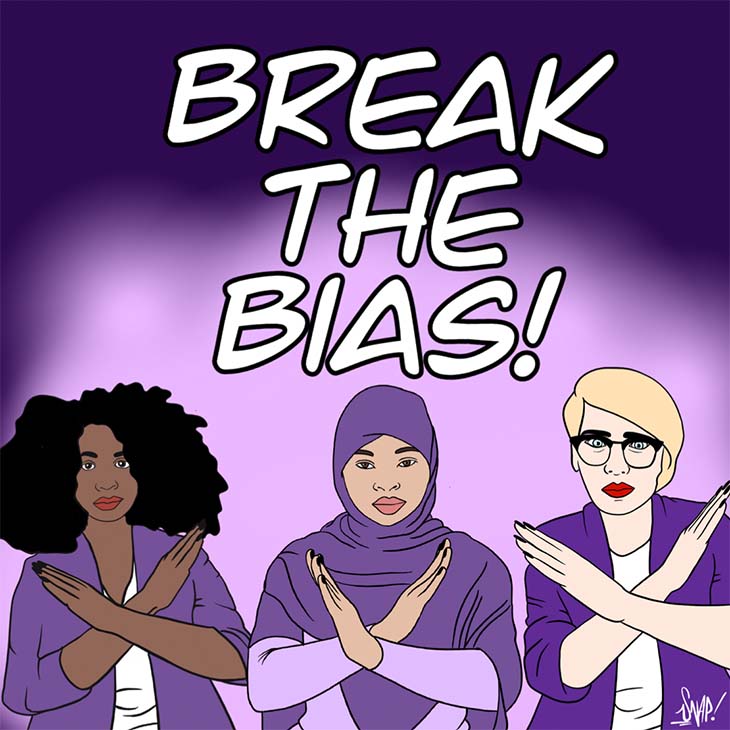
“Gender Equality Today for a Sustainable Tomorrow” – #BreaktheBias

How do we keep going? It’s becoming increasingly difficult to deal with the traumas that we face each day on our planet. The viral disasters, the inhumane way in which some people treat others and the rampant inequalities across regions, religions and race seem never-ending. Personal problems aside for the moment, the public atrocities are just too much to take. One such atrocity is gender bias.

No matter which countries in the world you look at, women have faced gender inequality for millions of years. Why is this? We are, biologically, the bearers of children. We cannot procreate without some form of input from a man, whether through the more popular way of sexual intercourse or through some form of IVF, either using the sperm of our partner or sperm from a Cryobank. Equally, a man is beholden onto a woman in order to become a biological father. You’d think this, at the very least, would be enough incentive to respect and treat us accordingly! So, I ask again, why have we women faced gender inequality since the beginning of humanity?

Humanity – it’s a funny word, isn’t it? Its very definition means: 1. “Understanding and kindness towards other people”; 2. “The condition of being human”. You can read what the first definition says, right? You see the irony, yes?

I could get into all kinds of arguments about the way in which women have been treated, but this debate should be over by now. We ought not to be still fighting in 2022 for each one of us to be heard. Look at where gender inequality has gotten us! This is not sustainable. We cannot continue to ignore the value women are to society, humanity and the universe, frankly. I am quite certain that most of you men are shaking your heads right about now, saying something like, “Of course we value women. Women….” – followed by a long list of amazing things we have done. But what does gender equality really mean?

Do you think that the hundreds of political country leaders across the globe were voted into power with a mindset involving gender equality? Do you believe that Adolf Hitler, Benito Mussolini, Kim Jong Un, Robert Mugabe, Muammar Gaddafi, Saddam Hussein, Jair Bolsonaro, Donald Trump, King Abdullah Aziz Al Saud, Joseph Stalin, Vladimir Putin and the thousands more men who have ruled and dictated the unwanted outcomes throughout history, were picked through the sentiments of gender equality? Do you suppose that, through these political choices, we have created a sustainable environment in which it is possible for humanity to survive?

All the female artists, scientists, judges, teachers, doctors, bankers, general managers, CIOs, CTOs, CEOs, and the like, in the world do not eradicate gender bias. Policy makers do. Country and global policy makers have the power to transform the world and break biases. Women such as Mia Mottley and Jacinda Ardern are making a difference, but both Barbados and New Zealand are small countries. Larger, more globally influential countries need to make their move. If we want a sustainable tomorrow, which we do actually need, then we must change policies and, in the true sense of the phrase, #BreaktheBias.

Sitting in Pain & Loneliness

These two feelings are hardly things humans strive for: pain and loneliness. Quite the opposite, in fact, because they are unpleasant and often unbearable. Yet there is so much pain and loneliness around us, all the time. It’s even there when we can’t see it, or don’t choose to see it.

In basic terms, pain comes in two forms: physical and psychological. Indeed, one can bring on the other. Many believe that psychological pain manifests in the physical, causing bodily illnesses. Hence one reason why doctors might tell their heart-diseased patients to avoid stress. Some of you might be able to relate to this.

What about physical pain causing psychological pain? When your body is pain, it is maddening. Pain is maddening. I have been there many times. I’ve been in so much physical pain that had a gun been on the hospital bed, I might have been tempted to end my pain. I have cried in pain, wishing a different part of my body was hurting, because I was certain it would still be less pain than I was feeling right then and there. This pain is lonely. Your loved ones see that you are in pain; they want to help you, but they cannot. While you might not be alone, you certainly sit in loneliness with that pain.

I am reading a really good book at the moment – “Eleanor Oliphant is Completely Fine” by Gail Honeyman. I was struck by a quote that appeared originally in Olivia Laing’s book “The Lonely City: Adventures in the Art of Being Alone”:

“Loneliness is hallmarked by an intense desire to bring the experience to a close; something which cannot be achieved by sheer willpower, or by simply getting out more, but only by developing intimate connections. This is far easier said than done, especially for people whose loneliness arises from a state of loss or exile or prejudice, who have reason to fear or mistrust as well as long for the society of others….The lonelier a person gets, the less adept they become at navigating social currents. Loneliness grows around them, like mould or fur, a prophylactic that inhibits contact, no matter how badly contact is desired. Loneliness is accretive, extending and perpetuating itself. Once it becomes impacted, it is by no means easy to dislodge.”

What does all of this really mean? Well, let’s look at the first sentence. In order to rid oneself of loneliness, we must create “intimate connections”. We need other people in our lives. Eleanor Oliphant has made it her business to avoid people. However, the book explores the breakdown of this loneliness, as someone comes along and pulls her into very small social situations and away from the very “prophylactic that inhibits contact”: Loss.

Most of us, if not all, have felt loss, in varying degrees. When my grandparents passed away, my cousins, siblings and I felt it. Our parents felt this even more intensely, as they had now lost their own parents. However, two of my grandparents had known the worst kind of loss there is. Their daughter, my aunt, a sister to my Dad and my other aunts, had passed away decades before. Losing a child is a suffocating pain and living in this pain is lonely. This loneliness is “accretive” – such a pertinent word, as the pain is indeed cumulative and never-ending. It is next to impossible to “dislodge” and we shouldn’t be so arrogant to believe that we can remove this pain from ourselves, nor anyone else for that matter. A few weeks ago, I told a friend that I wish I could take away her pain. “It’s my pain,” she replied. Of course, it really is. All the wishing in the world is not going to take away the pain.

So, if you can’t remove the pain, what can you do? You can sit next to those who sit in their pain and loneliness. Just be there for them….always. No matter how helpless you might feel. It’s not about you. It’s their loneliness and it’s their pain.

emmadaltonbrown@gmail.com