• Stay Sharp. Be Cyber Bright.
  • https://www.youtube.com/@becyberbright
  • https://www.cybersafekids.ie/online-safety-jamaican-style/

CyberBright

~ Navigate Cyber Space in a Smart Way. Stay Sharp. Be CyberBright. Cyber Safety is a Human Right. You'll also find my ServeYouWrite blog entries: Health, Adventure, Travel, Humour, Food, Philosophy, Books & More!

CyberBright

Author Archives: becyberbright

Education: Good for Productivity & Success

24 Wednesday Nov 2021

Posted by becyberbright in Life

≈ 2 Comments

As my eldest heads into school today for the first time this academic year, I thought I’d touch on the subject of education. Well, when I say “touch”, I really mean I’m going to ramble, and then I’m going to invite my readers to engage in conversation in the comments below or on social media.

In the last twenty months, the big child has had exactly five days in face to face learning; today will make six days in total. My youngest has been more fortunate, as he went to school for six weeks last academic year and, thus far, has had eight weeks this term. My children are among some of the lucky ones. There are tens of thousands of students who have not seen a physical classroom since March 12, 2020 – the day our Prime Minister announced he was closing schools, effectively immediately. I recall the afternoon vividly: picking up my kids and telling them to ensure that they had packed every last book belonging to them. I knew they would not be going back for a very long time. There are also tens of thousands of students who have never been able to get online for school due to disparity issues preventing them from having internet access, let alone having an electronic device on which to do school work. It is truly a travesty.

Our Prime Minister, the Most Honourable Andrew Holness, and his government seem to have been working tirelessly at rectifying these issues, all while dealing with the dire situation of three devastating Covid-19 infection ‘waves’, the rising crime, and the pre-existing problems within the education system. However, according to the Ministry of Education, more than 120,000 school children were unaccounted for last academic year. To say this is worrying would be an understatement.

Growing up, there was never a question of whether my siblings and I would complete sixth form or not. We didn’t have a choice. In fact, I assumed it was mandatory for all. Call this naive or ‘living in a bubble’, it was what it was. Education was the main priority in our home. So, when it was announced a few weeks ago that the Ministry of Education would be implementing a mandatory seven year programme within high school, I didn’t raise my eyebrows in dismay. That said, I have subsequently listened to people who are not in favour of this development.

In a recent interview with the Leader of the Opposition, the interviewer (a 2nd Form Campion College student) posed a question to Mark Golding regarding the new seven year programme for high school: “What would you say to not only the young children, but to the families, that are worried about this programme?”

Mr. Golding replied, “I don’t think that it has been well thought through, so to have everybody going into sixth form now is going to require significant resources to make that work. The classrooms, the teachers to support it and all the infrastructure around sixth form and the different pathways that have been identified – none of that is in place.” He mentioned that the majority of Jamaican children do not do sixth form – the expense alone makes it prohibitive to many. He thinks that the government has rushed their decision, without having sufficient consultations with teachers, principals and parents across the island. Golding believes that the priority and focus right now should be on helping the children, who have been left behind in the last twenty months, to get back to a positive position within their learning.

I do not disagree, but at some point in the future, I do believe all children should be in high school for the full seven years. The same interviewer, as mentioned above, brought up a pertinent problem in Jamaica: crime. He suggested that keeping the kids in school could help to prevent them from “getting involved with the wrong company, eventually leading to crime.” Once again, I do not disagree. I also believe that some sort of tertiary education, whether academic based, vocational or a technical skill, is beneficial to everyone. Asides from being good for the person doing it, it would be good for the overall productivity and success of our country.

Please leave your comments on these issues either here or on social media: Facebook, LinkedIn or Twitter. Let’s get a conversation going! Thanks, Emma.
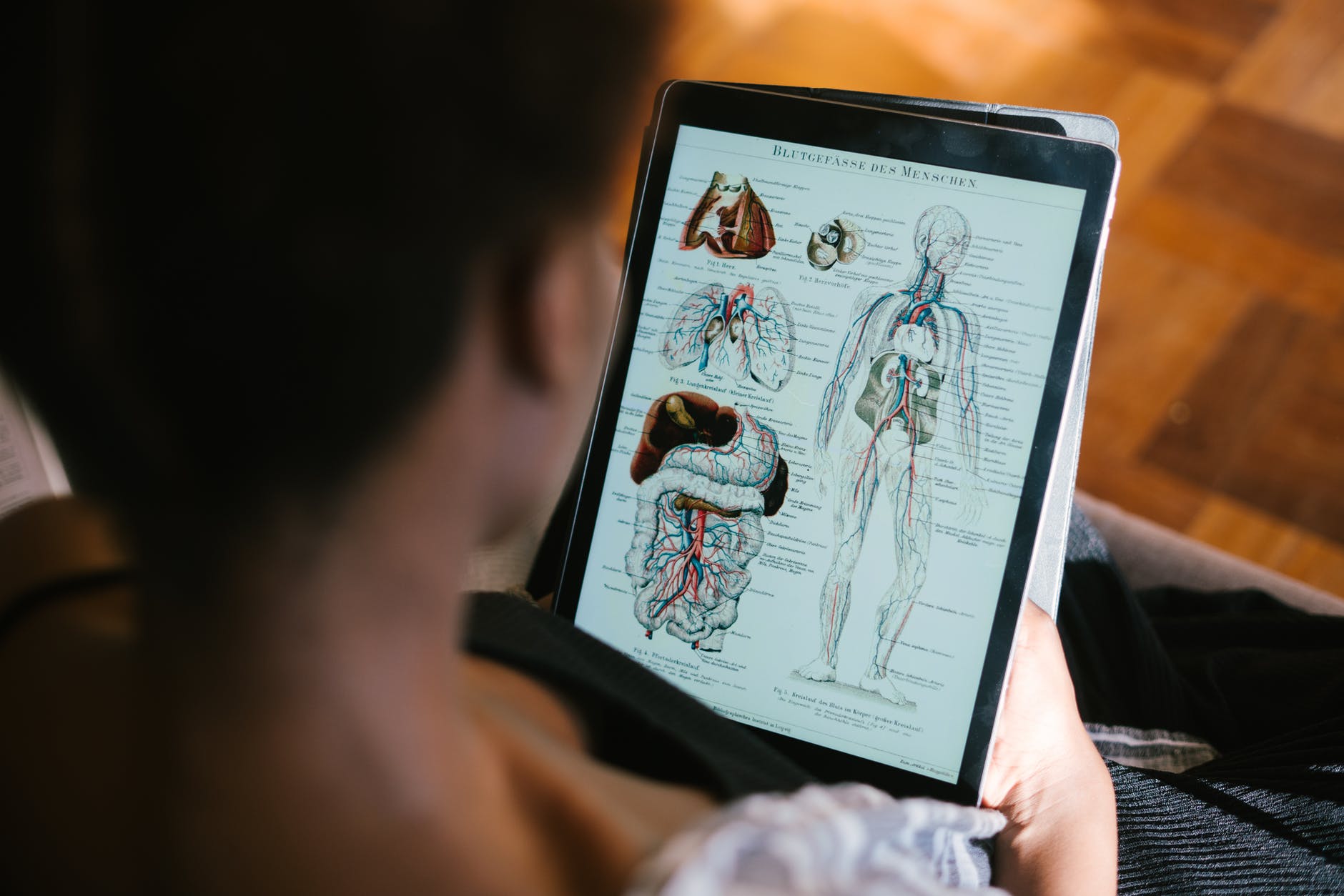

Photo by RF._.studio on Pexels.com

Share this:

  • Click to share on X (Opens in new window) X
  • Click to share on Facebook (Opens in new window) Facebook
  • Click to email a link to a friend (Opens in new window) Email
  • Click to print (Opens in new window) Print
  • Click to share on LinkedIn (Opens in new window) LinkedIn
  • Click to share on Reddit (Opens in new window) Reddit
  • Click to share on Tumblr (Opens in new window) Tumblr
  • Click to share on Pinterest (Opens in new window) Pinterest
  • Click to share on Pocket (Opens in new window) Pocket
Like Loading...

How about a ‘NO’ to sharing the foolishness!

16 Tuesday Nov 2021

Posted by becyberbright in Life

≈ 2 Comments

Tags

Cyber Safety, Online Safety

Have you ever seen those quizzes on social media – the ones that ask you a bunch of seemingly lighthearted questions? “What was the name of your favourite teacher?”; “What was the first city you lived in?”; “What’s your favourite meal?” OR you see a post that says, “Your stage name is a combination of the name of your first pet and your grandmother’s maiden name.” Thousands of people across the globe give their answers for thousands more people to see. What’s worrying is that the intention, which is behind asking these questions to the unsuspecting public, is less than innocent and lighthearted.

While I was teaching one of my cyber safety classes the other day, someone admitted that he had received a message on social media offering him money to answer a bunch of questions. The only catch was that he had to give his bank details, in order to get paid. He was a teenager without his own bank account, so he decided to go ahead and give one of his parent’s bank details, along with all his answers to the quiz. Guess what?! He actually got paid. Pretty cool, eh?!

NO. NO. NO. NOT COOL AT ALL. This is one of many online scams.

Here is what actually happens. The person behind the scam takes those bank details, along with your answers, and then calls your bank pretending to be you. This person has all those answers to the frivolous questions, remember! These are typically the very security questions that banks ask us, in order to prove we are indeed who we say we are. So why would the scammer bother giving you a little money in the first place? Well, it locks you into a false sense of security – the offer must be legit! What do you do when you believe an offer is real? You post it on your social media pages and you pass it on to all your contacts in your phone. You are serving the scammer so well that you don’t even realise you’re essentially helping the scammer to scam hundreds of other people, or more, as the chain will simply keep going and going.

What about when you are signing up for a new online account? What details do you give? Your email, your phone number, or a third party account with which to sign in? With these options available, which sounds safer? The third party sign in option is usually with your Facebook or Google account. Sounds pretty simple. You won’t have to give out your email, nor phone number, and you won’t have yet another username and password to remember. Before you know it, you are signing in to all these wonderfully useful platforms through your Facebook and/or Google accounts. What a breeze, eh?!

NO. NO. NO. NOT A BREEZE AT ALL. You have now connected all your new accounts to the big accounts you depend on for many of your online needs.

Has your Instagram account ever been hacked? You couldn’t get into it because someone literally took it over? It’s concerning, of course, but at least it’s only one account. But is it only one account? NO.

Instagram, WhatsApp and Facebook are all owned by the same people. These are connected. Remember you have been signing into all those other online accounts through your Facebook login? Now someone has hacked into your Instagram. So, what do you think the potential outcome of this could be? NOT GOOD.

If this does happen to you, go into your Facebook account immediately and change the password in settings (How to keep your account secure). Go into every single one of your other settings and make everything private, or choose the “Only Me” option. Ensure that you go into data settings and remove every app and website, which you’ve signed in with Facebook, or any that you have recently used. Just delete all of them. To be on the safe side, go into your Google account and change your password. If any family member’s account is connected to yours, change those passwords as well. Pick passwords that are long phrases, which are easy for you to remember, but ensure you use a combination of lowercase and uppercase letters, as well as numbers and symbols.

There are countless more ways in which people online can trick us all. We must each be vigilant and, when we see offers, ask ourselves if we know the person or company that is making the offer. Scams are vague and usually get passed down through a long chain of ‘forwards’. Scams do not identify with a reputable and known company. If it looks too good to be true, it probably is. If it looks like a fun and frivolous questionnaire, seemingly harmless, it is HARMFUL. Don’t let these scammers take you for a fool. Don’t participate in these scams. Don’t ‘share’ these scams. How about a ‘NO’ to sharing the foolishness.

Share this:

  • Click to share on X (Opens in new window) X
  • Click to share on Facebook (Opens in new window) Facebook
  • Click to email a link to a friend (Opens in new window) Email
  • Click to print (Opens in new window) Print
  • Click to share on LinkedIn (Opens in new window) LinkedIn
  • Click to share on Reddit (Opens in new window) Reddit
  • Click to share on Tumblr (Opens in new window) Tumblr
  • Click to share on Pinterest (Opens in new window) Pinterest
  • Click to share on Pocket (Opens in new window) Pocket
Like Loading...

When Someone Shows You the Stairs, Climb Them

09 Tuesday Nov 2021

Posted by becyberbright in Life

≈ 4 Comments

I am going to tell a personal story today. It’s about opportunity.

When I was a very little girl, I wanted to be an air hostess. I simply loved the restaurant lounge that looked over the runway at Norman Manley International Airport. Within a couple years, I had changed my mind. I wanted to be an actress. However, my Dad asked me how I expected to look after myself in that line of work. At which point, the youngest of my brothers piped up, “I’ll look after you.” Sweet, eh! In many ways, he actually has always looked after me and looked out for me, like all my siblings. Sometime before I turned ten, I decided on another career and this one stuck for the rest of my childhood and teen years. I was going to be a criminal lawyer.

Growing up, great importance was given to the value of education. I was treated no differently to my brothers when it came to academics. We had to do well. I don’t recall conversations pertaining to this exactly, but it was something we just knew we had to do. This came easily to us all, as did the various sports we chose, but it was not easy being away from home. We each had to find a coping mechanism that suited our individual personalities, and we had to build a resilience to loneliness. Don’t get me wrong, strong friendships with our school peers were formed by each of us, but there are times, like bedtime, when you are laying there wishing you could have that last conversation with your family, not a bunch of strange children lying on the other beds in a dormitory. I am fairly certain most of the other kids felt the same. Alas, exhaustion from our busy day would take over and the next thing to worry about would be:”How on earth do I get out from under my warm duvet on this freezing morning?!” Mandatory-timed breakfast, that’s how! Another busy day started and the goal remained the same: excel at what you do.

So, what happened with my plan to be a lawyer? Well, I did my A Levels (again, academic-focused) in sixth form, then took a year off to work and backpack around Australia, New Zealand and Fiji with one of my closest friends from school. Following this, I got my Bachelor’s degree in Philosophy at the LSE, then went straight to the Leith’s School of Food & Wine. I had had enough of academia. I don’t know if this was spurred on by the arrogance of my peers, who studied the same discipline, or if there had always been a creative side of me waiting to burst out. In school, I had hated arts & craft and home economics, and all of my 10 GCSEs had been academic subjects. One did not do the “arts” in our family!!

With my degree in philosophy and my diploma in food and wine, I began working in all kinds of kitchens at all kinds of places. I loved it. London was on fire with brilliant restaurants. The English were finally making great waves when it came to getting rid of their long-time reputation of having crap food. The private chef business was also booming and I soon found that I fitted really well into this niche. If you were a chef, people were impressed. It was right around the time when chefs like Jamie Oliver were being discovered. Cooking shows were all over the television, and cable TV was a new thing.

One day, I got a call from my agent at the chef agency I worked through. She wanted me to apply for this great gig at the BBC Good Food show. She said I’d be perfect for it. So, I went to the interview, knowing very little about the job, by the way. I sat across from this television producer, who wanted to figure out a way to promote BBC’s brand new cable food channel. All he told me was that they had a food truck to utilise and he had a vague vision of an American diner. Off the cuff, I came up with the idea of cooking mini portions of diner-style food, with a twist, and serving these to customers as they sat in the ‘diner’ to watch video clips from their new channel. At the show, patrons were not only watching the video clips, they were also watching me cook. I am pretty sure my mini burgers in mini coco breads did the trick! Before I knew it, along with my other freelance chef work, I spent the next couple years being a guest chef on their live TV show, Good Food Live. In fact, they even brought me back home to Jamaica to film a series of short inserts, of me cooking across the island, for the live show. It was incredible.

As time went on, I found myself writing for various magazines, like BBC Good Food, and developing recipes. I was good at it, so went to New York to take a diploma in Journalism. Here began my long transition into becoming a full-time freelance writer. You see, I moved back to Jamaica and got roped into teaching cooking. Two years later, I took the plunge and sent an idea for a ‘Single in the City’ column to the Gleaner. They hired me to be a freelance writer and, over the next five years, I took on several columns and a couple different aliases. I had found another career about which I was passionate. During this time, the Observer’s Lifestyle section was really taking off. I wanted to be a part of the action, so I wrote and asked them to hire me. I spent almost three years writing for them. I had a phenomenal editor, who pushed me to write about things I would never have thought of before. She made me a better writer and did not accept anything less than her required standards, which were high! This, in turn, gave me a very valuable skill: the skill of editing. If you wanted your work published in full, you had better learn how to edit your own work with excellence! I wrote for a few magazines while doing all of this, but, of course, the print world began losing out to online media. Times were changing, so jobs were changing. It was time to write a novel.

I self-published my first novel on Amazon three years ago and I am currently sitting on my second, which is, essentially, finished. But, the pandemic happened and happenstance, along with my niece, threw me in the direction of a nonprofit organisation, Cornerstone Jamaica, for which I have been volunteering as a CyberSafety Specialist for over a year. Throughout my life, I have met all kinds of people and one of them has been the founder of a successful nonprofit organisation called CyberSafe Kids, in Ireland. They have educated more than 25,000 children on CyberSafety in the last six years. This organisation trained me in CyberSafety, so that I could start doing the same for Jamaican children. I spearheaded, designed and wrote a CyberSafety programme for Cornerstone Jamaica, called CyberSafe Yuhself. Between the last school term, and the current one, I have given live and interactive online CyberSafety workshops to almost 1800 children and 150 of their teachers, in Westmoreland, Hanover, Clarendon and St. Mary. I truly believe that every human being, who goes online, should be versed in CyberSafety.

In the midst of my volunteer work, something extraordinary has occurred. Many of you must know LinkedIn, right? Well, I’ve been a member for a good while now, but I have not been so active on it. In the last few months, however, I noticed that there has been more activity on my page, so I updated my profile in mid-October. No sooner had I done that, when someone reached out to me and, figuratively, showed me the stairway to a career I would never have chosen for myself. You see, I have always trained for particular niches – cooking, writing, CyberSafety. Don’t ask me about the Philosophy part when it comes to careers, but I have actually used it in much of my writing. Anyway, I have never been formally trained for the work offered before me. That said, what if all my experiences and skills, acquired along the way, were indeed leading me right into this job? What if I am supposed to do this? Well, yesterday I started to officially climb those stairs!

  • Photo by Wendelin Jacober on Pexels.com

Share this:

  • Click to share on X (Opens in new window) X
  • Click to share on Facebook (Opens in new window) Facebook
  • Click to email a link to a friend (Opens in new window) Email
  • Click to print (Opens in new window) Print
  • Click to share on LinkedIn (Opens in new window) LinkedIn
  • Click to share on Reddit (Opens in new window) Reddit
  • Click to share on Tumblr (Opens in new window) Tumblr
  • Click to share on Pinterest (Opens in new window) Pinterest
  • Click to share on Pocket (Opens in new window) Pocket
Like Loading...

Altruism or Egoism: Which sits better?

01 Monday Nov 2021

Posted by becyberbright in Life

≈ 4 Comments

What does it take to be a giving person? Quite simply, kindness.

My mum has always told me to “kill them with kindness”, and goodness knows, it is deeply gratifying to rise above the bullshit and keep being kind. However, life tests us all, pushing us to different and particular breaking points. We each draw the line somewhere and this line is determined by so many moving variables that it would be virtually impossible to figure out where, when, how and why one individual’s limit is at ‘x’ point today and at ‘y’ point next week, let alone the limits of every single person. Perhaps some people do not even have limits when it comes to their kindness.

Auguste Comte, the French philosopher who founded Positivism, coined the term ‘altruism’, whereby one must “live for others”. Comte believed that we each have a moral obligation to serve, help or benefit other people, even if it means sacrificing our own needs and interests. Indeed, there are some truly altruistic people in the world, but what’s in it for them? That’s the point – there isn’t supposed to be anything “in it” for them. There are many times when I have acted with altruism, but the truth is, it is not continuously sustainable.

I have been fortunate throughout my life when it comes to making friends. I do so easily. Some have come and gone, others have remained steadfast in their love, loyalty, empathy and selflessness. I am mostly drawn to people who have altruistic tendencies, and this has become more apparent in latter years. I have witnessed some of my friends giving and giving to people whom they know, and to those whom they have never met. However, while there is immense virtue in altruism, is it virtuous to give so much of yourself, that you end up in physical and psychological burnout? I don’t think Friedrich Nietzsche believed it was so virtuous. This German philosopher claimed that treating everyone else as if they were more important than yourself is, in fact, demeaning and an act of self-degradation, leaving you unable to pursue your own skills and creativity. If an altruistic person is left in this state, can she or he continue to “live for others”and “give to others”? Surely the burnout will prevent this?

Let’s back up a bit and assume an altruist can keep giving completely without burning out. After all, one can surely keep giving kindness without it causing self-degradation, right? Well, in essence, yes. However, there is something that can hinder this: another person; more specifically, another person whose moral philosophy is based on egoism – the pursuit of one’s own self-interest. I must point out that egoism does not require one to ignore or go against another person’s well-being. It simply holds that the self-interest of the egoist be put first. The act of said egoist can be neutral, detrimental or even beneficial to others, and it can even be at his or her own short-term sacrifice, provided his or her long-term interest is facilitated. Ergo, when a person pursues life with egoism and works alongside a person who pursues a life of altruism, the latter either burns out or bows out. Even if the egoist and altruist have a similar goal of, let’s say, giving charitably to children, the egoist’s motivations are so vastly different from those of the altruist that the egoist will eventually get in the way of the altruist’s mission. Indeed, one might then question the egoist’s original and apparent intentions.

We could philosophise all day and find justifications for every action within Philosophy, but life’s second by second decisions do not allow for this in practicality. Sometimes we have ample time to make choices, other times we have to make them off the cuff. We just do not have the privilege to philosophise on every action we take. Simplistically, however, I do believe that we should and are able to figure out which sits better within ourselves: altruism or egoism?

Share this:

  • Click to share on X (Opens in new window) X
  • Click to share on Facebook (Opens in new window) Facebook
  • Click to email a link to a friend (Opens in new window) Email
  • Click to print (Opens in new window) Print
  • Click to share on LinkedIn (Opens in new window) LinkedIn
  • Click to share on Reddit (Opens in new window) Reddit
  • Click to share on Tumblr (Opens in new window) Tumblr
  • Click to share on Pinterest (Opens in new window) Pinterest
  • Click to share on Pocket (Opens in new window) Pocket
Like Loading...

Covid Vaccines: Greatest Good for the Greatest Number of People

23 Saturday Oct 2021

Posted by becyberbright in Life

≈ 3 Comments

Here are some reasons for the majority of the population to remain unvaccinated:

Oh wait, there are no reasons for the majority of the population to remain unvaccinated.

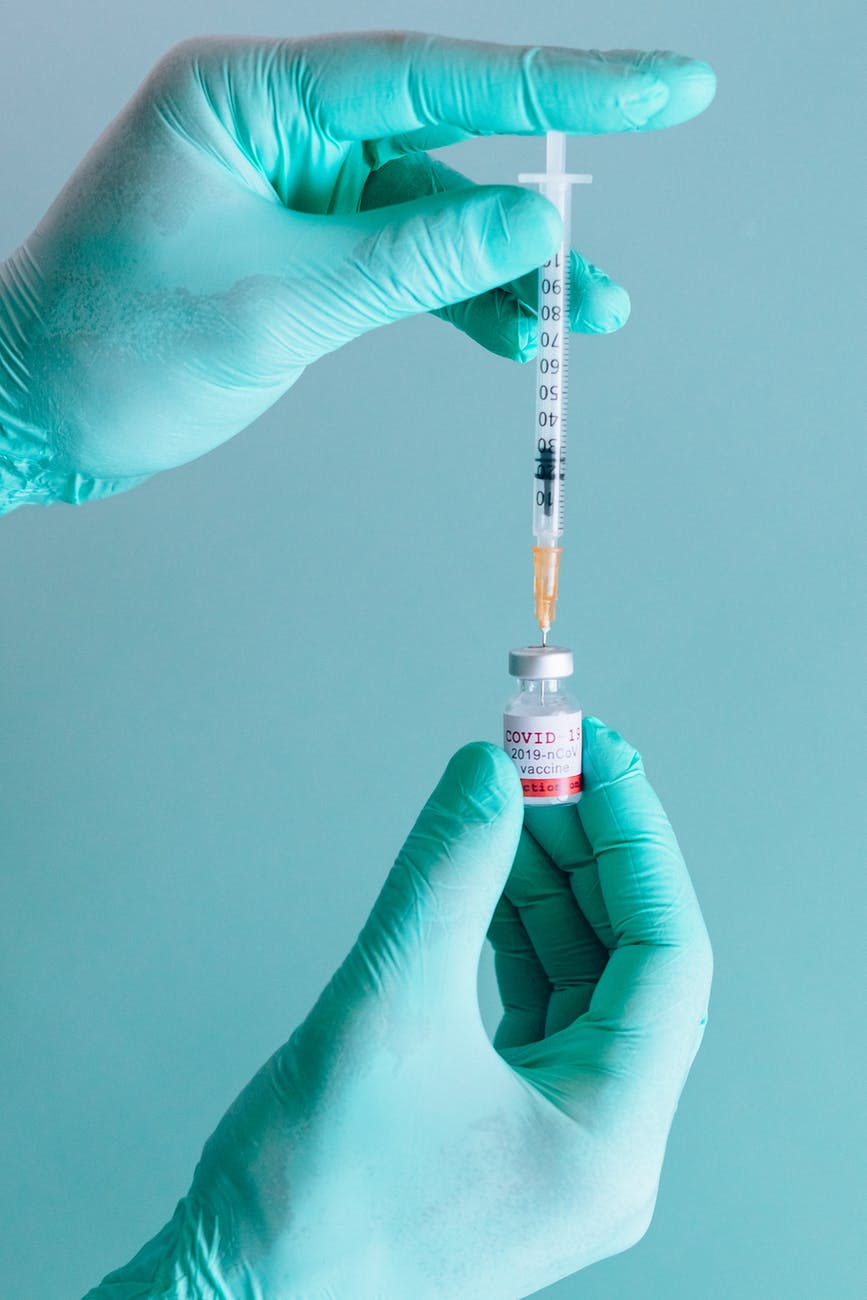
Covid 19 vaccines have been available in Jamaica for about seven months. If you scroll down on my main page, you’ll see that it’s been nearly that amount of time since I last wrote on my Blog. I spent months working on articles for a nonprofit organisation (have a look at what I wrote: https://cornerstonejamaica.org/insight/).

Alas, I digress. The penultimate post before this one, which was made on March 21, is titled: ‘A Utilitarian View of Jumping the Vaccine Line’. How ironic it is that seven months ago some younger people were scrambling to get their vaccines before the elderly, leaving the elderly to be turned away because the vaccine supply for the day had run out, yet now our Prime Minister is having to plead with most Jamaicans to get vaccinated. What’s even more ironic is my said post highlighted the need for younger people to wait their turn, not jump the line and allow the elderly to get theirs first, yet this post is going to be about “begging” everyone to get vaccinated now.

One could try and argue that I have changed my mind about who should get vaccinated and about the application of my utilitarian view, but this is not the case at all. I have always believed that everyone should take the Covid 19 vaccine and I remain steadfast in my utilitarian view of the world. To quote from my own blog: Jeremy Bentham believed in “The greatest amount of good for the greatest number of people”. This is the essence of Classical Utilitarianism, which relies on each person promoting the overall good. Bentham thought that an action was bad when it led to unhappiness, without any redeeming happiness. It had no utility. “If a law or an action doesn’t do any good, then it isn’t any good.” Seven months ago, the greatest amount of good for the greatest number of people did mean that first responders and the elderly should be vaccinated before everyone else. Now, with many more vaccine doses available and many more sites where Jamaicans can get vaccinated, the greatest amount of good for the greatest number of people will be achieved if Jamaicans become fully vaccinated. Of course, children under 12 years old have not yet been approved and those 12-17 years old can only take the Pfizer vaccine when the second batch arrives in Jamaica. That said, the rest of you should get vaccinated now!

Here is why a utilitarian philosophy should apply. I’m pretty sure you’ve all heard of the variants Delta and Mu (real pains up the backside!), to name a few. Anyway, viruses mutate, so it’s not surprising these variants are spreading rampant across the world. Viruses get a chance to mutate and spread when they have hosts. That’s us! To be more specific, they are much more likely to mutate and spread in an unvaccinated host. That’s you, you unvaccinated person! Unless the majority of the world population is fully vaccinated with the Covid 19 vaccine, the Covid 19 virus will continue to spread and mutate, spread some more and mutate again. Yes, even the fully vaccinated people can catch Covid, BUT they are less likely to get sick, less likely to be hospitalised and significantly less likely to die. Their bodies’ viral loading is lower if they get Covid, however, they too are potential hosts and can spread the virus. This right here confuses many, particularly those who are unvaccinated. Why should I get the vaccine when I could still get Covid after taking the vaccine? I’ll tell you why. You don’t want to die!

The only way to draw brakes on a pandemic such as this is for the vast majority of the world’s population to be fully vaccinated as quickly as possible. Yes, the speed at which we get vaccinated matters. When there is a slow uptake of the vaccine, the virus still has millions of unvaccinated hosts, billions if you look worldwide. When the covid vaccines were developed and tested, Delta and Mu didn’t exist. Had the vast majority of the population been vaccinated in an expeditious way, Delta and Mu are most likely not to have come into being. Sure, vaccine supply has prevented millions of people, particularly in the African and South American continents, from taking vaccines, but we in Jamaica have the vaccines and there is no reasonable reason why so many thousands within our population are flatly refusing to take the vaccine. Our government recently had to throw away 60,000 expired doses of AstraZeneca, due to vaccine illiteracy (yes, I just called you unvaccinated people vaccine illiterate!), and there is a considerable chance that they will be in the same position very soon. What’s going to happen if you continue to remain unvaccinated? You give the virus a greater chance to mutate! Then, these mutations spread and, what could potentially happen, if the majority remain unvaccinated, is the virus mutates so many times that the vaccines, which the rest of us have taken, will become ineffective. So, getting fully vaccinated within the quickest time possible is our chance to put a halt to this pandemic. It is our chance to save our people. It is our chance to save the world population. It will indeed produce the greatest good for the greatest number of people.

Share this:

  • Click to share on X (Opens in new window) X
  • Click to share on Facebook (Opens in new window) Facebook
  • Click to email a link to a friend (Opens in new window) Email
  • Click to print (Opens in new window) Print
  • Click to share on LinkedIn (Opens in new window) LinkedIn
  • Click to share on Reddit (Opens in new window) Reddit
  • Click to share on Tumblr (Opens in new window) Tumblr
  • Click to share on Pinterest (Opens in new window) Pinterest
  • Click to share on Pocket (Opens in new window) Pocket
Like Loading...

Say Their Names: Jamaican Women’s Lives Matter

30 Tuesday Mar 2021

Posted by becyberbright in Life

≈ 1 Comment

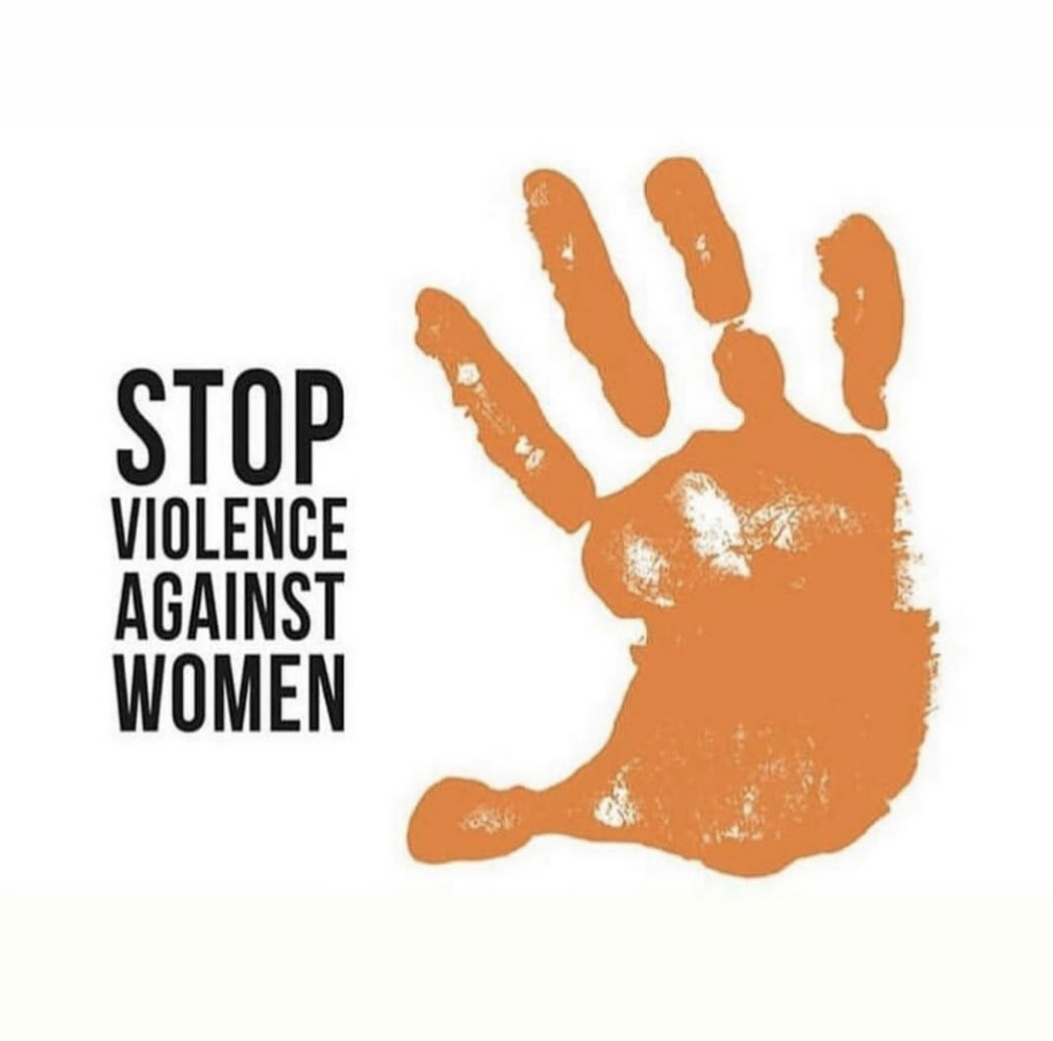
Jasmine Dean, Khanice Jackson, Tamika Richards, Nevia Sinclair, Kim Johnson, Ananda Dean and many more. Jamaican women and girls are being abducted, murdered and disposed in ways that go beyond brutal, leaving their families and friends in a spin of devastation. Jamaican women and girls are being sexually harassed, sexually assaulted and raped, leaving them scarred for years, if not for the remainder of their lives, but more often than not there are no physical scars to show for the psychological damage that has been done.

Pre-Covid, I was a volunteer in a mentor programme for high school students. One of the workshops I planned for the children entailed each child anonymously writing down three things they did not like being done to them. I collected responses from more than 150 students. These were statements, verbatim, from some of them:

“Don’t like to see children getting abuse.”; “I don’t like rape.”; “I do not like when people touch me on my bottom.”; “I don’t like when people touch me on my breast.”; “I don’t like when people touch me up when they are talking to me.”; “I don’t like when people touch me in a certain way.”; “I don’t like when older men stare at me and talk to me about sex or adult stuff.”; “One elder male in my community always wants to give me money so I can have sex with him, but I’m smart enough not to.”; “I don’t like when girls get abused.”

As I unfolded each piece of paper to read their words, I realised that they were all saying the same thing. These young teenagers, boys and girls, know that sexual abuse is wrong. They do not like it. Their instincts are in tact, yet this is not enough to stop the predators. Predators have power and they use this power to do harm.

So if children can feel that it’s wrong to be abused, why do some grow up to become predators? Have they been desensitised to the crime and why? Is the language used by men to speak to women and girls, and about them, breaking down the goodness inside the boys from when they are young? Is pressure coming from men for their sons to treat women as sexual objects at their disposal? If so, then by the time the boys become men, it’s no wonder that some seek to be violent towards girls and women.

On April 15, 2017, a man, whom my family and I trusted, overstepped and did something that could possibly have been forgiven had he stood up and taken responsibility for his unjustifiable actions towards me. But he didn’t, so we didn’t. Instead, I was shunned for “causing trouble”, accused of “shaking his marriage” and blamed for “rocking the boat” in general. I was threatened by several friends who are no longer in my stratosphere. I stood up and spoke up against sexual abuse because I needed to see change in Jamaica. If I didn’t stand up and speak up, who would?

I have had immense support from my family, numerous friends and acquaintances. The positive power of social media also came through for me during this time, only to be even more asserted exactly six months later, on October 15, 2017, when Alyssa Milano tweeted: “If you’ve been sexually harassed or assaulted write ‘me too’ as a reply to this tweet.” She added this at the bottom of the same tweet: “Me Too. Suggested by a friend: if all the women who have been sexually harassed or assaulted wrote ‘me too’ as a status, we might give people a sense of the magnitude of the problem.” Having been originally founded by Tarana Burke in 2006, the #MeToo movement blew up the internet. The world wanted to change. Women needed the world to change. Those of us who posted about our numerous #MeToo moments were hopeful. The end of 2017 marked the start of a new era, surely.

Going into 2018, celebrities were speaking out more and more, #TimesUp came into fruition, black was worn at the Golden Globes in solidarity for the survivors of rape and sexual abuse, sexual harassment laws were reviewed and improved in several countries, and famous men were beginning to pay for their abusive actions towards girls and women. Time was up. I even bought a #timesup T-shirt and wore it often. I still do. Alas, few seemed to notice and even fewer cared. It was disappointing to see so many women in Jamaica accept the status quo. They still do. It is disappointing to hear men and women still saying things like, “She had on a tight tank top and short skirt, so she shouldn’t have worn that,” or “why she walking around by herself anyway?”

Victim blaming is common, but it has to stop. We could push for laws to be enforced and, frankly, we should, but what we need to do is get to the root of the problem. We have to humanise and nurture every single one of our fellow citizens. We have to do this from their birth. We owe it to our children, to the babies who have just been born and to the ones who will be born in the future. Women’s and girls’ lives matter. Say their names.

Share this:

  • Click to share on X (Opens in new window) X
  • Click to share on Facebook (Opens in new window) Facebook
  • Click to email a link to a friend (Opens in new window) Email
  • Click to print (Opens in new window) Print
  • Click to share on LinkedIn (Opens in new window) LinkedIn
  • Click to share on Reddit (Opens in new window) Reddit
  • Click to share on Tumblr (Opens in new window) Tumblr
  • Click to share on Pinterest (Opens in new window) Pinterest
  • Click to share on Pocket (Opens in new window) Pocket
Like Loading...

A Utilitarian View of Jumping the Vaccine Line

19 Friday Mar 2021

Posted by becyberbright in Life

≈ 1 Comment

It is heartbreaking to see people in their seventies and older being turned away from places like the Good Samaritan Inn in Kingston when there has been news of healthy citizens, who do not fall under any of the categories in phase one slated for the Covid vaccine, getting their first dose in the past week or so. Discretion was used to give these younger, low-risk Jamaicans a chance to avoid the fatality of Covid, yet discretion is not to be used to grant the high-risk elderly the same privilege.

One cannot blame the doctors and nurses at the Good Samaritan Inn for following the directives of the Ministry of Health and Wellness. Indeed, I applaud them for abiding by the regulations set out by the government. They have been told that, for now, they are only to vaccinate health workers and members of the security forces. However, can someone please explain what happened at St. Joseph Hospital when the reported one hundred people, who were supposed to wait their turn like the rest of us, showed up and each sat to take a dose from another person who needs it more? What of the messages I’ve been receiving from some people who have directly and proudly been told by young and healthy friends that they got the vaccine this week?

Jeremy Bentham believed in “The greatest amount of good for the greatest number of people”. This is the essence of Classical Utilitarianism, which relies on each person promoting the overall good. Bentham thought that an action was bad when it led to unhappiness, without any redeeming happiness. It had no utility. “If a law or an action doesn’t do any good, then it isn’t any good.” It would take many more pages than this to get into the nuances of Bentham’s beliefs, but one important thing to note is that he viewed all pleasures equally. The pleasure I get from eating an ice cream would therefore equal the pleasure a doctor gets from saving someone’s life. The pain I feel from my puppy dying would be the same that you feel from the death of your best friend. With no qualitative differences between pleasures nor between pains, one could argue that pleasure or pain of an animal is the same of a human. Harming a puppy would therefore be just as bad as harming a human. John Stuart Mill disagreed with Bentham’s whole hedonistic approach and felt that pleasures and pains, good and bad, were in fact qualitative. One good thing was not the same as another good thing, and the two did not have the same utility. The same stood true for bad things. Over the next one hundred years or so philosophers, such as Henry Sidgwick and then G. E. Moore, refined their predecessors’ Utilitarian theories, until Utilitarianism came to be known as Consequentialism.

While there are many debatable flaws in the hedonistic approach of Classical Utilitarianism, it has paved the way in the formation of policies and legislation. It is why nations have laws. It is why epidemiologists, other scientists and the World Health Organisation all come up with recommendations for the roll out of things such as vaccines. It is why governments form policies when it comes to things like the roll out of vaccines. The more modern idea of utilitarianism, whereby one looks at consequences, accounts for what one could arguably describe as practical and ethical considerations. It is more practical and ethical to vaccinate healthcare workers, people in direct public service, the elderly and those with pre-existing illnesses before younger and healthier citizens. This is more useful, don’t you think?

So my question to the few entitled elitists, who drove out to get your Covid vaccines, is this: Did you consider the immediate and longterm negative consequences your actions would have on thousands of fellow Jamaicans? Let’s be frank, one selfishly entitled soul can and does encourage a sheeplike mentality, and a flock of you have prevented a plethora of elderly people with co-morbidities from getting the vaccine in the last week. Who knows what the knock-on effect will be, but I ask you this: Will your actions achieve “the greatest amount of good for the greatest number of people”? Was it worth it for you to push yourself up in the line? Is it more useful to get your vaccine before those who have a greater risk of dying from Covid than you?

  • Photo by Nataliya Vaitkevich on Pexels.com

Share this:

  • Click to share on X (Opens in new window) X
  • Click to share on Facebook (Opens in new window) Facebook
  • Click to email a link to a friend (Opens in new window) Email
  • Click to print (Opens in new window) Print
  • Click to share on LinkedIn (Opens in new window) LinkedIn
  • Click to share on Reddit (Opens in new window) Reddit
  • Click to share on Tumblr (Opens in new window) Tumblr
  • Click to share on Pinterest (Opens in new window) Pinterest
  • Click to share on Pocket (Opens in new window) Pocket
Like Loading...

Jamaica’s Corona Chronicles – Saving Livelihoods or Lives?

10 Wednesday Mar 2021

Posted by becyberbright in Life

≈ 1 Comment

No matter what decisions the Prime Minister makes, he cannot please the needs, nor wishes, of every single Jamaican. In fact, there are many people who go as far as interpreting the Covid 19 guidelines and policies, which are given at the numerous Press Conferences and printed in the many Jamaica Gazettes available online, to suit their own narratives.

Take a step back for a moment. Think about why exactly you may be unhappy with the policies and actions of the Most Honourable Andrew Holness and his team. Jot these down on a piece of paper. Next, read through this list and consider how you would do things differently, then write your suggestions down. Now read said suggestions and weigh them against those of the Prime Minister and his Government. Whose are more beneficial to the majority of the three million people living in Jamaica?

I’ll come back to this at the end, but first let’s reflect on the past year.

On March 10, 2020, Jamaica confirmed its first positive case of Covid 19. Two days later, a second case was confirmed and the Prime Minister ordered for the immediate closure of all schools in Jamaica. Friday, March 13, the lives of our children changed forever, as they sat at home waiting to hear what was going to happen with their education. The entire Grade 6 cohort in this country was one week away from PEP Performance Task Tests and six weeks away from Curriculum Based Tests, and students in Forms 5 and 6 were equally uncertain about what would happen to them regarding their exit examinations (CSEC & CAPE).

Students in Jamaica have been in distance learning for a year, with the exception of the privileged few who were given several weeks, or months, of face to face school before being sent home again. The problem with distance learning is most kids are being left behind and this comes with serious consequences, according to parental anecdotes. Moreover, studies conducted through Unicef back up this proclamation. We do need our children to be in the classroom, but with Jamaica’s current Covid positivity rate running between 25% and 40%, depending on the day, is it wise to send our kids out and throw more risk at the impending dire situation? While studies indicate that children are not getting so sick, they can spread the virus to those who might be more vulnerable.

So, where are we now with regards to policies? Up to and including March 22, 2021, these are the guidelines:

Funerals and burials are banned, but regular church services may take place online, with only 10 clergy/officiants/camera crew allowed to be together in person while filming the online service. No more than 25 people in total are allowed to attend a wedding, including the bride, groom, officiants and any staff. No more than 10 people are allowed to gather socially or in public, so NO parties! A specific list of beaches and rivers stay closed and curfew remains from 8:00pm until 5:00pm. There is a work-from-home order for the public sector and the private sector is urged to accommodate this as far as possible. No public sector gatherings/ceremonies are allowed, unless online. Attractions, gyms, parks and zoos must be closed by 6pm everyday. Everyone, including Jamaicans and business travellers, traveling to Jamaica, must have a negative Covid 19 test, which has been done within 72 hours of their travel date. All students are to engage in distance learning, but students in Grade 6, Form 5 and Form 6, from the schools that have been pre-approved, may have face to face learning.

With all that said, guidelines that have been in place for the last year, such as wearing masks in public, sanitising regularly and staying at least 6 feet away from other people, are still in effect. Jamaicans and residents returning home must still quarantine for 14 days. This order is in the Jamaica Gazette published online by the Ministry of Health & Wellness. Using the excuse, “No one at the airport told me to quarantine.”, is unacceptable. No one at the airport tells you not to steal, not to break a traffic light and not to lick someone’s face! Yet, you just know that you aren’t supposed to do those things. Again, Covid guidelines are in the Jamaica Gazette and we have repeatedly been told by the Prime Minister that all Jamaicans and residents returning to Jamaica must quarantine for 14 days. There are also strict instructions pertaining to tourists within the Jamaica Gazette and in Jamaican travel advisory documents, which can be found online. Once again, “No one at the airport told me to quarantine or what to do.”, is NOT a valid excuse. Nope. Not sorry. Not even a little bit sorry. Do not bend the rules to suit your needs. As for those who do not understand that if you test positive for Covid 19, you must stay home and isolate yourself for at least 14 days. All those living in your home must also quarantine at home for 14 days. You should alert anyone with whom you have been in close contact within the last 14 days. These people should also stay at home for 14 days. If in doubt or if anyone has symptoms, call the JamCovid hotline, explain the situation and ask them what you should do. Lives are at stake and, for that matter, so are livelihoods.

Speaking of livelihoods…I have to assume that we all wish for everyone’s livelihoods to be intact or improve. Correct? The dilemma lies in choosing between livelihoods and lives. The reality is this: as Covid 19 cases increase, hospitals become inundated with people. Moderately or critically ill patients, who could otherwise be saved by medical staff, could now suffer the worst outcome imaginable and the death rate would then be at risk of rising exponentially. The thing is, if lives are lost, so are livelihoods, and if livelihoods are lost, potentially some lives could be lost as well.

What is the solution? Please go back to your list of suggestions to improve on what the Government is doing. Do you have better solutions than what the Prime Minister of Jamaica and his team have arduously been working on for the past year? What else would you do to get the residents of Jamaica to comply with the rules? While you are mulling over this, please take into consideration the Bills that need to be debated among the Governing Politicians and those from the Opposition, and passed by way of votes, before they can be put into law and before the appropriate penalties can be given to those who choose to ignore guidelines, which have been originally recommended by the World Health Organisation. If every single person living in this country was to abide by the Covid regulations set out by our Prime Minister, wouldn’t we be in a position to save both livelihoods and lives?

Photo by CDC on Pexels.com

Share this:

  • Click to share on X (Opens in new window) X
  • Click to share on Facebook (Opens in new window) Facebook
  • Click to email a link to a friend (Opens in new window) Email
  • Click to print (Opens in new window) Print
  • Click to share on LinkedIn (Opens in new window) LinkedIn
  • Click to share on Reddit (Opens in new window) Reddit
  • Click to share on Tumblr (Opens in new window) Tumblr
  • Click to share on Pinterest (Opens in new window) Pinterest
  • Click to share on Pocket (Opens in new window) Pocket
Like Loading...

A Cornerstone in the Lives of Jamaican Students

02 Tuesday Mar 2021

Posted by becyberbright in Life

≈ 7 Comments

No matter what circumstance a child in Jamaica might be in, two things have become absolute necessities for every single one of them – internet access and access to a device. 

We are halfway through the present school year and most Jamaican students have now been in online learning for one year.  Few fortunate students have had some face to face learning since September 2020. However, with the exponentially rising Covid cases, the Jamaican government has mandated that all public and private schools revert to or remain online, with an exception to allow some schools, who have had their Covid protocols approved, to bring in their Grades 6, 11, 12 and 13 students for face to face learning in preparation for Exit Examinations: PEP, CSEC & Cape. 

Having started an initiative in June 2020 called Cornerstone Connex, which has successfully brought internet connection to several rural communities in the western side of the island, Cornerstone Jamaica has a mission to put the well-being of Jamaican students at the forefront. That said, when online school opened on October 5, 2020, many teachers sat waiting, and are still waiting five months later, for some of their students to come into the virtual classroom. What has been the problem?

The Jamaican government has promised, and delivered, thousands of tablets to kids in need, but it is a tall order to supply every single child with a device, let alone imminently. This is where the Cornerstone Connex initiative has jumped in with full force. All the internet in the world cannot help a child unless he or she has a device suitable for the academic tasks at hand. All Jamaican children need devices for online school and learning, but there is a glaring disparity between those with devices and those without. 

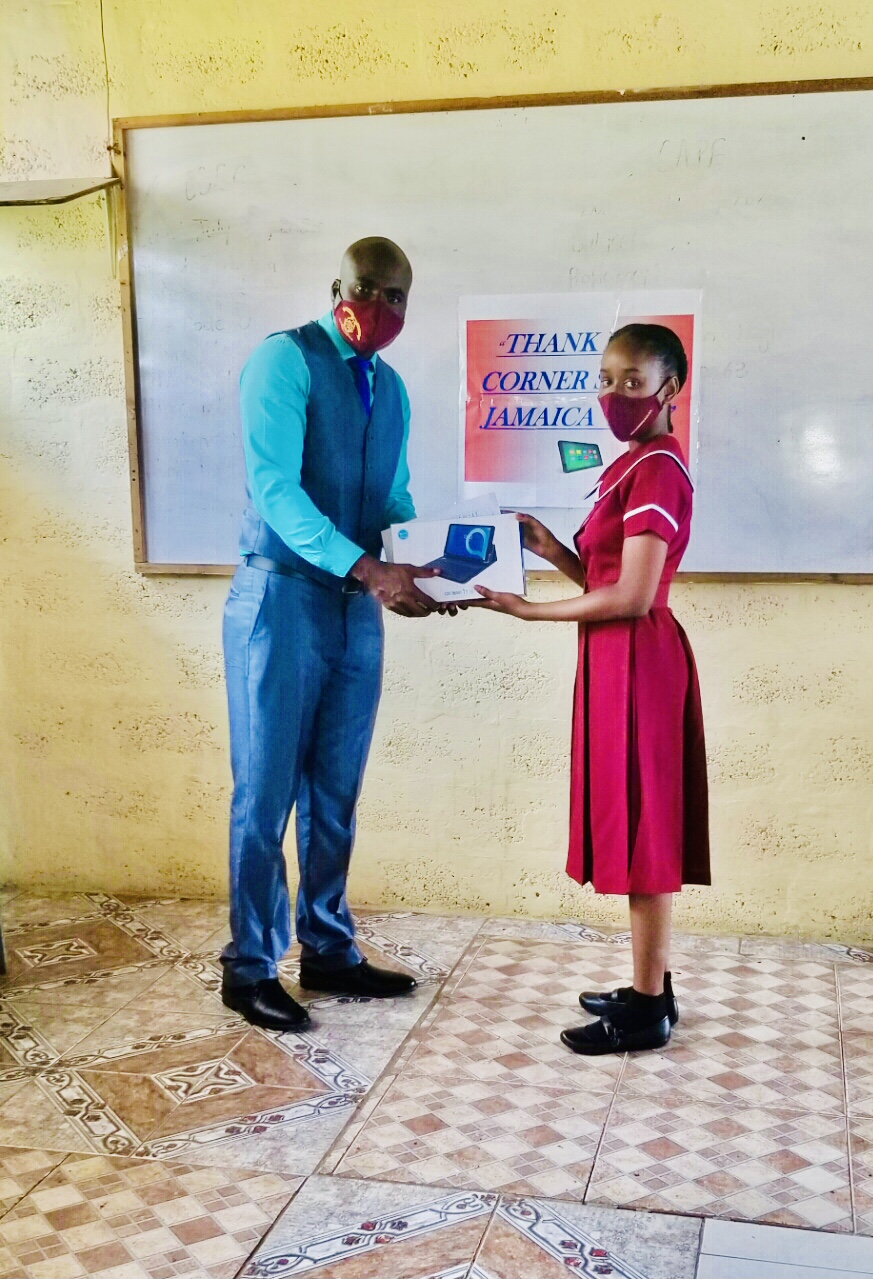
Three days after school reopened for online learning in October, Cornerstone Jamaica received a donation of US$10,000 to spend on tablets for students. The donor requested that some of this money be spent on 50 tablets for students at Lennon High School, which is in the farming community of Mocho, Clarendon. Being a non-profit organisation that “does things” rather than “talk about things”, a plan was put in place and 50 Alcatel tablets, with keyboards and cases, were purchased from Intcomex at a very reasonable rate.  Due to the constraints of Covid-19, Chairman of Lennon High School Board, Gordon Sharp, gladly presented them to Principal Frederick Lattray on Cornerstone Jamaica’s behalf.

Mr. Lattray was overwhelmed with gratitude for what he called “This rather timely show of support by Cornerstone Jamaica.” He explained that most of the school’s students and their families are from low socioeconomic levels and, even pre-Covid, found it difficult to attend school regularly due to financial difficulties. “With the onset of the pandemic, things got even worse as students were now being required to access school via online modalities. This proved very difficult for many, because they were unable to access these modes of delivery due to the lack of internet and devices,” Lattray related. He went on to say that of approximately 970 students, at least 450 of them did not have access to a tablet or laptop, and he iterated that “this gift will go a long way in helping some of our needy students to access online education.” 

After careful consideration, Lennon High School came up with an incentive for students to get the tablets. “The tablets will be allocated to students picked by the teachers and will be on loan to them. If a student meets certain performance standards over a determined period, he or she will keep the tablet. If not, he or she will lose it to another student,” the Chairman told Cornerstone Jamaica.

Cornerstone Jamaica did not stop there, as the remaining US$4000 plus change, from the aforementioned donation, was used to buy more tablets for more Jamaican children. The very same donor has continued to support the cause, giving further generous sums to fulfil the task Cornerstone Jamaica has embraced. 

This organisation has been painfully cognisant of the thousands upon thousands of students who still have no access to learning materials nor online classes. In order to address this dire situation, late last year Cornerstone Jamaica launched a US$10,000 matching initiative with its donor base to buy tablets for students in 11 Partner Schools in Westmoreland and Hanover.  Good quality tablets, with protective cases, were purchased at US$100 per device and Cornerstone appealed to people far and wide to give Jamaican kids a fair chance by donating any amount they could – nothing was too small a donation.  As the Jamaican saying goes, “Every mickle mek a muckle!” That said, the love and money poured from the pockets of Jamaicans at home and in the Diaspora, including a hefty donation of US$30,000 from one donor! This afforded Cornerstone Jamaica the luxury of furnishing the 11 partner schools in Westmoreland with a few hundred more Samsung A tablets, along with cases, and Lennon High School, who has become the twelfth partner, with another 50. In total, Cornerstone Jamaica has been able to donate over 500 tablets to students. The aim is to ensure that every student in the partner schools gets a tablet for online learning. 

After receiving 100 tablets from Cornerstone Jamaica for his students at Lennon High School, Mr. Lattray revealed one very touching story about a young girl who had to drop out of another high school to give birth to her baby. Lennon High School accepted her into their student body, but she had no way of attending school in person, constrained by Covid and caring for her little one. Having been given one of the donated tablets, however, she is now able to attend online school. “This young lady is special and she has potential, so the generous donation is greatly appreciated,” said Lattray. 

While Cornerstone Jamaica would like to thank each and every donor, it must be noted that some of the volunteer partners within the organisation have given hundreds of hours, yes hundreds, towards sourcing, collecting, shipping, unpacking, repacking, shipping again, clearing customs, driving, delivering, unpacking, logging serial numbers, repacking and distributing these hundreds of tablets with cases to 12 schools. It was no small feat, to say the least. The intense labour given by the Tablet Team is second to none, one that is surely the Cornerstone of this incredibly organised organisation, which strives to improve the lives of Jamaican students.

To donate, please click on or cut and paste this link into your browser: https://cornerstonejamaica.org/donate/

For more information, please contact: emma@cornerstonejamaica.org 

Mr. Lattray Presenting an Alcatel Tablet, donated by Cornerstone Jamaica, to a Lennon High School Student
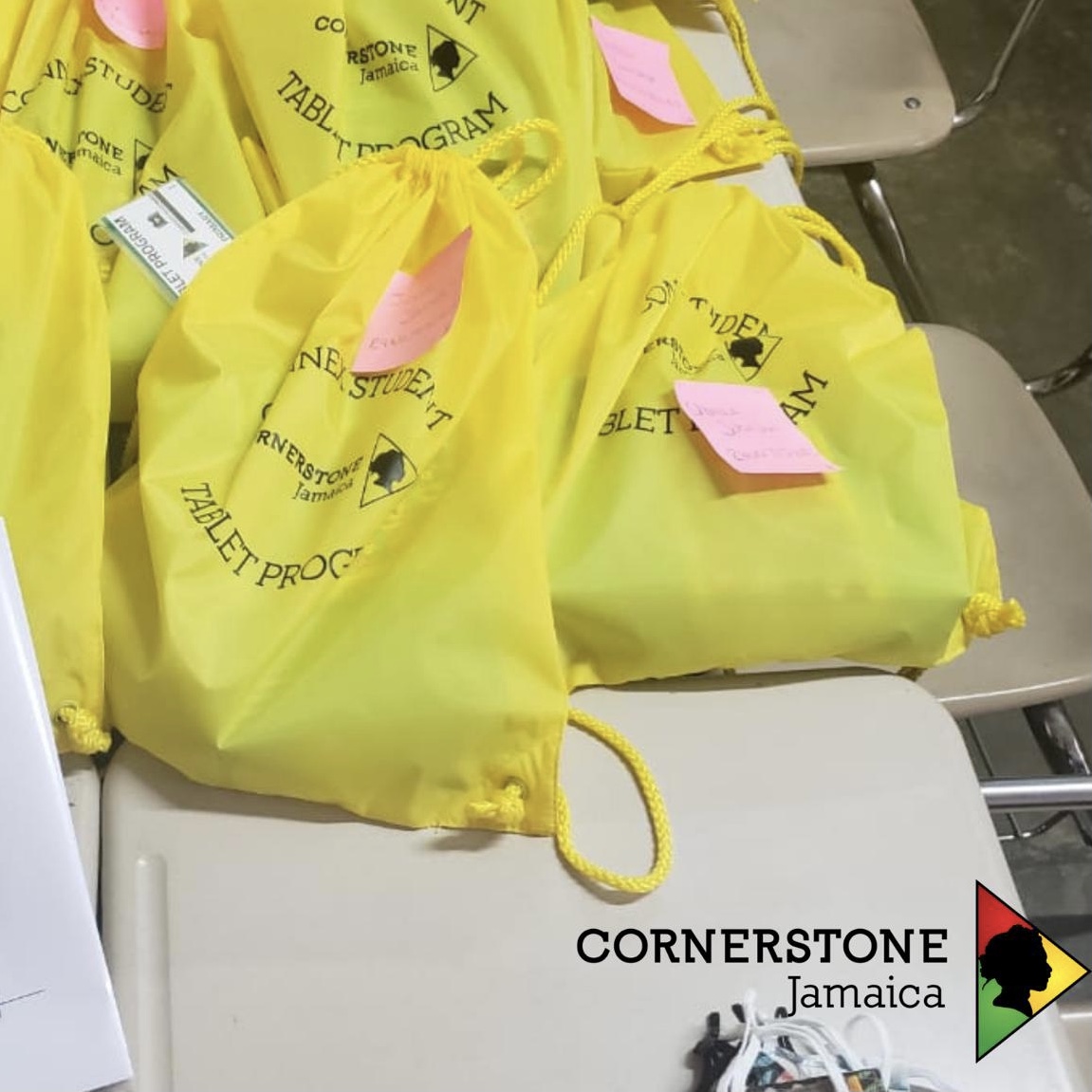
Samsung A Tablets with Cases in a Cornerstone Jamaica Bag, ready for Distribution
Samsung Tab A

Share this:

  • Click to share on X (Opens in new window) X
  • Click to share on Facebook (Opens in new window) Facebook
  • Click to email a link to a friend (Opens in new window) Email
  • Click to print (Opens in new window) Print
  • Click to share on LinkedIn (Opens in new window) LinkedIn
  • Click to share on Reddit (Opens in new window) Reddit
  • Click to share on Tumblr (Opens in new window) Tumblr
  • Click to share on Pinterest (Opens in new window) Pinterest
  • Click to share on Pocket (Opens in new window) Pocket
Like Loading...

“Beneath A Scarlet Sky” (author Mark Sullivan) – Emma’s Book Review 14 of 2020

04 Friday Sep 2020

Posted by becyberbright in Life

≈ Leave a comment

Author Mark Sullivan said he was “at the lowest point of my life”. Coming close to taking his life one early evening, he took a pause for the sake of his family. A few hours later he learned about an Italian war story that was hardly believable. Sullivan called Pino Lella a few times and eventually persuaded Pino to see him in person. Sullivan flew to Italy. This was the first of many trips he made to Italy over a decade and the result is this incredible book, “Beneath A Scarlet Sky”.

The story starts in June 1943, right in the throes of World War II, in Milan. Pino has had a privileged life and is quite the ladies’ man. He is now 17 years old, just met the gorgeous Anna, and Allied bombs have destroyed his family home. Pino’s family send him off to the Northern mountains of Italy, near a little ski town called Madesimo, to live with an old friend Father Re at Casa Alpina, where another 40 boys, including his younger brother Mimo, have found refuge from the dangers of war.

Father Re sets Pino the immense task of hiking solo in the surrounding snowy mountains almost every day, about which Sullivan writes in such a vivid way that one would think he had been tasked with this physically challenging feat. While Pino is happy to have escaped the bombs of war in Milan, he becomes proud to be part of Father Re’s Underground Railroad that’s helping Jews escape over the Alps. Pino is chosen to be the one who guides these Jews through the treacherous alpine terrain, oftentimes risking his own life as he ensures the safety of those entrusted to his care. The daily nail-biting expeditions, eloquently described in Sullivan’s prose, are forever etched in my mind.

Eventually, it is time for Pino to return to Milan, but his family once again dictate his fate, forcing him to join the Germans, in order to protect his life. Now 18 years old, circumstance lands him the job of personal driver for Adolf Hitler’s left hand in Italy, General Hans Leyers, and Pino ends up informally working as a spy for the Allies, which makes his seeming betrayal easier to stomach. Despite the horrendous experience of living within a war, which, aside from smell and sound, Sullivan captures in graphic detail, Pino is happy. He has found the love of his life, Anna, who happens to be the maid of General Leyers’ mistress.

While we all know the outcome of World War II, Pino’s story does not end the way one might expect. Sullivan will keep you on your proverbial toes right up to the last page of this book, pulling on every heart string and emotion deep within. Truly one of my favourite reads of all time.

P.S. I read this book at the start of Summer, but I’ve been so busy, I’ve not had time to write. I shall endeavour to get back to blogging on a regular basis now.

Share this:

  • Click to share on X (Opens in new window) X
  • Click to share on Facebook (Opens in new window) Facebook
  • Click to email a link to a friend (Opens in new window) Email
  • Click to print (Opens in new window) Print
  • Click to share on LinkedIn (Opens in new window) LinkedIn
  • Click to share on Reddit (Opens in new window) Reddit
  • Click to share on Tumblr (Opens in new window) Tumblr
  • Click to share on Pinterest (Opens in new window) Pinterest
  • Click to share on Pocket (Opens in new window) Pocket
Like Loading...
← Older posts
Newer posts →

Subscribe

  • Entries (RSS)
  • Comments (RSS)

Archives

  • May 2025
  • April 2025
  • November 2024
  • October 2024
  • September 2024
  • May 2023
  • April 2023
  • January 2023
  • November 2022
  • April 2022
  • March 2022
  • February 2022
  • November 2021
  • October 2021
  • March 2021
  • September 2020
  • June 2020
  • May 2020
  • April 2020
  • March 2020
  • February 2020
  • January 2020
  • November 2019
  • April 2019
  • March 2019
  • December 2017
  • November 2017
  • October 2017
  • September 2017
  • August 2017
  • July 2017
  • June 2017
  • May 2017
  • March 2017
  • February 2017
  • January 2017
  • October 2016
  • September 2016
  • June 2016
  • May 2016
  • April 2016
  • March 2016
  • February 2016
  • January 2016
  • December 2015
  • November 2015
  • October 2015

Categories

  • Children
  • Education
  • Fashion
  • Food
  • Health
  • Humour
  • Life
  • Uncategorized

Meta

  • Create account
  • Log in

Blog at WordPress.com.

  • Subscribe Subscribed
    • CyberBright
    • Join 64 other subscribers
    • Already have a WordPress.com account? Log in now.
    • CyberBright
    • Subscribe Subscribed
    • Sign up
    • Log in
    • Report this content
    • View site in Reader
    • Manage subscriptions
    • Collapse this bar
 

Loading Comments...
 

    %d