• Stay Sharp. Be Cyber Bright.
  • https://www.youtube.com/@becyberbright
  • https://www.cybersafekids.ie/online-safety-jamaican-style/

CyberBright

~ Navigate Cyber Space in a Smart Way. Stay Sharp. Be CyberBright. Cyber Safety is a Human Right. You'll also find my ServeYouWrite blog entries: Health, Adventure, Travel, Humour, Food, Philosophy, Books & More!

CyberBright

Monthly Archives: March 2021

Say Their Names: Jamaican Women’s Lives Matter

30 Tuesday Mar 2021

Posted by becyberbright in Life

≈ 1 Comment

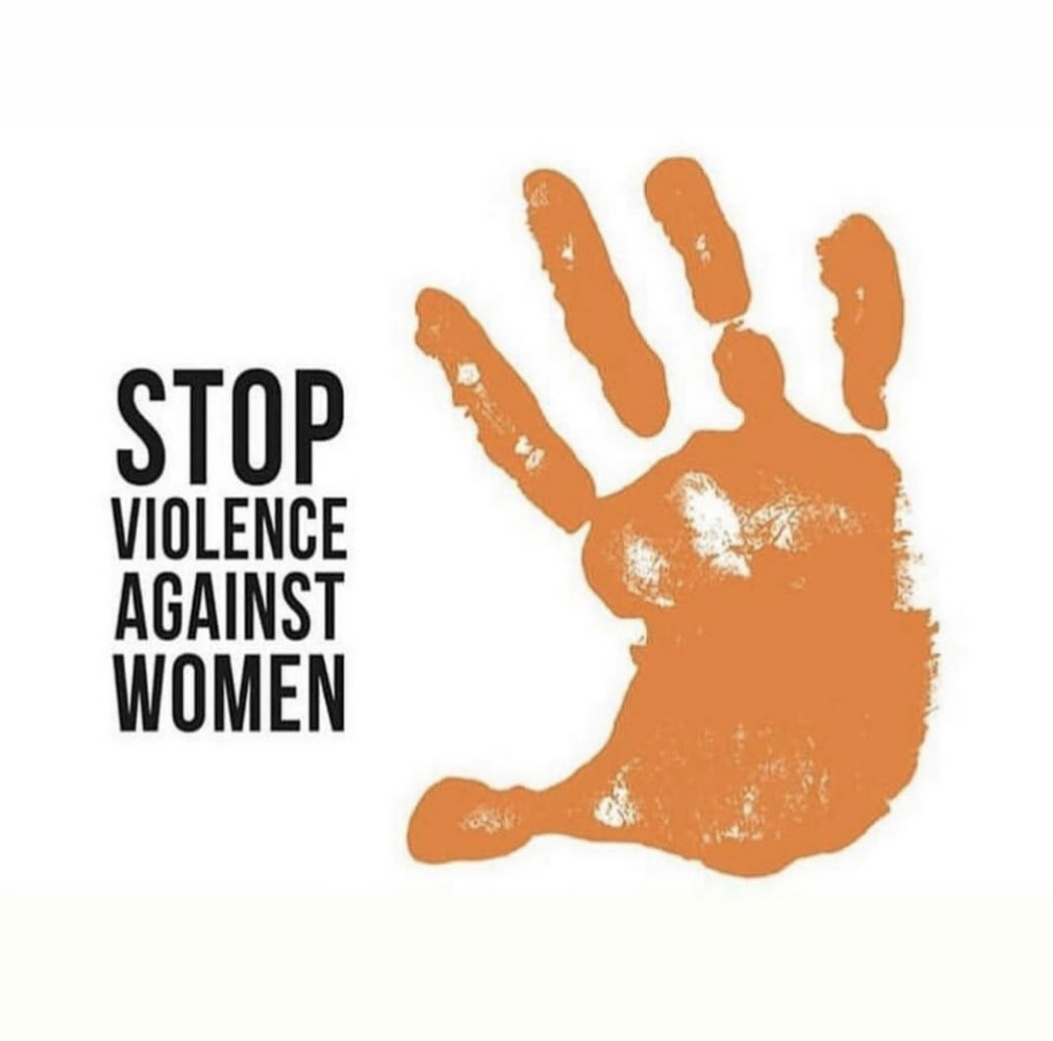
Jasmine Dean, Khanice Jackson, Tamika Richards, Nevia Sinclair, Kim Johnson, Ananda Dean and many more. Jamaican women and girls are being abducted, murdered and disposed in ways that go beyond brutal, leaving their families and friends in a spin of devastation. Jamaican women and girls are being sexually harassed, sexually assaulted and raped, leaving them scarred for years, if not for the remainder of their lives, but more often than not there are no physical scars to show for the psychological damage that has been done.

Pre-Covid, I was a volunteer in a mentor programme for high school students. One of the workshops I planned for the children entailed each child anonymously writing down three things they did not like being done to them. I collected responses from more than 150 students. These were statements, verbatim, from some of them:

“Don’t like to see children getting abuse.”; “I don’t like rape.”; “I do not like when people touch me on my bottom.”; “I don’t like when people touch me on my breast.”; “I don’t like when people touch me up when they are talking to me.”; “I don’t like when people touch me in a certain way.”; “I don’t like when older men stare at me and talk to me about sex or adult stuff.”; “One elder male in my community always wants to give me money so I can have sex with him, but I’m smart enough not to.”; “I don’t like when girls get abused.”

As I unfolded each piece of paper to read their words, I realised that they were all saying the same thing. These young teenagers, boys and girls, know that sexual abuse is wrong. They do not like it. Their instincts are in tact, yet this is not enough to stop the predators. Predators have power and they use this power to do harm.

So if children can feel that it’s wrong to be abused, why do some grow up to become predators? Have they been desensitised to the crime and why? Is the language used by men to speak to women and girls, and about them, breaking down the goodness inside the boys from when they are young? Is pressure coming from men for their sons to treat women as sexual objects at their disposal? If so, then by the time the boys become men, it’s no wonder that some seek to be violent towards girls and women.

On April 15, 2017, a man, whom my family and I trusted, overstepped and did something that could possibly have been forgiven had he stood up and taken responsibility for his unjustifiable actions towards me. But he didn’t, so we didn’t. Instead, I was shunned for “causing trouble”, accused of “shaking his marriage” and blamed for “rocking the boat” in general. I was threatened by several friends who are no longer in my stratosphere. I stood up and spoke up against sexual abuse because I needed to see change in Jamaica. If I didn’t stand up and speak up, who would?

I have had immense support from my family, numerous friends and acquaintances. The positive power of social media also came through for me during this time, only to be even more asserted exactly six months later, on October 15, 2017, when Alyssa Milano tweeted: “If you’ve been sexually harassed or assaulted write ‘me too’ as a reply to this tweet.” She added this at the bottom of the same tweet: “Me Too. Suggested by a friend: if all the women who have been sexually harassed or assaulted wrote ‘me too’ as a status, we might give people a sense of the magnitude of the problem.” Having been originally founded by Tarana Burke in 2006, the #MeToo movement blew up the internet. The world wanted to change. Women needed the world to change. Those of us who posted about our numerous #MeToo moments were hopeful. The end of 2017 marked the start of a new era, surely.

Going into 2018, celebrities were speaking out more and more, #TimesUp came into fruition, black was worn at the Golden Globes in solidarity for the survivors of rape and sexual abuse, sexual harassment laws were reviewed and improved in several countries, and famous men were beginning to pay for their abusive actions towards girls and women. Time was up. I even bought a #timesup T-shirt and wore it often. I still do. Alas, few seemed to notice and even fewer cared. It was disappointing to see so many women in Jamaica accept the status quo. They still do. It is disappointing to hear men and women still saying things like, “She had on a tight tank top and short skirt, so she shouldn’t have worn that,” or “why she walking around by herself anyway?”

Victim blaming is common, but it has to stop. We could push for laws to be enforced and, frankly, we should, but what we need to do is get to the root of the problem. We have to humanise and nurture every single one of our fellow citizens. We have to do this from their birth. We owe it to our children, to the babies who have just been born and to the ones who will be born in the future. Women’s and girls’ lives matter. Say their names.
Share this:

  • Click to share on X (Opens in new window) X
  • Click to share on Facebook (Opens in new window) Facebook
  • Click to email a link to a friend (Opens in new window) Email
  • Click to print (Opens in new window) Print
  • Click to share on LinkedIn (Opens in new window) LinkedIn
  • Click to share on Reddit (Opens in new window) Reddit
  • Click to share on Tumblr (Opens in new window) Tumblr
  • Click to share on Pinterest (Opens in new window) Pinterest
  • Click to share on Pocket (Opens in new window) Pocket
Like Loading...

A Utilitarian View of Jumping the Vaccine Line

19 Friday Mar 2021

Posted by becyberbright in Life

≈ 1 Comment

It is heartbreaking to see people in their seventies and older being turned away from places like the Good Samaritan Inn in Kingston when there has been news of healthy citizens, who do not fall under any of the categories in phase one slated for the Covid vaccine, getting their first dose in the past week or so. Discretion was used to give these younger, low-risk Jamaicans a chance to avoid the fatality of Covid, yet discretion is not to be used to grant the high-risk elderly the same privilege.

One cannot blame the doctors and nurses at the Good Samaritan Inn for following the directives of the Ministry of Health and Wellness. Indeed, I applaud them for abiding by the regulations set out by the government. They have been told that, for now, they are only to vaccinate health workers and members of the security forces. However, can someone please explain what happened at St. Joseph Hospital when the reported one hundred people, who were supposed to wait their turn like the rest of us, showed up and each sat to take a dose from another person who needs it more? What of the messages I’ve been receiving from some people who have directly and proudly been told by young and healthy friends that they got the vaccine this week?

Jeremy Bentham believed in “The greatest amount of good for the greatest number of people”. This is the essence of Classical Utilitarianism, which relies on each person promoting the overall good. Bentham thought that an action was bad when it led to unhappiness, without any redeeming happiness. It had no utility. “If a law or an action doesn’t do any good, then it isn’t any good.” It would take many more pages than this to get into the nuances of Bentham’s beliefs, but one important thing to note is that he viewed all pleasures equally. The pleasure I get from eating an ice cream would therefore equal the pleasure a doctor gets from saving someone’s life. The pain I feel from my puppy dying would be the same that you feel from the death of your best friend. With no qualitative differences between pleasures nor between pains, one could argue that pleasure or pain of an animal is the same of a human. Harming a puppy would therefore be just as bad as harming a human. John Stuart Mill disagreed with Bentham’s whole hedonistic approach and felt that pleasures and pains, good and bad, were in fact qualitative. One good thing was not the same as another good thing, and the two did not have the same utility. The same stood true for bad things. Over the next one hundred years or so philosophers, such as Henry Sidgwick and then G. E. Moore, refined their predecessors’ Utilitarian theories, until Utilitarianism came to be known as Consequentialism.

While there are many debatable flaws in the hedonistic approach of Classical Utilitarianism, it has paved the way in the formation of policies and legislation. It is why nations have laws. It is why epidemiologists, other scientists and the World Health Organisation all come up with recommendations for the roll out of things such as vaccines. It is why governments form policies when it comes to things like the roll out of vaccines. The more modern idea of utilitarianism, whereby one looks at consequences, accounts for what one could arguably describe as practical and ethical considerations. It is more practical and ethical to vaccinate healthcare workers, people in direct public service, the elderly and those with pre-existing illnesses before younger and healthier citizens. This is more useful, don’t you think?

So my question to the few entitled elitists, who drove out to get your Covid vaccines, is this: Did you consider the immediate and longterm negative consequences your actions would have on thousands of fellow Jamaicans? Let’s be frank, one selfishly entitled soul can and does encourage a sheeplike mentality, and a flock of you have prevented a plethora of elderly people with co-morbidities from getting the vaccine in the last week. Who knows what the knock-on effect will be, but I ask you this: Will your actions achieve “the greatest amount of good for the greatest number of people”? Was it worth it for you to push yourself up in the line? Is it more useful to get your vaccine before those who have a greater risk of dying from Covid than you?

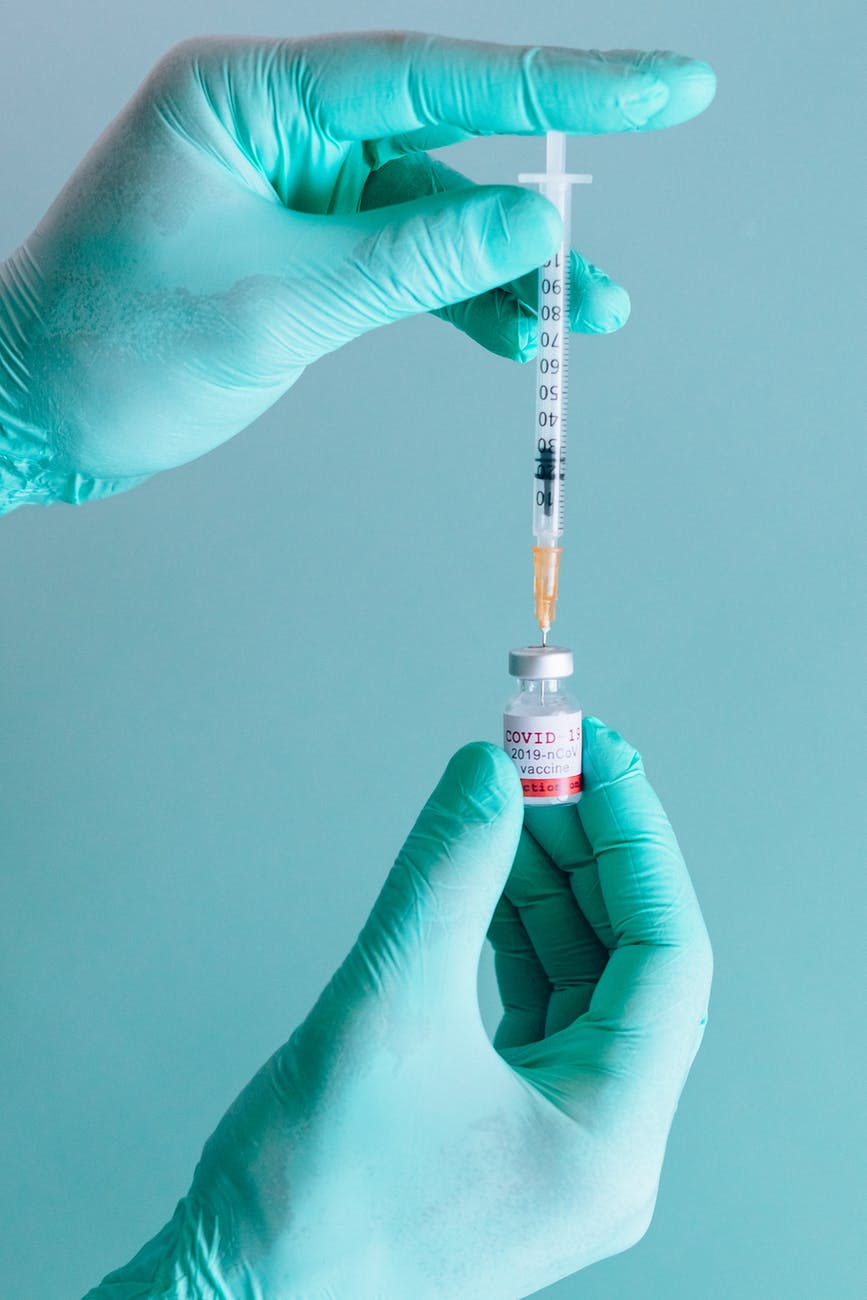
  • Photo by Nataliya Vaitkevich on Pexels.com

Share this:

  • Click to share on X (Opens in new window) X
  • Click to share on Facebook (Opens in new window) Facebook
  • Click to email a link to a friend (Opens in new window) Email
  • Click to print (Opens in new window) Print
  • Click to share on LinkedIn (Opens in new window) LinkedIn
  • Click to share on Reddit (Opens in new window) Reddit
  • Click to share on Tumblr (Opens in new window) Tumblr
  • Click to share on Pinterest (Opens in new window) Pinterest
  • Click to share on Pocket (Opens in new window) Pocket
Like Loading...

Jamaica’s Corona Chronicles – Saving Livelihoods or Lives?

10 Wednesday Mar 2021

Posted by becyberbright in Life

≈ 1 Comment

No matter what decisions the Prime Minister makes, he cannot please the needs, nor wishes, of every single Jamaican. In fact, there are many people who go as far as interpreting the Covid 19 guidelines and policies, which are given at the numerous Press Conferences and printed in the many Jamaica Gazettes available online, to suit their own narratives.

Take a step back for a moment. Think about why exactly you may be unhappy with the policies and actions of the Most Honourable Andrew Holness and his team. Jot these down on a piece of paper. Next, read through this list and consider how you would do things differently, then write your suggestions down. Now read said suggestions and weigh them against those of the Prime Minister and his Government. Whose are more beneficial to the majority of the three million people living in Jamaica?

I’ll come back to this at the end, but first let’s reflect on the past year.

On March 10, 2020, Jamaica confirmed its first positive case of Covid 19. Two days later, a second case was confirmed and the Prime Minister ordered for the immediate closure of all schools in Jamaica. Friday, March 13, the lives of our children changed forever, as they sat at home waiting to hear what was going to happen with their education. The entire Grade 6 cohort in this country was one week away from PEP Performance Task Tests and six weeks away from Curriculum Based Tests, and students in Forms 5 and 6 were equally uncertain about what would happen to them regarding their exit examinations (CSEC & CAPE).

Students in Jamaica have been in distance learning for a year, with the exception of the privileged few who were given several weeks, or months, of face to face school before being sent home again. The problem with distance learning is most kids are being left behind and this comes with serious consequences, according to parental anecdotes. Moreover, studies conducted through Unicef back up this proclamation. We do need our children to be in the classroom, but with Jamaica’s current Covid positivity rate running between 25% and 40%, depending on the day, is it wise to send our kids out and throw more risk at the impending dire situation? While studies indicate that children are not getting so sick, they can spread the virus to those who might be more vulnerable.

So, where are we now with regards to policies? Up to and including March 22, 2021, these are the guidelines:

Funerals and burials are banned, but regular church services may take place online, with only 10 clergy/officiants/camera crew allowed to be together in person while filming the online service. No more than 25 people in total are allowed to attend a wedding, including the bride, groom, officiants and any staff. No more than 10 people are allowed to gather socially or in public, so NO parties! A specific list of beaches and rivers stay closed and curfew remains from 8:00pm until 5:00pm. There is a work-from-home order for the public sector and the private sector is urged to accommodate this as far as possible. No public sector gatherings/ceremonies are allowed, unless online. Attractions, gyms, parks and zoos must be closed by 6pm everyday. Everyone, including Jamaicans and business travellers, traveling to Jamaica, must have a negative Covid 19 test, which has been done within 72 hours of their travel date. All students are to engage in distance learning, but students in Grade 6, Form 5 and Form 6, from the schools that have been pre-approved, may have face to face learning.

With all that said, guidelines that have been in place for the last year, such as wearing masks in public, sanitising regularly and staying at least 6 feet away from other people, are still in effect. Jamaicans and residents returning home must still quarantine for 14 days. This order is in the Jamaica Gazette published online by the Ministry of Health & Wellness. Using the excuse, “No one at the airport told me to quarantine.”, is unacceptable. No one at the airport tells you not to steal, not to break a traffic light and not to lick someone’s face! Yet, you just know that you aren’t supposed to do those things. Again, Covid guidelines are in the Jamaica Gazette and we have repeatedly been told by the Prime Minister that all Jamaicans and residents returning to Jamaica must quarantine for 14 days. There are also strict instructions pertaining to tourists within the Jamaica Gazette and in Jamaican travel advisory documents, which can be found online. Once again, “No one at the airport told me to quarantine or what to do.”, is NOT a valid excuse. Nope. Not sorry. Not even a little bit sorry. Do not bend the rules to suit your needs. As for those who do not understand that if you test positive for Covid 19, you must stay home and isolate yourself for at least 14 days. All those living in your home must also quarantine at home for 14 days. You should alert anyone with whom you have been in close contact within the last 14 days. These people should also stay at home for 14 days. If in doubt or if anyone has symptoms, call the JamCovid hotline, explain the situation and ask them what you should do. Lives are at stake and, for that matter, so are livelihoods.

Speaking of livelihoods…I have to assume that we all wish for everyone’s livelihoods to be intact or improve. Correct? The dilemma lies in choosing between livelihoods and lives. The reality is this: as Covid 19 cases increase, hospitals become inundated with people. Moderately or critically ill patients, who could otherwise be saved by medical staff, could now suffer the worst outcome imaginable and the death rate would then be at risk of rising exponentially. The thing is, if lives are lost, so are livelihoods, and if livelihoods are lost, potentially some lives could be lost as well.

What is the solution? Please go back to your list of suggestions to improve on what the Government is doing. Do you have better solutions than what the Prime Minister of Jamaica and his team have arduously been working on for the past year? What else would you do to get the residents of Jamaica to comply with the rules? While you are mulling over this, please take into consideration the Bills that need to be debated among the Governing Politicians and those from the Opposition, and passed by way of votes, before they can be put into law and before the appropriate penalties can be given to those who choose to ignore guidelines, which have been originally recommended by the World Health Organisation. If every single person living in this country was to abide by the Covid regulations set out by our Prime Minister, wouldn’t we be in a position to save both livelihoods and lives?

Photo by CDC on Pexels.com

Share this:

  • Click to share on X (Opens in new window) X
  • Click to share on Facebook (Opens in new window) Facebook
  • Click to email a link to a friend (Opens in new window) Email
  • Click to print (Opens in new window) Print
  • Click to share on LinkedIn (Opens in new window) LinkedIn
  • Click to share on Reddit (Opens in new window) Reddit
  • Click to share on Tumblr (Opens in new window) Tumblr
  • Click to share on Pinterest (Opens in new window) Pinterest
  • Click to share on Pocket (Opens in new window) Pocket
Like Loading...

A Cornerstone in the Lives of Jamaican Students

02 Tuesday Mar 2021

Posted by becyberbright in Life

≈ 7 Comments

No matter what circumstance a child in Jamaica might be in, two things have become absolute necessities for every single one of them – internet access and access to a device. 

We are halfway through the present school year and most Jamaican students have now been in online learning for one year.  Few fortunate students have had some face to face learning since September 2020. However, with the exponentially rising Covid cases, the Jamaican government has mandated that all public and private schools revert to or remain online, with an exception to allow some schools, who have had their Covid protocols approved, to bring in their Grades 6, 11, 12 and 13 students for face to face learning in preparation for Exit Examinations: PEP, CSEC & Cape. 

Having started an initiative in June 2020 called Cornerstone Connex, which has successfully brought internet connection to several rural communities in the western side of the island, Cornerstone Jamaica has a mission to put the well-being of Jamaican students at the forefront. That said, when online school opened on October 5, 2020, many teachers sat waiting, and are still waiting five months later, for some of their students to come into the virtual classroom. What has been the problem?

The Jamaican government has promised, and delivered, thousands of tablets to kids in need, but it is a tall order to supply every single child with a device, let alone imminently. This is where the Cornerstone Connex initiative has jumped in with full force. All the internet in the world cannot help a child unless he or she has a device suitable for the academic tasks at hand. All Jamaican children need devices for online school and learning, but there is a glaring disparity between those with devices and those without. 

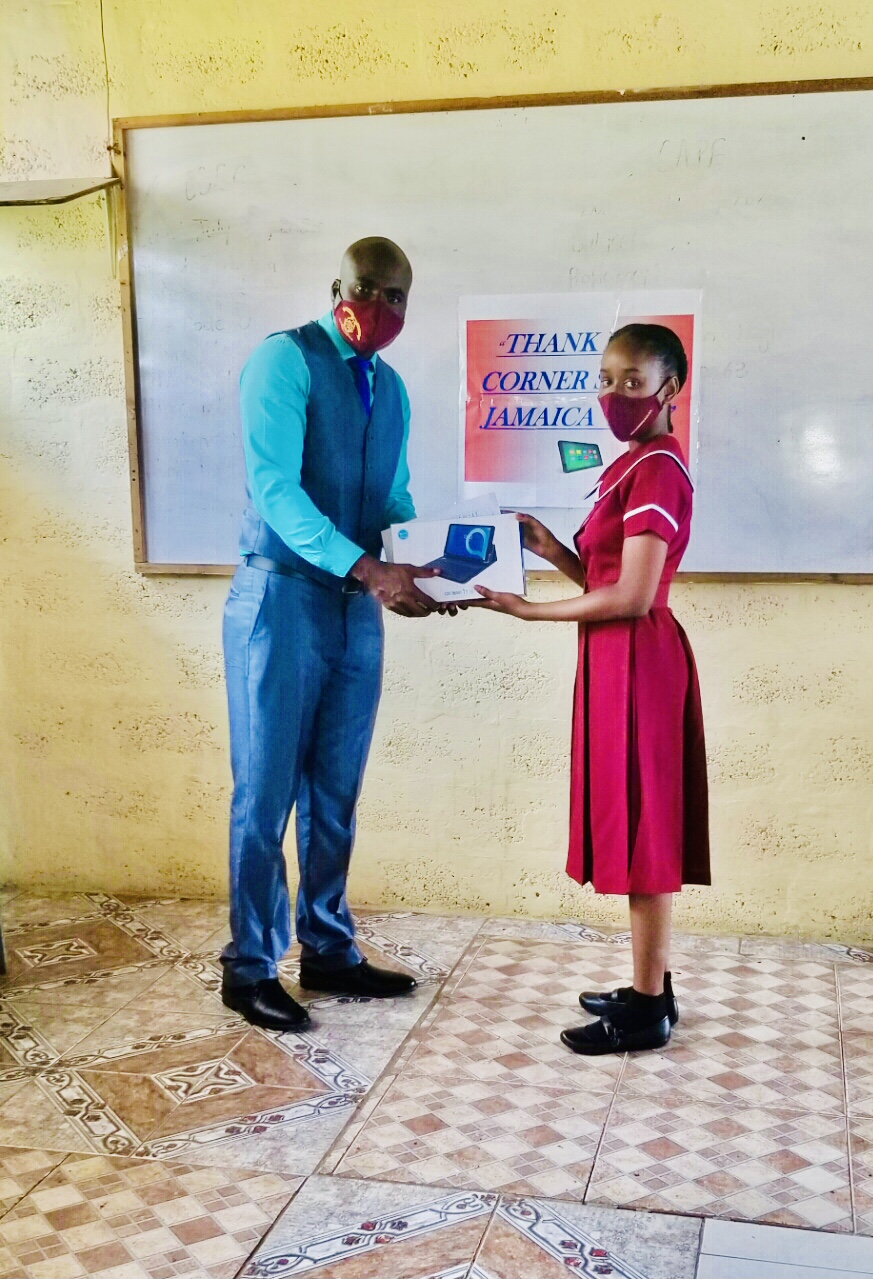
Three days after school reopened for online learning in October, Cornerstone Jamaica received a donation of US$10,000 to spend on tablets for students. The donor requested that some of this money be spent on 50 tablets for students at Lennon High School, which is in the farming community of Mocho, Clarendon. Being a non-profit organisation that “does things” rather than “talk about things”, a plan was put in place and 50 Alcatel tablets, with keyboards and cases, were purchased from Intcomex at a very reasonable rate.  Due to the constraints of Covid-19, Chairman of Lennon High School Board, Gordon Sharp, gladly presented them to Principal Frederick Lattray on Cornerstone Jamaica’s behalf.

Mr. Lattray was overwhelmed with gratitude for what he called “This rather timely show of support by Cornerstone Jamaica.” He explained that most of the school’s students and their families are from low socioeconomic levels and, even pre-Covid, found it difficult to attend school regularly due to financial difficulties. “With the onset of the pandemic, things got even worse as students were now being required to access school via online modalities. This proved very difficult for many, because they were unable to access these modes of delivery due to the lack of internet and devices,” Lattray related. He went on to say that of approximately 970 students, at least 450 of them did not have access to a tablet or laptop, and he iterated that “this gift will go a long way in helping some of our needy students to access online education.” 

After careful consideration, Lennon High School came up with an incentive for students to get the tablets. “The tablets will be allocated to students picked by the teachers and will be on loan to them. If a student meets certain performance standards over a determined period, he or she will keep the tablet. If not, he or she will lose it to another student,” the Chairman told Cornerstone Jamaica.

Cornerstone Jamaica did not stop there, as the remaining US$4000 plus change, from the aforementioned donation, was used to buy more tablets for more Jamaican children. The very same donor has continued to support the cause, giving further generous sums to fulfil the task Cornerstone Jamaica has embraced. 

This organisation has been painfully cognisant of the thousands upon thousands of students who still have no access to learning materials nor online classes. In order to address this dire situation, late last year Cornerstone Jamaica launched a US$10,000 matching initiative with its donor base to buy tablets for students in 11 Partner Schools in Westmoreland and Hanover.  Good quality tablets, with protective cases, were purchased at US$100 per device and Cornerstone appealed to people far and wide to give Jamaican kids a fair chance by donating any amount they could – nothing was too small a donation.  As the Jamaican saying goes, “Every mickle mek a muckle!” That said, the love and money poured from the pockets of Jamaicans at home and in the Diaspora, including a hefty donation of US$30,000 from one donor! This afforded Cornerstone Jamaica the luxury of furnishing the 11 partner schools in Westmoreland with a few hundred more Samsung A tablets, along with cases, and Lennon High School, who has become the twelfth partner, with another 50. In total, Cornerstone Jamaica has been able to donate over 500 tablets to students. The aim is to ensure that every student in the partner schools gets a tablet for online learning. 

After receiving 100 tablets from Cornerstone Jamaica for his students at Lennon High School, Mr. Lattray revealed one very touching story about a young girl who had to drop out of another high school to give birth to her baby. Lennon High School accepted her into their student body, but she had no way of attending school in person, constrained by Covid and caring for her little one. Having been given one of the donated tablets, however, she is now able to attend online school. “This young lady is special and she has potential, so the generous donation is greatly appreciated,” said Lattray. 

While Cornerstone Jamaica would like to thank each and every donor, it must be noted that some of the volunteer partners within the organisation have given hundreds of hours, yes hundreds, towards sourcing, collecting, shipping, unpacking, repacking, shipping again, clearing customs, driving, delivering, unpacking, logging serial numbers, repacking and distributing these hundreds of tablets with cases to 12 schools. It was no small feat, to say the least. The intense labour given by the Tablet Team is second to none, one that is surely the Cornerstone of this incredibly organised organisation, which strives to improve the lives of Jamaican students.

To donate, please click on or cut and paste this link into your browser: https://cornerstonejamaica.org/donate/

For more information, please contact: emma@cornerstonejamaica.org 

Mr. Lattray Presenting an Alcatel Tablet, donated by Cornerstone Jamaica, to a Lennon High School Student
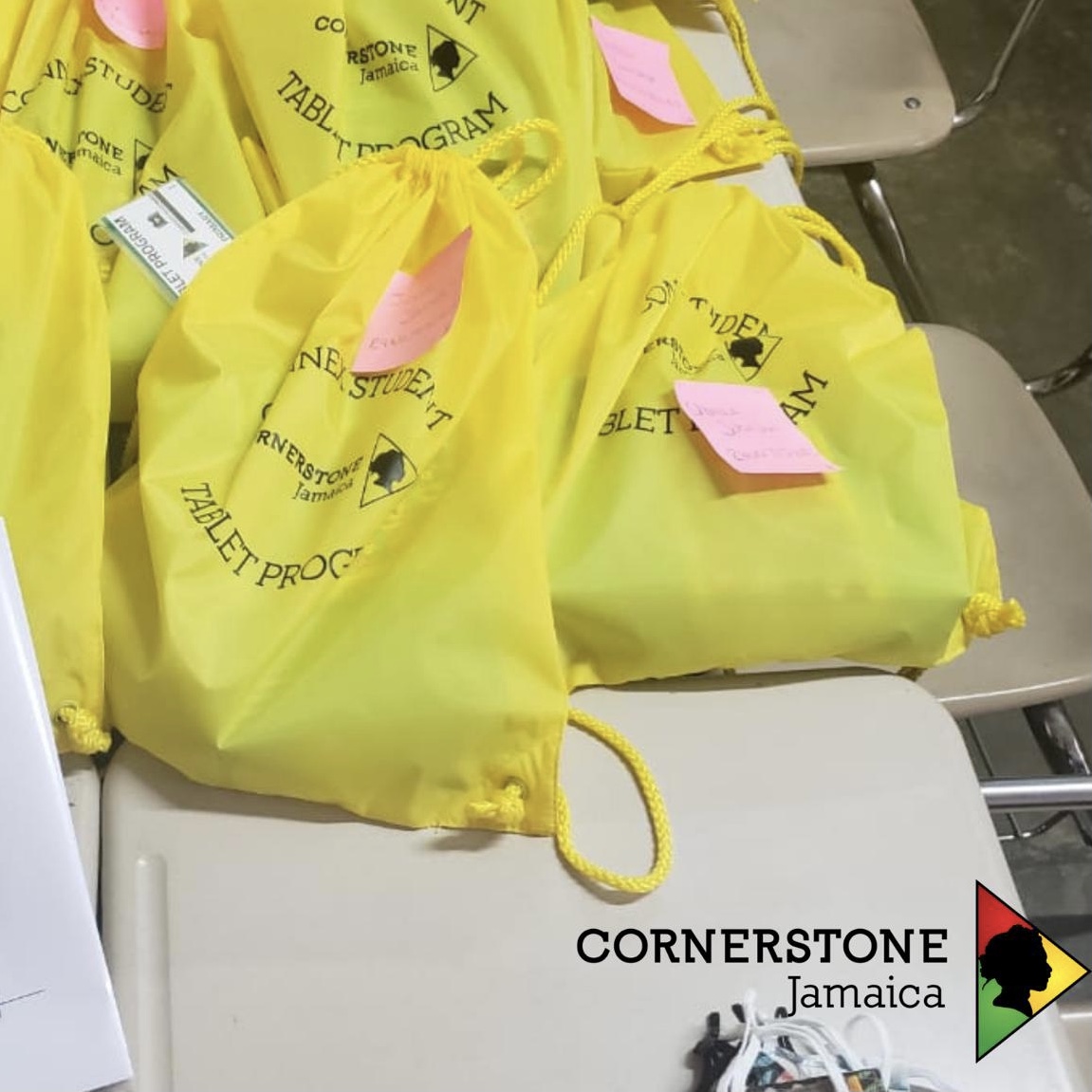
Samsung A Tablets with Cases in a Cornerstone Jamaica Bag, ready for Distribution
Samsung Tab A

Share this:

  • Click to share on X (Opens in new window) X
  • Click to share on Facebook (Opens in new window) Facebook
  • Click to email a link to a friend (Opens in new window) Email
  • Click to print (Opens in new window) Print
  • Click to share on LinkedIn (Opens in new window) LinkedIn
  • Click to share on Reddit (Opens in new window) Reddit
  • Click to share on Tumblr (Opens in new window) Tumblr
  • Click to share on Pinterest (Opens in new window) Pinterest
  • Click to share on Pocket (Opens in new window) Pocket
Like Loading...

Subscribe

  • Entries (RSS)
  • Comments (RSS)

Archives

  • May 2025
  • April 2025
  • November 2024
  • October 2024
  • September 2024
  • May 2023
  • April 2023
  • January 2023
  • November 2022
  • April 2022
  • March 2022
  • February 2022
  • November 2021
  • October 2021
  • March 2021
  • September 2020
  • June 2020
  • May 2020
  • April 2020
  • March 2020
  • February 2020
  • January 2020
  • November 2019
  • April 2019
  • March 2019
  • December 2017
  • November 2017
  • October 2017
  • September 2017
  • August 2017
  • July 2017
  • June 2017
  • May 2017
  • March 2017
  • February 2017
  • January 2017
  • October 2016
  • September 2016
  • June 2016
  • May 2016
  • April 2016
  • March 2016
  • February 2016
  • January 2016
  • December 2015
  • November 2015
  • October 2015

Categories

  • Children
  • Education
  • Fashion
  • Food
  • Health
  • Humour
  • Life
  • Uncategorized

Meta

  • Create account
  • Log in

Blog at WordPress.com.

  • Subscribe Subscribed
    • CyberBright
    • Join 64 other subscribers
    • Already have a WordPress.com account? Log in now.
    • CyberBright
    • Subscribe Subscribed
    • Sign up
    • Log in
    • Report this content
    • View site in Reader
    • Manage subscriptions
    • Collapse this bar
 

Loading Comments...
 

    %d